Influencer marketing is being rebuilt in real time as loyalty programs and affiliates are starting to merge.
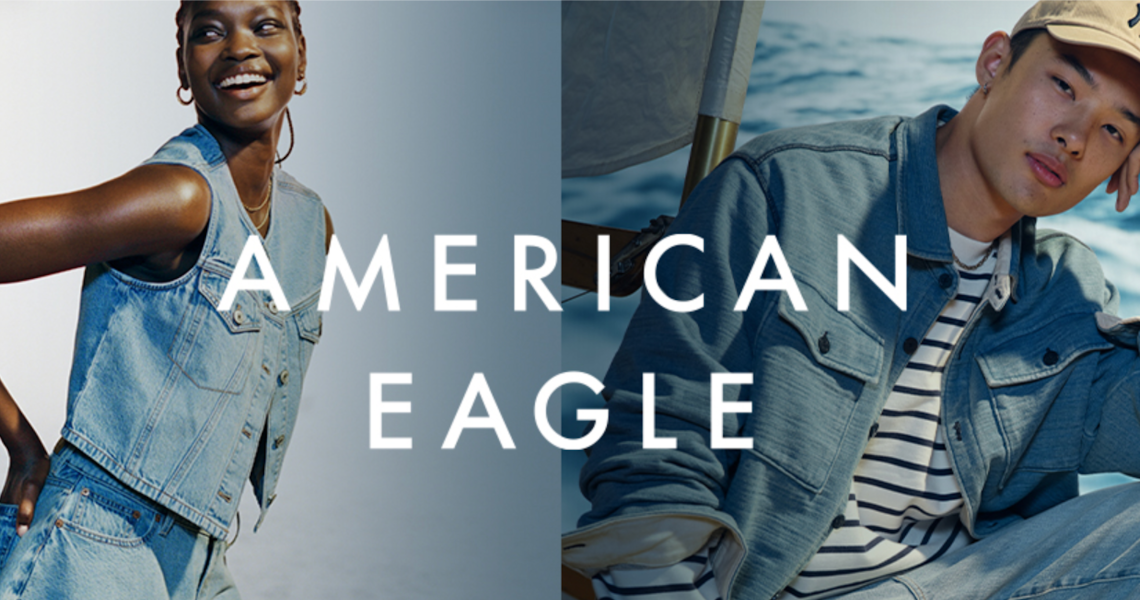
In early February, American Eagle launched its revamped AE Creator Community, a centralized platform supported by brand ambassador platform SocialLadder where anyone with at least 1,000 followers can apply to receive products, complete challenges, earn commission, and collect points redeemable for cash or merchandise.
This follows a similar move by Gap Inc., which in October introduced a creator affiliate and advocacy hub spanning its Old Navy, Gap, Banana Republic and Athleta brands. In that program, U.S.-based creators with over 1,000 followers can apply to earn commission on sales, receive early product access and gifting, participate in paid collaborations, and have their content amplified across the brands’ channels.
On paper, both programs resemble expanded affiliate initiatives. In practice, they show a broader move away from one-off influencer campaigns and toward always-on advocacy systems that combine loyalty mechanics with performance-driven creator marketing.
The changes reflect what brands are seeing across platforms. According to influencer marketing platform Collabstr’s 2026 Influencer Marketing Report, which came out in January, nearly 80% of influencer collaborations now cost under $300. UGC campaigns grew from 15% of total collaborations in 2024 to 35% in 2025, and average payouts per collaboration have continued to decline as the number of creators grows. Brands are spreading budgets across 15-30 creators, rather than concentrating on one or two higher-fee influencers, to test more content types.
According to American Eagle, there was significant demand for the new affiliate program. Within 24 hours, 643 people had signed up, and ten days later, that number reached 803. More notable than volume was participation. The platform includes a members-only chatroom within the AE Creator Community portal, designed to encourage peer interaction and direct feedback to the brand. The dedicated chatroom on the portal saw a 91% engagement rate, compared to a 70% benchmark, while engagement across the broader creator platform — including challenges and content prompts — reached 43%, versus a 17% benchmark, according to the brand. All of this occurred before any significant marketing push, which is planned for March.
Ashley Schapiro, vp of marketing, media, performance and engagement at American Eagle, said the redesign was about correcting what the brand felt was an overly transactional experience for creators.
“We continued the commission base and the gifting,” she said in an interview. What changed were three structural additions: one-to-one communication, gamification and scale. “We know those were critical pieces of the program that our community really loved. But the piece we needed to start on was being more creator-first by [encouraging direct conversation with the brand].”
“We call it a community [program] now,” Schapiro said. “But what makes a community is people engaging with it and participating with it.”
Creators can earn points for replying to peers in chat rooms, completing themed challenges or producing specific content formats.
The accessibility to the programs from American Eagle and Gap reflects the broader algorithmic reality of brands working across platforms like Instagram and TikTok. Follower counts are no longer predictive of performance.
“If you’ve built an entire strategy around follower counts — macros, nanos, 100,000 followers equals X fee — it’s at the very least 93% wrong,” said Paul Archer, CEO of Duel. He was referencing the fact that the vast majority of social views now come from non-followers. Duel works with brands including Victoria’s Secret, MAC and Charlotte Tilbury to centralize creator ecosystems and tie them directly to revenue. Archer argues that the traditional influencer manager role is becoming obsolete.
“The campaign model where it’s like, ‘We’ll work with you for this post,’ has eroded,” he said. “It’s becoming an always-on piece, where you have a whole bank of creators that love you and are willing to show up on a continuous basis, and they’re earning on performance”.
Performance often surfaces unexpected winners. “We’ve got some people that have a few thousand followers that are the biggest drivers of income for these massive brands,” Archer said, although he declined to name names. “And they’re never the ones that the brands pick [for influencer partnerships]”.
That unpredictability is precisely why brands are building new systems. Unlike one-off deals, advocacy programs operate on affiliate links, performance bonuses and product seeding.
“It unlocks the ability for the brand to work with a lot more people, because they don’t have to risk as much upfront,” Archer said. According to him, beauty brands have moved the fastest. “Most of the major beauty groups have advocacy programs,” Archer said, speaking about Charlotte Tilbury, Revolution Beauty, which runs the creator advocacy program Revolution Generation, and Rare Beauty. “They are all looking to build and scale.”
Part of this trend is about ensuring authenticity in an age of AI and social media saturation. “It’s become more important to be working with the authentic fans of the brand than it has ever been,” Archer said. “As soon as someone puts out slop and it’s identified, [the brand’s] reputation is in tatters.”
Schapiro echoed the emphasis on realness over polish. “Content is really currency,” she said. “A lot of times, creator-led content performs even better than brand content [on social].” And if a brand casts a wider net for that content by merging customer and influencer content, there is a greater chance it will catch a piece of content that performs. It can then create a relationship with that creator through the point system to strengthen it in the future.
Internally, this change in influencer and loyalty program structure is forcing organizational change. Archer said brands must think more like system designers than talent managers. “The influencer manager role is dead,” he said. “Everything they do will be done better by AI in the next 12 months.”
Instead, advocacy increasingly sits under digital or performance teams. “The skill set of building CRMs and thinking from a performance mindset — one-to-many — is more akin to designing the systems you need to work with creators in 2026 and beyond,” Archer said.
Measurement is also evolving alongside structure. Brands are looking beyond earned media value to more finance-aligned metrics like sales, and need a streamlined location to track everything, which is why portals by the likes of AE and Gap make sense. “CFOs are screaming out for something centralized that speaks the same language,” Archer said.
At AE, loyalty integration is also under consideration. The brand has 16 million loyalty members in the U.S. and Canada. While details are still being developed, Schapiro said the goal is to integrate all members of the current loyalty program into the AE Creator Community in the near future.
“We want the [loyalty] community to participate in it and help drive the future of it,” said Shapiro.