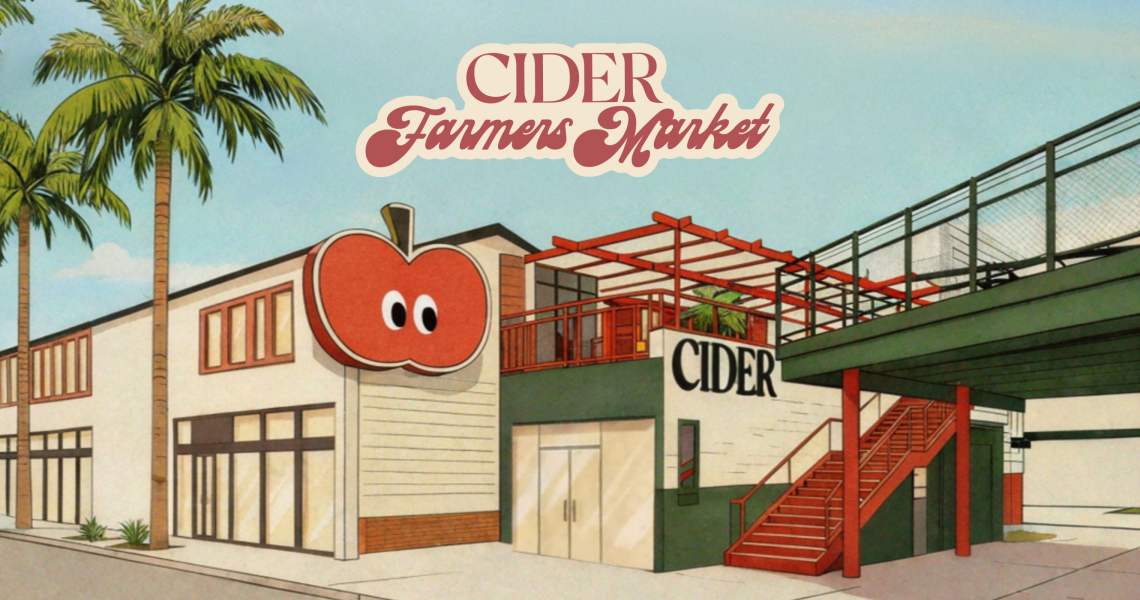
The Los Angeles-based fashion brand Cider has spent the last five years growing its online business and establishing itself as a go-to affordable competitor to brands like H&M and Shein.
Now, after years of testing, Cider has opened its first permanent store in its hometown of Los Angeles. The store, at nearly 8,000 square feet, is a major expansion and investment for the company, which has raised over $130 million in investor funding in recent years. The store is in Los Angeles’ Farmer’s Market shopping center.
Cider’s expansion reflects the growing interest in affordable, price-conscious brands at a time when consumers’ wallets are pressured by the rising cost of living. It’s also the latest example of an online-only brand determining that the only way to keep expanding is to go IRL with brick-and-mortar retail.
“The past few years, we’ve really been focused on our digital presence, through growing our Discord and expanding our influencer network,” said Cider co-founder Fenco Lin. “Retail is a natural extension of what we’ve built online.”
After testing the concept with pop-ups in New York City and Seoul over the last two years, Lin said Cider was finally ready to translate its online experience into physical retail. The online Cider store lets customers shop by mood like “Playful” or “Elegant,” a popular feature that over 50% of its customers use. The physical store is organized the same way, with distinct sections differentiated by different colors and decor, along with signs noting which mood they represent.
Cider chose L.A., where it already has a strong customer base along with existing warehouses to help ship merchandise quickly, for both its first store and the two more it’s opening later this year.
The expanded investment in retail comes as Cider is experiencing significant growth, with revenue increasing 7x over the last five years, and its mobile app has been downloaded 50 million times. Cider also has nearly 6 million Instagram followers and is valued at over $1 billion. Lin said now is the moment for Cider to push its affordable clothes, which range from accessories under $10 to dresses for around $100.
The University of Michigan’s Consumer Sentiment Index, which measures consumer confidence in the economy, hit 47.6 this month, the lowest in the survey’s 74-year history. The combination of stagnating wages and rising gas prices due to the war in Iran has consumers cutting back on discretionary spending.
That spending constraint means there’s a limit to how e-commerce brands can grow. While in previous years direct-to-consumer brands grew and scaled entirely through e-commerce and social media advertising, physical retail has increasingly become an essential part of growth.
In January, the online fashion retailer Revolve made the same decision, opening its first permanent store in Los Angeles. At the time, Revolve co-CEO Michael Mente said in a press statement that “expanding our physical footprint is both a strategic and natural progression.” Cider’s competitor Shein also opened its first permanent store, in Paris late last year.
For Lin, the physical store is also a way to stand out against an increasingly homogeneous sea of e-commerce brands.
“DTC fashion brands have to evolve to a more integrated model,” she said. “Digital is still critical for scale efficiency, but it’s hard to sustain differentiation online. All the brands are using the same influencer strategies, and it’s harder to stand out.”