With the current influencer marketing landscape providing many clues about the industry’s direction, Glossy Campus has compiled a digestible guide to: what is shaping influencer marketing now; where leading and influential brands, including top beauty brands, are placing their bets, in terms of working with creators; and — taking all of that into consideration — what creators should know now to build long-terms careers in the industry.
In this guide, you’ll learn about the shift of influencer marketing from a tangential brand tactic to a central marketing strategy, driven by the success of creator content in fueling performance and consumer trust. You’ll also read about the rise of affiliate, or commerce-first, influencer marketing strategies, as more brands entrust creators to act as more than just billboards. And you’ll learn about the growing value of the authenticity, “rawness” and trust that creators provide, particularly in the age of AI. Other topics include the maturation of the influencer marketing sector and why it matters, and the category-specific challenges facing beauty creators today.
This report is a compilation of information from Glossy stories, research, events and reporting. We hope it serves as a valuable tool as you grow your personal brand. Enjoy!
Influencer marketing growth
Influencer marketing is growing as an industry and gaining importance among brands as a marketing strategy.
According to Shopify, influencer marketing was projected to be a $24 billion global industry by the end of 2024. Meanwhile, brands in the United States spent around $10.5 billion on influencer marketing in 2025, and they’ll spend up to $13.7 billion in 2027, according to a recent eMarketer forecast. Top TikTok Shop creators are earning millions — for example, Brooke Sobol (600,000 followers) generated over $7 million in sales in 2025, and Gini Vasquez (1 million followers) drove over $10 million in cumulative sales in the last two years. Yet Instagram remains the No. 1 social media channel marketers use, according to Glossy’s 2025 CMO Strategies report on social media.
Brands are smart to invest in the strategy. Another eMarketer study found that 73% of U.S. Gen-Z consumers make online purchases from creators, and — according to Sprout Social — 35% of consumers say influencer recommendations are their most trusted source for gift ideas. Glossy research shows that influencers receive the most comments on their posts from September through December, suggesting that consumers are asking more questions during the holiday gifting season.
As James Nord, founder and CEO of the influencer marketing company Fohr, explained, “People are finding out about brands mostly from other people.” As a result, he said, power is shifting within marketing departments, with higher percentages of budgets allocated to influencer marketing.
What’s more, top retailers say creator-made content consistently outperforms their traditional brand assets in paid social ads, emails and even out-of-home advertising.
“Creator content outperforms branded assets every single time — and not by a little, by a lot,” Noah Gonzalez, head of brand PR and talent relations at H&M Americas, told Glossy. “There’s always going to be a place and importance for branded assets, but people innately want to see the people they have followed and championed work with big brands and get their pay. That makes them very excited, and that spillover helps us.”
The beauty opportunity
Influencer marketing has become especially beneficial and well-suited for beauty brands and retailers, due to the highly visual, education-reliant and routine-based nature of the products. The beauty sector relies heavily on demonstration and trust to combat skepticism, making creators the primary vehicle for purchasing decisions. As such, it’s no surprise that the product category with the most sponsored posts on Instagram during 2024 was beauty, with product demonstrations being the most common content type, Glossy research shows. Meanwhile, teasers for product launches drove the most engagement among beauty content formats in the first quarter of 2025.
“Social media is important for the beauty shopper. It’s the medium that influences their purchasing decisions,” said Melis del Rey, Amazon’s gm and director of North American stores for beauty, baby and beauty technology.
Beauty brands often leverage specific creators to explain complex ingredients and validate claims. For example, in December 2025, Pantene partnered with “skin-fluencer” and trichologist Abbey Yung to break down clinical studies and the science behind its new anti-shedding collection, helping to “get the science story out” to skeptical consumers.
On a similar note, to address consumer doubt, brands like Pattern Beauty and Kitsch have used micro-influencers to demonstrate product effectiveness across a diverse range of hair textures.
In addition, the opportunity to showcase a complete beauty regimen allows content creators to influence multiple purchases rather than single product sales, driving significant revenue. Creators have found success by explaining how specific products fit into their daily lives via “Get Ready With Me” (GRWM) videos, creating a repeatable system for consistent sales.
Case study: 3 ways Medicube is working with influencers to catapult its growth
Medicube, an 11-year-old K-Beauty brand, has aggressively utilized influencer marketing to jump 36 spots on Traackr’s leaderboard in April 2025, reaching the No. 5 spot just behind industry giants like Sephora and Rare Beauty. The Traackr ranking is based on the effectiveness of brands’ influencer marketing efforts. To achieve this growth and expand beyond its K-Beauty niche to become a “mainstream American” brand, Medicube is employing the following three strategies.
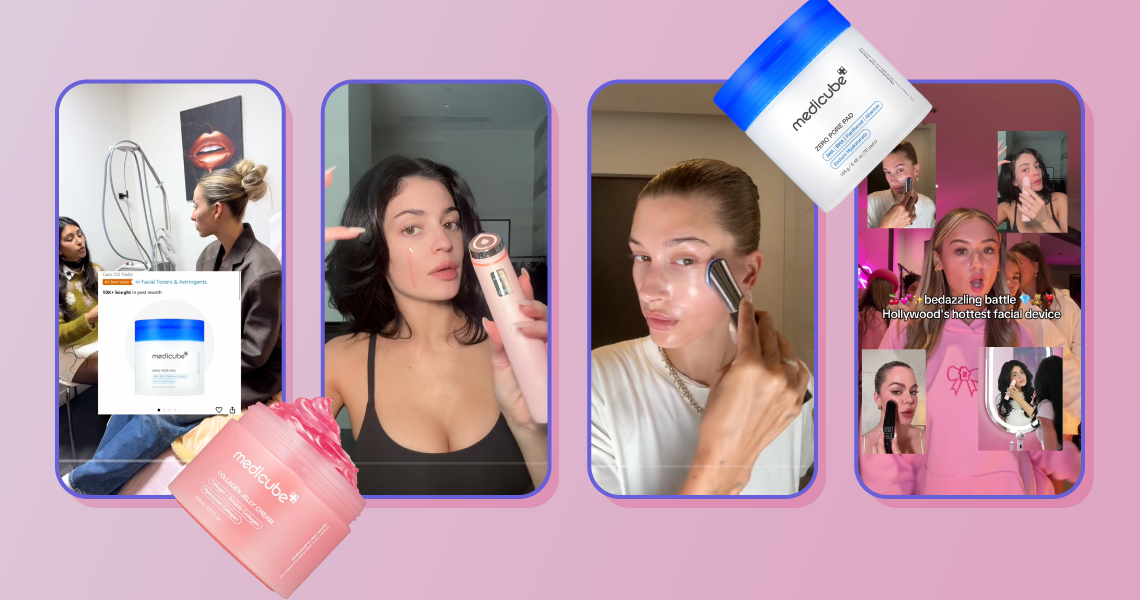
1. Partnering with mega-influencers and celebrities for mass awareness. Medicube has heavily invested in “mega-influencers” and celebrities to drive visibility and validate its products with broad audiences. It has benefitted from a mix of organic viral moments and high-profile paid partnerships.
- Investing in celebrity endorsements: In March 2025, the brand tapped Kylie Jenner for a paid partnership, which included Jenner attending a brand pop-up and posting a TikTok to her 57 million followers, which garnered 1.1 million likes. Additionally, in the same month. The brand appointed celebrity makeup artist Sir John (447,000 Instagram followers) as creative director to help expand the skin-care brand’s reach to makeup consumers.
- Building on viral validation: Buzz surrounding the brand was also fueled by mentions from top-tier creators like Hailey Bieber, whose organic, unseeded use of the brand’s Booster Pro device went viral, and Alix Earle, who recommended the brand following advice from her dermatologist.
- Reaping the rewards: Traackr data directly attributed Medicube’s surge in “brand vitality” to these high-profile mentions, which resulted in a 78% increase in new creators posting about the brand in April.
2. Engaging Gen Z and Gen Alpha through teen collectives. To plant a seed for brand loyalty and expand its reach, Medicube partnered with “GlowHouse,” a TikTok content collective comprised of 14 creators ages 14-19.
- Catering to younger demographics: Recognizing that teenagers have limited budgets, the brand focused this partnership on its “Mini Booster Pro,” a lower-priced device than the original model, at $96 versus $240.
- Leaning into experiential marketing: The activation, set in a Los Angeles home, involved the teen collective recording podcasts with a Medicube-branded backdrop, “bedazzling” Medicube devices and hosting hundreds of fellow influencers, who were gifted Medicube products.
- Establishing long-term awareness: Medicube acknowledged that this young demographic may not drive immediate high-volume sales. Its goal was instead to spike brand awareness and affinity with Gen Z and Gen Alpha consumers.
3. Leveraging platform-specific sales events and livestreams. Because Medicube currently lacks a brick-and-mortar retail presence in the U.S., it heavily relies on digital platforms to drive commerce.
- Taking part in a TikTok Super Brand Day: In March, Medicube became the first K-Beauty brand to collaborate with TikTok on a “Super Brand Day,” a dedicated sales event on the platform allowing it to introduce new products and offer deals and promotions.
- Creator-led livestreams: For the multi-day “Super Brand Day” sales event, the brand appointed veteran beauty creator Michelle Phan and its creative director, Sir John, to host livestreams, introduce new products and offer special promotions directly to consumers. To date, livestreaming has allowed the brand to convert engagement into direct-to-consumer sales on platforms including TikTok Shop and Amazon.
Currently, the influencer marketing landscape is being defined by a shift toward “full-funnel” strategies, where creators are integral to everything from brand awareness to direct sales.
The strategy relies on different tiers of creators for specific goals, ranging from celebrities like Khloé Kardashian for awareness, or “brand heat,” to affiliate creators for conversion. Brands are now tapping everyone from student athletes to internal, on-staff creators to micro- and nano-influencers. And many creators are now responsible for measurable outcomes rather than visibility alone.
That provides many opportunities for brands and influencers alike.
The rise of affiliate marketing
To take full advantage, many retailers have built their own affiliate networks in recent years. For example, Walmart manages “tens of thousands” of relationships through its creator platform, Sarah Henry, the company’s head of content, influencer and commerce, told Glossy.
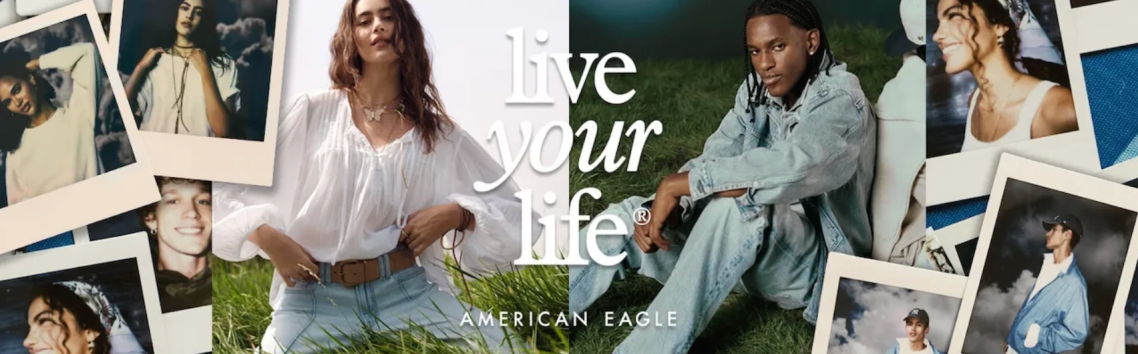
American Eagle, meanwhile, has launched the “Live Your Life” affiliate community, allowing brand fans and students to build their own “dedicated digital storefronts” of their favorite items. This program treats students not just as consumers, but as “business partners” who earn commissions on sales.
“I think we’re about to begin the next phase — an affiliate commerce space, where friends and ambassadors of the brand can also be our business partners,” said Craig Brommers, CMO of American Eagle. “Intuitively, it makes sense that, as we build trust in this community, there could be a real business opportunity here.”
As described by Krishna Subramanian, the co-founder and CEO of the end-to-end influencer marketing platform Captiv8, “Affiliate is becoming a core part of creator strategy, particularly for brands that want to scale full-funnel influence, from awareness to conversion, with measurable outcomes.”
In fact, many brands are shifting their budgets from Meta and Google to TikTok Shop creators, viewing them as “decentralized retail media networks,” Glossy’s Zofia Zwieglinska reported.
The power of nano-influencers
As for brands working with influencers with smaller followings, the beauty brand Cocokind, for example, is prioritizing “depth over scale” by engaging creators with as few as 200-300 followers who have highly engaged communities. According to the brand, this strategy worked to generate over $390,000 in earned media value from a single campaign that centered on mailed product samples.
And finally, some brands, including American Eagle, are positioning employees as creators, putting them in social posts to get in on trends quickly without the investment of a professional studio session.
“The reality is that content is currency, and you just need so much of it,” said Ashley Shapiro, svp of marketing at American Eagle.
As Kyle Dulay, founder of influencer marketplace Collabstr, tells it, brands are deliberately spreading budgets across more creators to test faster and reduce risk. “By working with 15, 20 or 30 creators, brands get more shots on goal,” he said. “They can see what angles are working and refine much faster than if they put their entire budget into one or two creators.”
And regardless of who they partner with, brands have learned to take a hands-off approach, when it comes to directing their content. Being too prescriptive kills brand performance, marketers at American Eagle, Walmart and Fabletics told Glossy. Instead, these companies provide influencers with data and content ideas, but allow the creators to use their own voices. American Eagle’s Brommers noted that Gen Z has a “very high B.S. radar,” making strict styling rules counterproductive.
According to Shapiro, American Eagle evaluates the success of all of its creator content using a “3 Rs” model, considering reach, or awareness; resonance, or engagement; and reaction, referring to traffic and conversion.
The impact of influencer saturation
Other shifts shaping the industry include market saturation. In the first quarter of 2025, the average number of likes on sponsored beauty posts dropped by 73% compared to the previous year, suggesting consumers may be growing tired of traditional sponsored beauty content, Glossy research shows. In 2024, sponsored beauty posts received their highest average likes in the second quarter, which coincides with major industry sales events like Sephora’s VIB sale and Ulta’s 21 Days of Beauty.
What’s more, more social media users are now working to become influencers, giving brands more options for partnerships. In turn, nearly 80% of all influencer partnerships now cost brands less than $300, according to Collabstr’s 2026 Influencer Marketing Report.
Of course, there’s also the rise of AI, which has provided marketers with new capabilities related to influencer marketing, including automating personalization and scaling content.
Creators’ changing priorities, tactics
Creators are adapting to industry shifts, with many pivoting from chasing virality to leaning on content formats and subject matter that consistently drive results. That includes leveraging “repeatable systems,” such as selling bundles or filming routine-based content.
Meanwhile, others — like Dana Hasson (3 million TikTok followers) — are prioritizing long-term brand partnerships, realizing that audiences trust creators who consistently use the products they promote. They’re prioritizing sustainable income and trust over one-off paychecks. “Working with the same brand is very powerful, in the sense that [your audience] trusts that you are really using the product,” Hasson told Glossy.
However, for influencer agencies, longer-term partnerships are falling out of favor: With the pace of trends and content moving so quickly, it makes more sense and is more “fair” for contracts to be shorter, with the option to extend based on performance, Nord said. “The fact that your content is performing today is absolutely no guarantee that it will be performing well in six months,” Nord said. “It’s not always [the creator’s] fault, but we need to make sure we’re working with the most effective people.”
In addition, influencers are becoming more selective about their brand partners — vetting for values and product efficacy — to protect their credibility. For example, Nicolette Mason (232,000 Instagram followers), a long-time fashion and lifestyle creator, said she ensures potential brand partners align with her values, including by reviewing a brand’s inclusion practices, ensuring diversity in the influencers they work with. And educational creator Yung prioritizes substantiating claims before signing deals — Yung required a deep dive into Pantene’s clinical studies before agreeing to partner with the brand, aiming to avoid “gimmicky” endorsements, she told Glossy.
Using all the tools in their toolkit to drive engagement, rather than relying on organic buzz, is also giving influencers a competitive advantage. For example, asking followers to comment on a specific keyword to receive information has proven effective, generating 43.5 times more comments in Q1 2024 compared to posts without this call to action.
On that note, creators are also taking advantage of AI tools, like CapCut and ChatGPT, to handle the high volume of content now required to be successful — they can now automate editing and scripting, and enjoy lower production costs. But, at the same time, they’re increasingly playing up their “realness,” as AI-generated content floods social platforms.
Spotlight: The NIL opportunity: How top brands are tapping college athletes
Brands are aggressively integrating college athletes and students into their marketing hierarchies, viewing them not as passive billboards but as active creative partners, designers and “decentralized retail media networks.” They’re also increasingly favoring college athletes over professional stars due to their “cultural resonance,” affordability and inherent storytelling ability. The market for Name, Image and Likeness (NIL) partnerships for student-athletes totaled $1.67 billion for the 2024-2025 season and is projected to exceed $2 billion for the 2025-2026 season.
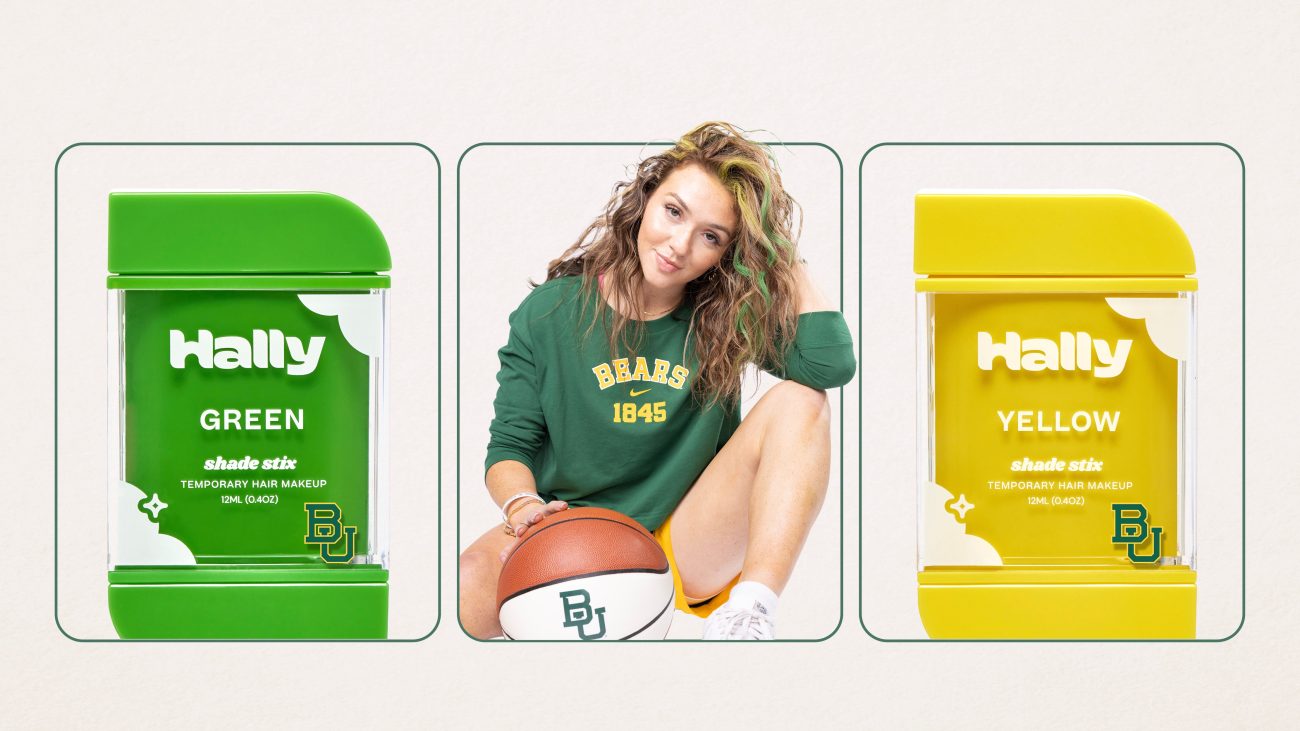
The following breaks down the college-athlete opportunities brands are embracing:
- Co-designing and providing creative input: Brands are moving beyond simple endorsement deals to involve athletes in product creation. For the first time, Hollister recently involved student-athletes in the design process for a collection of over 130 pieces. The brand partnered with six college football players, including Colin Simmons from the University of Texas and Julian Humphrey from Texas A&M, to co-design merchandise that reflects their individual teams.
- Regional rivalries: Brands are capitalizing on the intense loyalty of college sports fans. Hollister’s campaign explicitly paired players from rival schools — such as Ohio State and Michigan — to model “dueling merchandise” during the final month of the regular football season.
- Cost-efficiency and scale: Working with student-athletes allows brands to stretch their budgets. While professional athlete sponsorships can cost millions, the average student-athlete sponsorship costs “tens of thousands of dollars,” allowing brands to tap into “untapped talents”. While only 17% of Division 1 athletes currently have NIL deals, 65% are interested in signing them.
- Authenticity and relatability: American Eagle CMO Craig Brommers said student-athletes are “super attractive” to brands because they possess a “realness” that professionals may lack; they are actively going to school and are involved in their communities, and they’re often viewed as the “natural influencers on their campuses.”
- Investing in the future: Major brands like New Balance and Blenders Eyewear are expanding their rosters of college athlete partners; Blenders’ founder even donated $5 million to San Diego State University’s basketball program to support NIL options.
To remain competitive in a saturating market, influencers and creators are moving away from relying solely on viral moments and one-off brand deals. Instead, Glossy’s influencer sources indicate they are building sustainable business models by launching their own products, expanding to new platforms like Substack and Pinterest, and treating content creation as a repeatable sales system.
1. Diversifying revenue streams beyond brand deals
Creators are increasingly establishing themselves as independent entrepreneurs to reduce reliance on volatile social media algorithms and single sponsorships.
That includes launching owned brands and products to capture direct revenue. For example, baking and beauty creator Hasson launched a food brand, Homemadeish, which debuted with a cookie mix. Others are creating digital products: Beauty creator Zahava Ben-Haim (@makeup2themaxx; 141,000 TikTok followers) has monetized her skills by designing custom TikTok filters for major brands like Rare Beauty, Milk Makeup and L’Occitane.
Meanwhile, other creators are moving toward affiliate models where they function as “business partners” rather than just advertisers. In fact, some creators are treating affiliate marketing as a primary career path, with select brands offering training on how to earn commissions effectively.
2. Diversifying platforms in the name of stability
Recognizing the risks of being “chronically online” or dependent on a single app, creators are expanding their digital footprint.
Some are expanding their focus to Substack. For example, fashion creator Mason launched a Substack newsletter called “Loose Leaf Tea” to expand and strengthen her direct audience relationships. Many marketers now view Substack as a “hot word” because it offers highly engaged, paying communities and enables long-form storytelling that isn’t possible in 3-5-second videos.
Likewise, creators including Hasson are expanding their content distribution to YouTube to produce longer-lasting content, diversifying beyond TikTok’s short lifespan.
Other creators, meanwhile, are newly focused on Pinterest, knowing that many brands are upping their investments in the platform to reach aspirational, full-price customers. For their part, American Eagle executives cited the platform as a “bright spot” in their marketing mix where creators set the strategy.
Finally, to combat digital fatigue, many creators are taking their influence offline. Mason, for example, is focusing on “offline community building” by hosting get-togethers. “I think that being so chronically online hurts us as people,” she told Glossy.
3. Diversifying content formats, moving past virality as a goal
Successful creators are abandoning the “chase for virality” in favor of “repeatable systems” that drive consistent sales and engagement.
Top TikTok Shop creators like Sobol and Vasquez, for example, rely on proven formulas rather than focusing on platform trends. Sobol generates sales by recommending “bundles” of complementary products, while Vasquez focuses on product education. This approach has enabled Vasquez to generate cumulative sales of over $10 million.
Perhaps taking a cue from Vasquez, to differentiate themselves in a crowded beauty market, many creators are pivoting to deep educational content — and brands are seeing the value. For example, “skin-fluencer” Yung partnered with Pantene after studying the brand’s clinical trials and visiting its labs, helping the brand “get the science story out” to skeptical consumers.
4. Diversifying based on passions and values
Creators are also differentiating themselves by adhering to strict personal values and targeting niche communities.
For example, Mason implements “inclusion riders” before signing deals, reviewing a brand’s political spending and diversity practices to ensure they align with her values as an LGBTQ+, first-generation American woman.
And, overall, it seems 2026 is moving toward “hyper-specific, curated content” and away from “a hodgepodge of varying videos”. For example, the beauty brand Cocokind engages creators who post daily about beauty, prioritizing “depth of engagement over follower count”.
Social media best practices and norms are evolving in real-time, which continues to present a challenge. Ben-Haim, for example, wants to focus on storytelling in 2025, to avoid sounding like “an infomercial,” she said. But, she noted, audiences are demanding content that gets straight to the point. “They’re not interested in a whole to-do, explaining who you are, what you are. They just want information,” she said, adding, “‘Hi, my name is’ is kind of cringe.”
Deep Dive: The rise and role of affiliate marketing: How 3 brands are investing in the strategy
Brands are shifting their affiliate marketing strategies from simple bottom-of-the-funnel transactions to “full-funnel” influence models that prioritize authenticity, scale and creator education.
Below, how American Eagle, Walmart and Kitsch are leveraging affiliate marketing.
American Eagle
American Eagle has aggressively expanded its affiliate strategy by launching a proprietary program designed to turn fans and creators into business partners.
AE debuted its own affiliate community, which allows members — ranging from seasoned influencers to new creators — to build dedicated “digital storefronts” featuring their favorite items.
The brand views “anyone with a phone” as a potential creator, actively enlisting its own office employees to capture content and respond to trends quickly, rather than relying solely on professional shoots.
Walmart
Walmart has built a large infrastructure to manage affiliate relationships at scale, as it moves away from restrictive content guidelines to foster trust.
The retailer manages “tens of thousands” of affiliate relationships through its Walmart Creator platform, in addition to using third-party networks like LTK.
Walmart found that being too prescriptive “handcuffed” influencers and hurt performance. Instead, the company now provides partners with content ideas and trending data, gleaned from social listening, but allows them to speak entirely in their own voices.
To maximize the value of these partners, Walmart integrates creator content directly onto its e-commerce site to make the shopping experience feel more “fun” and inspire product discovery.
Kitsch
Hair-care brand Kitsch distinguishes its affiliate strategy by focusing on creator education and recruiting from its existing customer base.
Kitsch hosts training sessions for its community members to teach them how to successfully earn affiliate commissions — regardless of the brand — setting them up to potentially become breadwinners for their households.
The brand ensures authenticity by prioritizing affiliate partners who have previously tagged the brand organically in their content.
And it leverages these partners to provide “proof points” for consumers. For instance, it partnered with creators who have a variety of hair textures to demonstrate product efficacy as the brand expands into shampoo and conditioner.
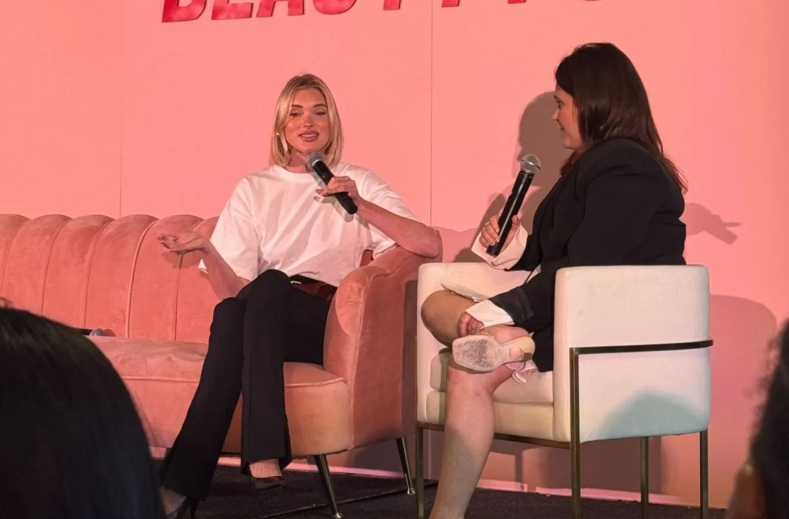
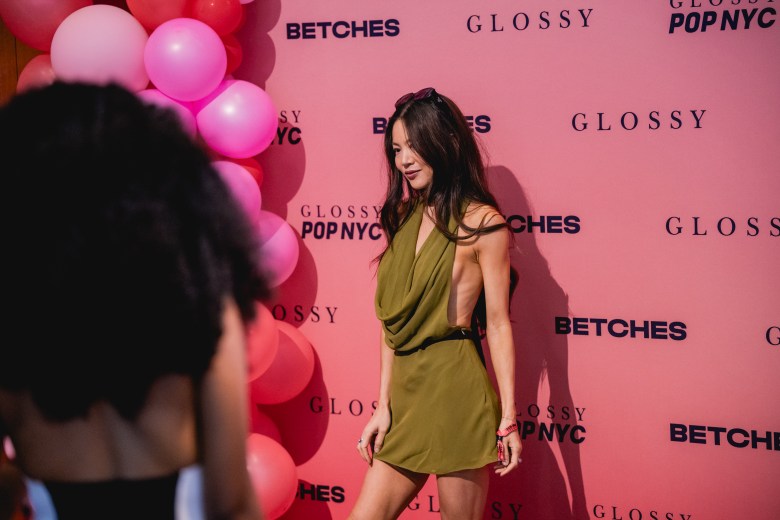
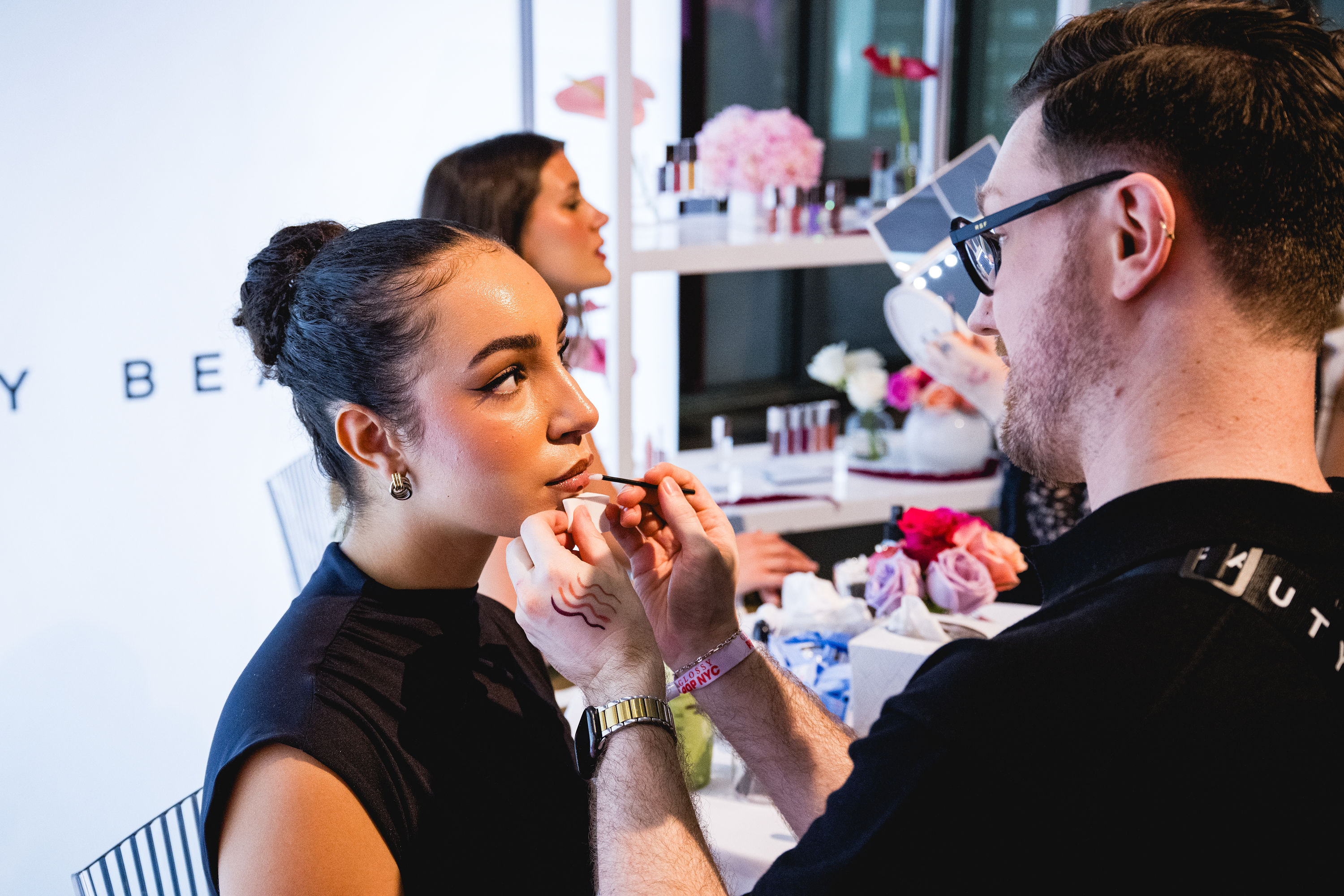
Influencers speaking at Glossy’s recent Pop NYC and Beauty Pop events shared their top tips for growing their creator careers.
“We all know our followers. I’m constantly analyzing [my 8.6 Instagram followers]. We take little polls, too. If you have a following on Instagram, you have a business mind already. [My advice is to] learn about your followers and hone in on what you believe in.” –Elsa Hosk, model and influencer-turned-founder of the Helsa fashion brand
“As a creator, it’s important to know that you are on the ground and have a touchpoint to the people who are going to be buying [the brand’s products]. Your connection to your audience is a power that companies want, and it’s a power companies don’t always have. So you have to trust your instincts [when you walk into boardrooms] and know you have the audience that [these companies] want to reach.” –Bailey McKnight, influencer and co-founder of Itk Skincare
“At the end of the day, I think, ‘I don’t work for those brands. I get to work with brands, which is great, but I feel like my audience gave me this job, so I kind of work for them. I’m here to review whatever they need.” –influencer Sarah Palmyra
“For all of my paid partnerships, every single one of them, there’s brand history — there’s a documented digital footprint of my relationship with the brand, since 2016 [when Instagram Stories] started. Building long-term relationships creates brand passion. It’s so important for me to know the formulas I’m talking about inside and out, whether it’s a paid partnership or an organic post. It’s also really important for my audience to believe what I say — that, after the hashtag #ad is over, [they] still see me using that product. … I’m not just trying to be a creator who blows up and goes viral. I’m trying to build an empire. I’m trying to build my forever.” –influencer Stephanie Valentine, aka Glamzilla