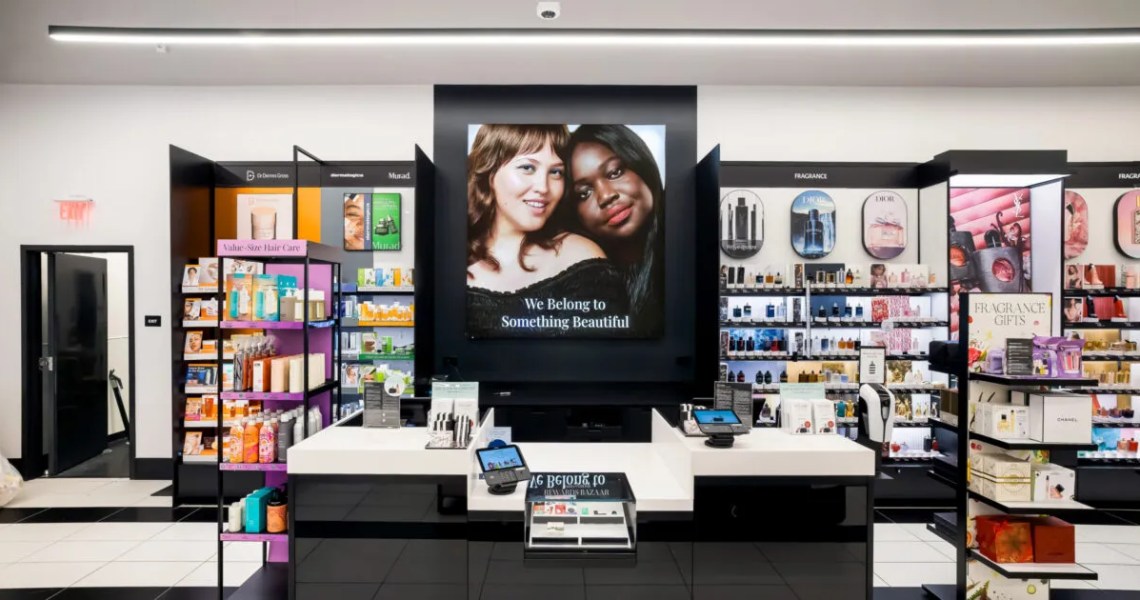
On an average afternoon at many Sephora locations, bright lights, thumping music and the buzz of chattering staff and customers are as much a part of the shopping experience as swatching lip glosses and picking up a new mascara. But for a few hours each week, the LVMH-owned retailer is now attempting to quiet things down.
In June, Sephora announced the global rollout of its “Quiet Hours” program. As part of the new initiative, participating stores across the globe will lower the volume of in-store music and adjust lighting during select hours in an effort to create a calmer atmosphere. Stores will also suspend events and let shoppers determine if they want assistance from sales associates during those periods.
With the Quiet Hours program, Sephora joins other major retailers in offering designated hours with reduced noise and lights to better suit the needs of neurodiverse shoppers. Walmart introduced a similar program in 2023, while Target’s sensory-friendly hours initiative dates back to 2016. Sephora first tested Quiet Hours in 2025 as a pilot program in 32 stores across eight markets; 80% of U.S. stores will now offer Quiet Hours with the expanded rollout.
Those initiatives represent a shift from traditional mass retail design that previously welcomed sensory overload. Abercrombie & Fitch was infamous in the early 2000s for pounding music and clouds of fragrance more akin to a nightclub than a clothing store. In today’s environment, however, retailers are grappling with what it means to be truly inclusive and accessible as an increasing number of consumers identify as neurodiverse.
“Back in the day, [stores were] like, ‘Turn the music up, the louder the better, pack in as many people as you can,’” said Paula Floyd, founder and CEO of retail agency Headkount.
During her time overseeing MAC stores in the ‘90s and early 2000s, Floyd recalls the makeup giant intentionally kept stores loud and buzzy to drive sales. “If the store was quiet and people were just standing around, it was extremely intimidating [for customers]. The focus is on you,” she said. “We literally had a guideline for all volumes in each [MAC] store.”
But the Covid-19 pandemic was a restart for many businesses; retailers began experimenting with initiatives like pre-opening shopping hours for vulnerable populations looking to avoid crowds. “That’s when I felt like retailers were paying more attention to the consumer, versus paying attention to the retailer’s needs,” said Floyd.
According to a 2024 YouGov poll, 19% of Americans identify as neurodivergent. According to CDC data published in 2025, autism prevalence among children in the U.S. increased from 1-in-150 in the year 2000 to 1-in-36 in 2020.
“The one thing Covid taught us is that it’s OK to slow down,” said Dr. Bonnie Mitchell, DBH, LPCC and clinical director at The Mental Health and Stabilization Center of Sacramento.
“And now that we have more people identifying as neurodivergent — meaning that they have PTSD, they have anxiety, they have fears — stores are starting to recognize the importance of these people who need this extra time, who need the dim lighting, who need the dimmer music.”
Other retailers are experimenting with inclusive design through more permanent changes. After receiving late-in-life diagnoses of ADHD and dyslexia, and ADHD and autism, respectively, husband and wife team Olly and Amelia Markeson co-founded Neurohaus in 2023 to help brands create more “neuroinclusive” store designs.
Neurohaus’s founders, whose clients include Versace, Pandora and Goodwill, say they want to reduce “triggers” while introducing “glimmers,” or elements that can stimulate the senses in a positive way. That includes introducing rounded as opposed to sharp lines and incorporating areas of personal and private space for shoppers and staff in otherwise crowded stores.
“The opportunity lies in creating things which are positively stimulating for that community, and for everybody,” said Olly Markeson. “As opposed to this sense that the neurodivergent community kind of needs things to be lesser. There’s no need for things to be lesser. There’s just a need for them to be recalibrated and be intentionally considered in the design to be positively stimulating.”
Those changes can benefit not only consumers, but also retail employees.
“Among retail staff, we hypothesize that [neurodiversity] strongly overindexes,” said Olly Markeson. “Every day is different, and you’re on your feet, and it can be very positively stimulating. And you don’t need traditional formal higher education qualifications for entry into retail, and so for lots of reasons, you get a lot more neurodivergent staff.”
While buzzy environments have traditionally been associated with higher activity and subsequently higher sales, today’s customers don’t need to brave a crowded mall just to make a purchase. Online giants like Amazon and TikTok Shop are attracting more beauty brands and consumers thanks to their frictionless shopping experiences, putting pressure on brick-and-mortar chains like Sephora or Ulta to lure shoppers in-store.
“Especially as retail is going to be more experiential and focused on those moments of connection, with in-person moments of connection, [neuroinclusivity] is all the more important,” said Amelia Markeson.
Floyd believes Sephora’s Quiet Hours may attract more than just the neurodivergent shopper, but also help the store cater to older shoppers — an increasingly valuable beauty consumer. In 2024, Sephora made headlines for its popularity among tween consumers, whom some blamed for creating a chaotic shopping experience. In recent years, Sephora has introduced brands targeting multi-generational consumers, like pre-teen skin-care line Evereden and 40-plus make-up brand Sarah Creal.
“There’s a huge clientele there,” said Floyd. “There are grandmothers and preteens shopping together.”
But Sephora’s current Quiet Hours program remains limited in scope. At many locations, Quiet Hours are only offered during the first hour of opening on Tuesdays and Saturdays. On social media forums like Reddit and TikTok, some users have criticized the program as inaccessible due to its limited hours. Sephora denied Glossy’s request for comment.
The question of neuroinclusivity is still a growing topic in retail, but Olly and Amelia Markeson noted that major brands like Versace can help set a standard for inclusivity that trickles down across the industry. Future legislation around accessibility may also address neurodiversity, as disability discrimination complaints from neurodivergent workers are on the rise.
“All stores have to be wheelchair-friendly, right? Why can’t they be emotionally friendly, too?” said Dr. Mitchell.