The K-beauty craze and tween beauty market aren’t going away anytime soon — if you go by a new crop of beauty founders, that is. On Monday, beauty incubator Maesa announced the 2027 class for its Maesa Magic Incubator program, which provides grants and mentorship to three early-stage beauty entrepreneurs.
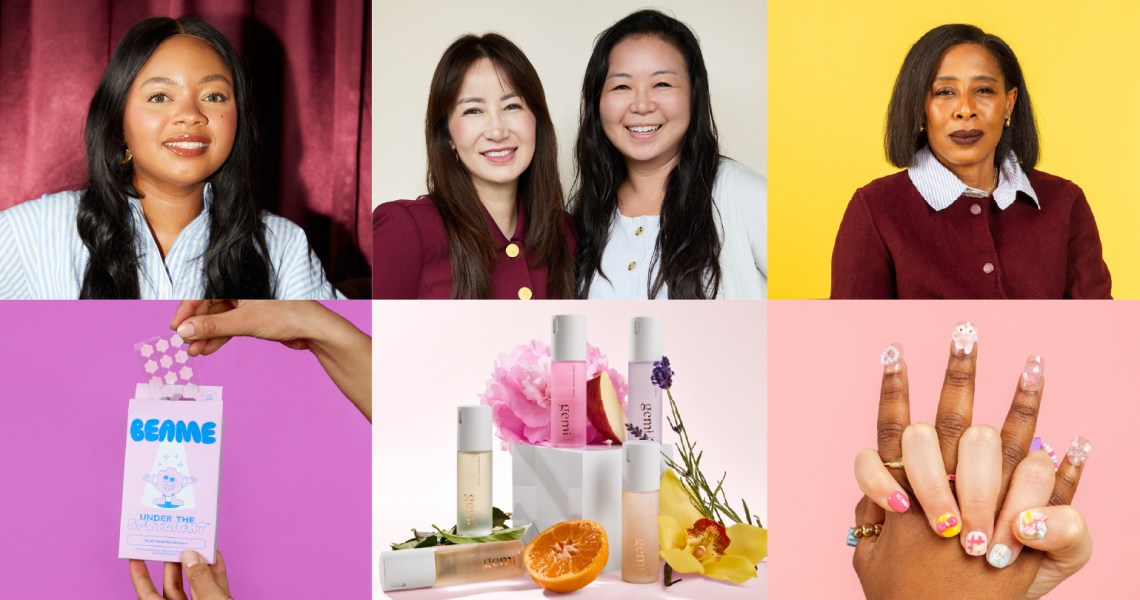
The class of 2027 includes Eniye Okah, whose brand Beame makes UV-detection face patches to let users know when to reapply their SPF; Monique Claiborne Cardwell, founder of the kid- and tween-targeted press-on nail brand Sugar Standard; and Hau Yeung and Erin Choi, founders of K-beauty hand-care brand Gemi. Those participants will each receive a $35,000 grant and mentorship from industry leaders, with the program concluding in January.
“Identifying an opportunity and building a scalable beauty company are very different things,” said Gemi founder Erin Choi. “Programs like Maesa Magic bridge that gap by pairing the ideas and agility of emerging founders with deep industry expertise, helping them make smarter decisions when they matter most.”
Maesa, whose portfolio includes the likes of affordable fragrance brand Fine’ry and Ashley Tisdale-backed Being Frenshe, launched the program in 2023 with the goal of aiding beauty founders from underrepresented communities. To qualify for the program, founders must have launched their brands but not exceed $1 million in revenue.
“Given that we are an incubator ourselves and we create new brands, we had a genuine right to make an impact in this space. And the more we saw, the more we realized that the beauty industry, the entrepreneurs in the beauty industry, don’t really represent the country,” said Maesa CEO Piyush Jain. “White men are dramatically overrepresented in that category. There are beauty entrepreneurs who are women, who are people of color, who just don’t have the right representation.”
Past participants include Tonal Cosmetics founder Christal Alert, who has also received backing from Glossier and participated in Sephora’s accelerator program, and Aziza El Wanni, whose hair-care brand The Potion Studio launched at Ulta Beauty in August. This year’s advisory board includes Starface co-founder Brian Bordainick; Liraz Evenor, managing director at Bain Capital Private Equity Portfolio Group; and The Black Beauty Club founder Tomi Talabi, alongside Maesa executives.
Maesa is not the only beauty company to offer funding to early-stage entrepreneurs. The Sephora Accelerate Program launched in 2016 and was revamped in 2021 to focus on product-based brands from founders of color. Ulta launched its MUSE Accelerator in 2022 to provide early-stage support to founders.
Maesa declined to share exactly how many applications it received for the class of 2027, but described it as in the hundreds.
Jain said Maesa’s program is distinct for its customizable format. Participants will choose “major” and “minor” topics to focus on during their program, with mentors offering guidance tailored to their needs. Alongside individualized mentorship, the founders will also meet at Harvard in October for three days of meetings with industry experts and travel to the trade show Cosmoprof in January.
“There are many incubator programs which have just a standard methodology. They tell you exactly what they want to tell you,” said Jain. “Personally, my view is that that’s not really helpful when you’re the recipient. Because you’re not going to school to learn entrepreneurship. You’re attending a program like this to try and better your idea.”
Eniye Okah, whose Beame brand is already sold at European online beauty store Lookfantastic, said Maesa’s funding and mentorship will help her as she prepares to launch her brand in a major U.S. retailer.
“The best incubators help founders bridge the gap between launching a great product and building a business capable of sustaining it. Beauty doesn’t need more brands built for a moment,” said Okah.
Nail care and kids’ beauty have emerged as major trends in the industry; Sugar Standard founder Monique Claiborne Cardwell aims to bridge those categories with elevated options designed for kids and tweens looking for press-on nails.
“We’ve already brought Sugar Standard to market, and Maesa Magic can help us take what we’ve built and scale it into a major beauty brand that defines the junior nail category,” she said.
While Maesa is known for incubating brands, Jain said it does not provide investment to former participants in order to separate its business interests from the program. But he believes the company benefits long term from the program by offering its employees a sense of purpose.
“I genuinely believe that companies with purpose will thrive. I think our consumers increasingly want us to have a purpose beyond selling a product and trying to create revenue and profit,” he said. “Our employees are so engaged because of the program. They take great pride in being able to contribute, being able to share their knowledge and being able to see the success of some entrepreneurs who go through the program.”
But Maesa does hope that success will mean future profits for its participants.
“Hopefully in 10 years from now, there’ll be a brand that breaks the $100 million barrier, and they went through the program at some point,” said Jain.