Spurred by tariffs, inflation and job insecurity, 2025 was a year of consumers pulling back on discretionary spending and redefining value. According to McKinsey’s State of Beauty 2025 report, 54% of executives see restricted spending as the greatest current risk to industry growth. It’s a shift that executives not only recognized but also actively recalibrated their strategies around in 2025.
“Inflationary price increases have been plaguing us since as early as about 2022. We now have the additional tariff-induced price increases. And even more recently, in the last few months or so, we’ve started to see a tough job market. All of these things have collectively driven the consumer to pull back their spend,” said Stacey Ramstedt, CMO at Church & Dwight.
McKinsey’s report, published in July, posed the question of whether the “white-hot” $450 billion beauty industry was “finally cooling.” Larissa Jensen, Circana’s svp and global beauty industry advisor, pointed out that, though consumer sentiment has indeed been struggling, beauty growth has not halted. Circana’s latest data, from January 2025 through September 2025, shows that prestige market sales increased 4% to $24.1 billion, and units sold also saw a 4% boost year over year. Sales in the mass channel increased 5% to $54.5 billion, and units sold grew 2%.
According to Jensen, beauty consumers remain inclined to treat themselves. See: the famous “lipstick index,” showing that sales of affordable luxury items, like lipstick, don’t slow down during a recession, even when consumers pull back on nearly everything else. “Even a lip gloss purchased at Target is a treat mindset, right? It’s a way of making yourself feel better,” Jensen said. The McKinsey report noted that consumers are assessing products with greater scrutiny, and, as such, some categories are deemed more splurge-worthy than others. For example, serums were viewed as more valuable than cleansers or lip balms.
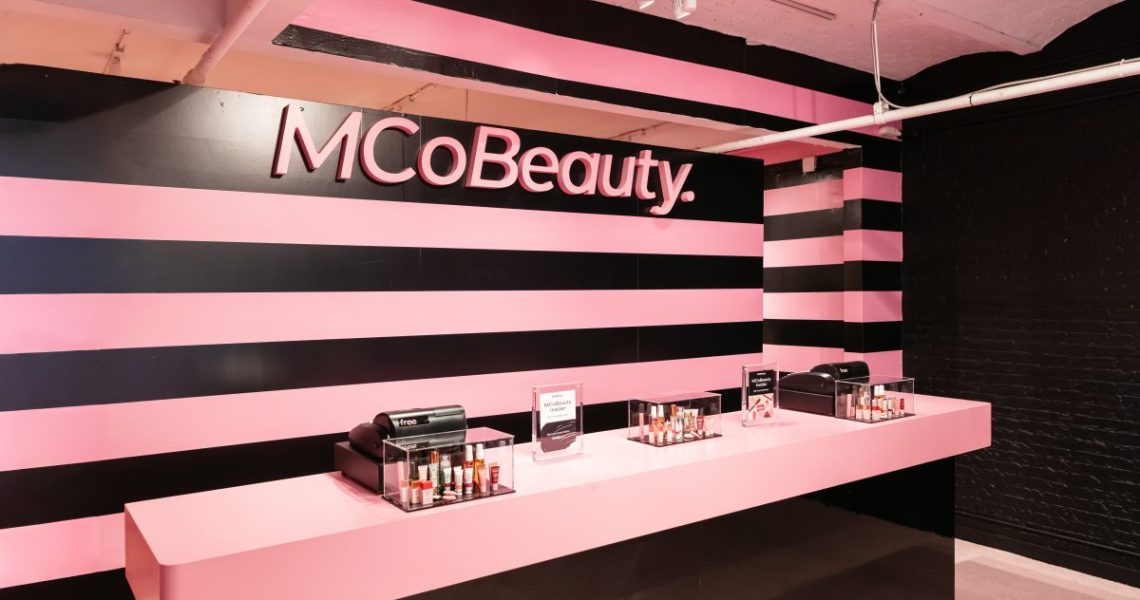
This new eye on value is not going anywhere. “Consumers are going to be more value-driven in 2026,” Meridith Rojas, CMO at MCo Beauty North America, told Glossy. MCo Beauty, which unabashedly dupes more expensive products, has allowed consumers to feel comfortable making more affordable choices. “Dupes used to be considered, like, ‘Fine, OK, good enough.’ But now, [consumers are seeing that] what’s being brought to market is [high] quality. The value is abundantly clear,” Rojas said.
In a PWC analysis, Gen Z reported willingness to trade down, or shop dupes. PWC wrote, “Retailers once wary of private labels and dupes can now lean into them, not as fallback options but as creative options. Gen Z doesn’t see ‘affordable’ as generic. They see it as smart.”
For Ramstedt, this means leaning into transparency. This is important, she said, because of “how easy it is to price-compare online.”
“AI search is putting it all on steroids and making it very easy for consumers of all ages — but it’s definitely being driven by Gen Z — to do price comparisons,” she said, adding, “Consumers are willing to buy products, but they want to know what they’re getting, and they’ll tell you whether or not they think they’re getting enough of a value.”
To ensure it is communicated that Church & Dwight products deliver said value, Ramstedt took action. Beginning in the spring, she began to emphasize value in the ad copy and brand messaging across the brands she works on, which include Hero, Nair, Batiste and Arm & Hammer, among many others. “[We are] meeting consumers in the moment,” Ramstedt said, noting that one of her first moves as CMO was to shift 40% of Church & Dwight’s paid media to creative spots focused on “how our products are worth the prices you pay in store.” For example, with Nair, the company emphasized its ability to provide an alternative to the salon, at a time when consumers may be pulling back on professional beauty expenses. The change in marketing priorities has paid off — the value-focused paid media saw a 53% increase in click-through rate.
Ramstedt and Rojas don’t see consumers’ value-driven shopping changing any time soon. “Consumers do one of two things in an environment where they are cautious about spending: They either trade down to lower-priced options, or they trade up to the value buy,” such as a larger, economy-sized version of a product they already use, Ramstedt said. At Church & Dwight, this means offering a variety of cost and size options, including value sizes of Hero pimple patches that let people spend more on a product they already know they love, as well as smaller packs at lower prices that allow for trial.
Fragrance has been a particularly interesting sector, when it comes to value-driven shopping. On the one hand, according to Circana, prestige fragrance sales increased 6% to $5.9 billion in the third quarter of 2025. Simultaneously, the mass sector of the fragrance category grew, too — fragrance was the fastest-growing category in the mass market, up 17%, based on dollar sales, and up double digits on a unit basis. Jensen called the very existence of mass fragrance beyond celebrity brands a newer phenomenon.
Dating back to the tail end of 2023, she said, “We started to see … an interesting dichotomy in fragrance: Luxury continued to do well, while, at the same time, we started to see a surge in [the launch of] value products in fragrance — products like body sprays, which have a significantly lower price point. Minis have become very popular, as well. [These brands] are very clearly looking to the luxury market for inspiration, in terms of packaging, scent, etc., and it’s changing the way mass fragrance is perceived. It’s not necessarily that you’re compromising by buying a luxe-inspired fragrance.” She noted brands that dupe popular, expensive fragrances, like Fine’ry, MCo Beauty and Dossier.
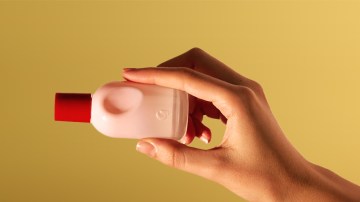
MCo Beauty’s fragrance category is performing so well, it will expand significantly at the start of 2026. It currently offers a collection of $11.99 body sprays — that will change and expand in the coming year, in response to its community’s embrace of the current offering.
Though experts don’t seem particularly optimistic about a booming economy in the new year, they also agree that the lipstick index — or at least some version of it — continues to endure. “[The lipstick index] is not dead. It’s not just lipstick, though; we need to broaden our perspective, because it’s bigger than lipstick. … [You could call it] the beauty index,” Jensen said, adding that it continues to be particularly strong when sentiment is down.
“When you feel down, you want to give yourself a boost,” she said, “You [want to] feel better about yourself? You buy yourself a lipstick or a lip gloss, or a tinted moisturizer.”