On Thursday, the e-commerce and branding agency Front Row announced the opening of a new Seoul office to service K-beauty brands aiming to grow their presence in the U.S. market.
Headed by Jinny Kim, Front Row’s svp Korea, the Seoul office will work with local brands to offer services such as scaling their presence on Amazon and TikTok Shop, creating localized content, and optimizing their AI presence. It joins Front Row’s five existing outposts across the globe in New York City, San Diego, Hamburg, Bratislava and Amsterdam. Front Row was established in 2025 by combining eight existing agencies. Its clients include beauty brands such as Glossier, Sol de Janeiro and K18.
“This current resurgence [of K-beauty] feels different because there’s an enormous amount of power behind the brands as they enter into the [U.S.] market. I think compared to last time, there are more ways to win — and I would also say the opposite of that is there are more ways to lose,” said Christopher Skinner, chief revenue officer of Front Row.
“This is not just, ‘Hey, let’s take Korean brands and put them on Amazon,’” he added. “This is: How can we preserve the soul and essence of these brands as they were born in Korea, regionalize messaging where appropriate, and then stand up the digital growth and demand-gen needs to actually garner awareness and attention?”
According to NielsenIQ, U.S. K-beauty sales reached $2.8 billion in early 2026 — a 48% year-over-year jump. The category has had particular resonance on Amazon, which, according to The Korea Herald, sells roughly 44% of all Korean beauty products sold in the U.S.
According to data provided by Front Row, Korean facial skin-care sales on Amazon reached $818 million in the first half of 2026, an 80% year-over-year increase, compared with 27% growth in the facial skin-care category overall. Korean skin-care brand Medicube was the No. 1 beauty brand during Amazon’s October Prime Days, with estimated sales of $33 million.
With that appetite, indie Korean brands have more opportunities to grow by targeting U.S. and European consumers.
“LG and Amorepacific, those big giant brands, they are of course very active in both the domestic market and international markets. But for the indie brands, like the niche brands, it is really different,” said Jinny Kim, Front Row’s svp Korea. “The local market, domestic market, is so competitive, and there are lots of international global brands and big brands here in Korea. So they see more chances out of the Korean market, like the U.S. and Europe.”
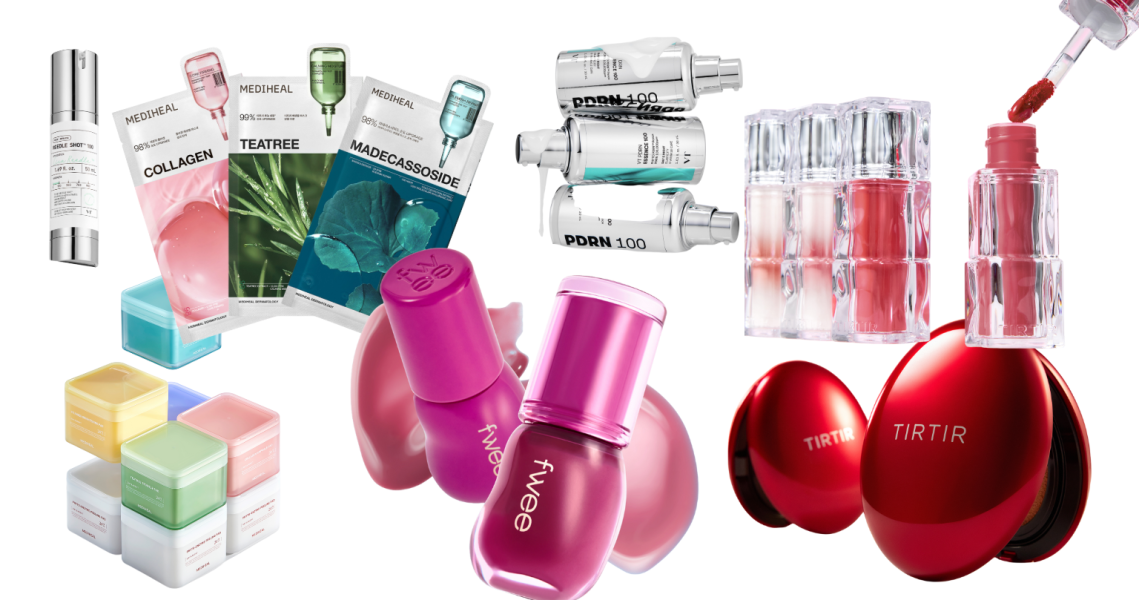
Korean brands have often excelled at delivering innovative products to international consumers and generating hype around novel ingredients like PDRN. Kim believes Front Row can help those brands establish more longevity with U.S. consumers.
“The biggest challenge has been turning this short-term consumer excitement into sustainable, profitable growth,” said Kim. “So many brands struggle with building lasting brand awareness and retaining customers and scaling, while managing rising marketing costs and competition.”
When K-beauty first took off in the U.S. in the 2010s, the trend was largely concentrated on skin care with ingredients and products that were new to American consumers like snail mucin and sheet masks. In its second wave, U.S. appetites for Korean beauty have expanded to include everything from hair care and fragrance to wellness.
“I see beauty and wellness becoming more interconnected, driven by consumers taking a more holistic view of how they look and how they feel,” said Kim. “But I think [Korean brands] expanding into wellness requires careful attention with product claims, regulatory requirements and consumer trust, especially in the U.S. and European markets.”
American consumers of K-beauty have long been accustomed to buying beauty products online. But Korean brands are increasingly available in stores as U.S. brick-and-mortar retailers capitalize on stateside demand for K-beauty. In August, Sephora debuted a selection of Korean beauty brands curated by Seoul-based retailer Olive Young across 500 U.S. stores. Target and Ulta have also upped their K-beauty offerings with brands like Haruharu Wonder and Rom&nd.
Front Row is confident that the growing presence of K-beauty in brick-and-mortar retailers won’t deter customers from shopping on digital platforms like Amazon or TikTok Shop.
“We know that consumers are standing in physical retail on their phone. We know that Amazon, out of all of [the retailers investing in K-beauty], has the most trusted and well-revered review platform,” said Skinner. “So even if they’re standing in one of those retailers, Amazon is a part of that journey, whether the retailer wants that or not.”