Typically, when brands launch a collaboration, it’s to bank on the marketability and audience of their collaborator. That’s the play whenever a brand works with a big-name celebrity, an iconic brand or an acclaimed designer.
For Oribe’s annual holiday collaboration, the goal is different. The hair-care brand intentionally seeks out brilliant, but less well-known artists to design its annual holiday gift set. The idea is that the thrill of discovering something you’d never seen before can be just as powerful as the thrill of recognizing something you already knew.
These collaborations are central to Oribe’s holiday strategy, according to Oribe’s co-founder and president, Daniel Kaner, and vp of global marketing and creative, Diana LaMura-Scarrone. They serve as both a brand-building tool to position Oribe as luxury and artisanal and a sales driver, with Oribe partnering with its best-performing salons to highlight the collab.
The holiday collection typically drives most of Oribe’s fourth-quarter sales, though core products also tend to sell better heading into the holidays. The sets range in price from small sets at around $42 to the flagship set at $310.
Kaner said the overall strategy stays the same each year, even if the details change. Oribe works with a skilled artist from a creative medium outside of hair care to produce a series of gift sets. Previous collaborators have included a Japanese calligrapher, a Kenyan textile artist and a French tapestry artist.
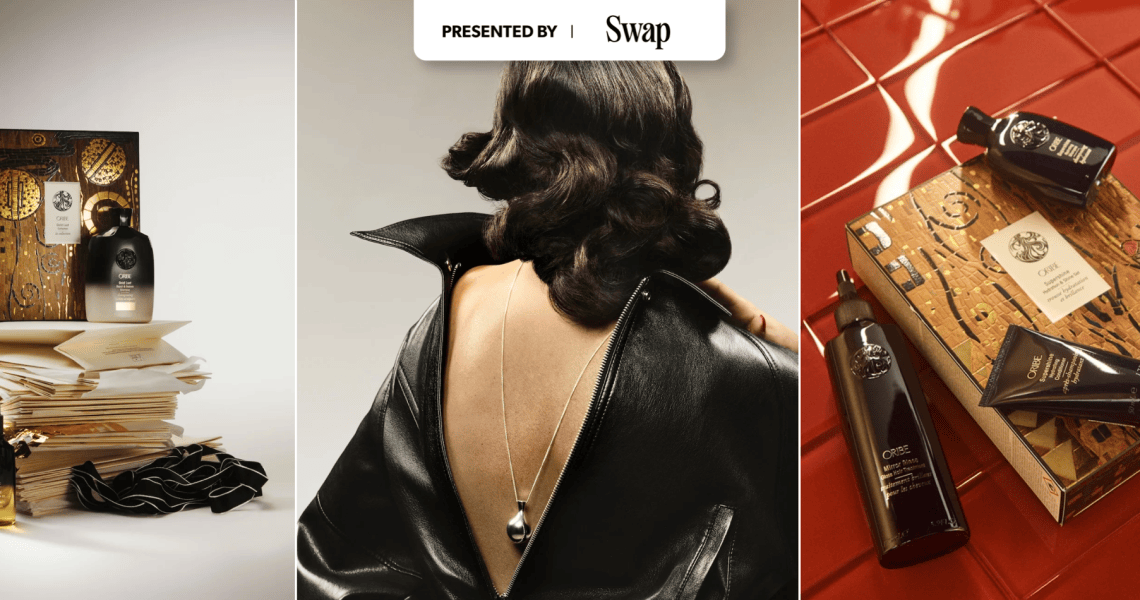
This year, Oribe collaborated with Mathilde Herrero, a mosaicist, who designed a gift set inspired by Byzantine geometry and Art Nouveau. The collection launched last month as the holiday season kicked off.
For Kaner, not only do these collaborations give the Oribe customer something new, but bringing in outside artists from other mediums also gives Oribe’s product team a welcome jolt of inspiration.
“We try to work in a very horizontal collaborative way as an organization,” Kaner said. “The holiday collaboration is a way to develop and play with our own art and craft, and it becomes a form of leadership and development of the collaborative spirit. Everyone in the company gets involved in creating the holiday collaboration. It’s really good for the team.”
The marketing campaigns for these collaborations typically highlight the artist and showcase the handmade element of the art that went into the collaboration. For example, Herrero created a real mosaic of gold and plaster, which serves as the product packaging design. The accompanying campaign shows how Herrero drew the design, mixed the material and hand-placed every tile to create it.
LaMura-Scarrone specifically called out this strategy as a way to consciously position the brand against the rise of generative AI and the lack of human touch in both product and marketing these days. Oribe does not use generative AI for any creative product, she said.
“A lot of brands are doing artist collabs right now in reaction to AI,” she said. “It’s a big trend in beauty and fashion, and this is just another stake in the ground in support of human-made art. That feels more meaningful than ever right now.”
The overall hope is that these collaborations will both establish brand identity for new customers and reinforce it for existing customers.
Herrero’s art also serves as more than inspiration for the gift set’s design. For the first time, Oribe is using the original art piece from the collaboration as an in-store display. While Oribe has no physical store of its own, the team shipped the original mosaic created by Herrero to Flaunt Salon in Oklahoma, a salon run by hairstylist Faith Mouse.
While Oribe sells DTC online and wholesale through partners like Nordstrom, salons were the brand’s first sales channel and still drive a large percentage of the brand’s revenue. Right now, sales are fairly evenly split between online DTC, wholesale and salon sales channels, but wholesale and e-commerce are the fastest-growing channels. Flaunt is also one of Oribe’s best-performing salons, in terms of sales, according to LaMura-Scarrone. Oribe’s revenue was around $170 million when it was acquired by Kao Corporation in 2017, and it has doubled since then, according to the brand.
“We’ve always worked with our salons on their displays, but this is the first time we’re actually shipping them the art,” LaMura-Scarrone said. “That’s how important salon is to us. Faith is actually one of our top sales drivers, too.”
Beauty shoppers plan to spend more, prioritize value and treat themselves this holiday
Beauty shoppers don’t plan to hold back this holiday season, according to a new survey by tech consultancy Accenture.
In a survey of 1,393 beauty and personal care shoppers in the U.S., 44% of Gen Zers and 46% of millennials said they expect to spend more during the holidays than last year. Fifty-three percent cited higher prices as the reason, while 49% said they want to treat themselves. Millennials said they expect to spend an average of $1,088, while Gen Z said $1,005 — both above the $885 average among beauty and personal care shoppers.
But that doesn’t mean they won’t be looking for value. Forty-eight percent of beauty and personal care shoppers said they plan to shop for holiday gifts at mass merchants and warehouse clubs, up from 34% in 2025, and 38% said they plan to shop at discount stores, up from 34%.
Beauty shoppers said they plan to split their holiday shopping almost evenly between online (52%) and in-store (48%), with even active generative AI users expecting 45% of their holiday shopping to take place in stores.
Overall, shoppers said they plan to dedicate more of their holiday budget to beauty and personal care products, with the category moving from No. 6 to No. 5 in a ranking of planned holiday purchases.
Within a broader sample of 4,048 U.S. shoppers, a respondent qualified as a beauty and personal care shopper if they selected “beauty and personal care” as one of the product categories they planned to purchase during the holiday shopping season. –Jill Manoff
Holiday news to know
- Walmart’s holiday sales events will total 14 days this season, up from 10 in 2025. According to its announcement on Monday, early Black Friday deals will run November 12-15, the core Black Friday sale will run November 23-29, and Cyber Monday offers will be available November 30 to December 2. The announcement noted that thousands of gifts will be available for less than $20, and Walmart+ members will receive early access to specific deals.
- Target, meanwhile, will kick things off with a three-day Early Black Friday Sale, running November 5- 7, followed by limited-time offers dropping every weekend throughout the holidays. Its Deal of the Day program will return on November 1 and run through Christmas Eve.
- Fashion accessories are set to be a popular gifting item, with 22% of U.S. TikTok users planning to shop for accessories, including jewelry, this Black Friday and Cyber Monday, according to TikTok — and they may use the platform to do so. U.S. TikTok searches for “gold jewelry” surged 1,134% month over month in September, while searches for “opal rings” jumped 825%, and searches for #friendshipbracelet increased 120%. –Jill Manoff