This week, I checked in on the ongoing Y2K revival as consumers continue to look back on the good, the bad and the ugly of the era. Additionally, another children’s beauty brand hits the market — this time with a sports tie-in — and a major slice of the U.K. beauty market gets new ownership.
The ongoing Y2K revival — and its cultural reckoning
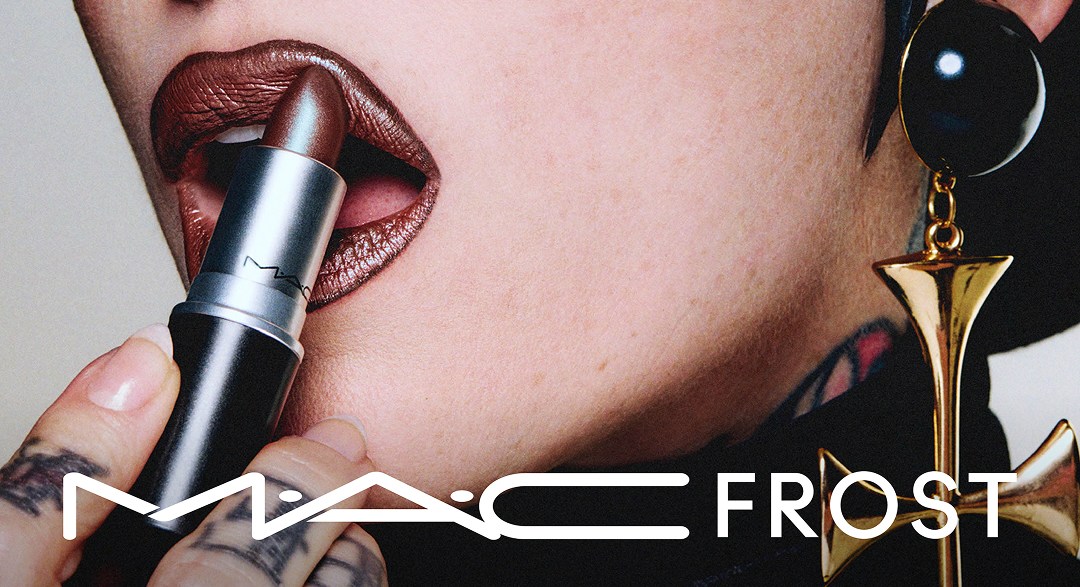
MAC’s classic Spanish Fly lipstick — a medium brown with frosty blue glitter — didn’t exactly translate to the clean girl era of beauty. But makeup consumers might be ready to bring a little glitter back into their lives: On Thursday, MAC reintroduced its Frost lipstick formula with both new shades and revived classics like Spanish Fly, with a campaign featuring beauty creator and collector Erin Parsons.
“Beauty is a reflection of what is going on in culture at any given time,” said Teny Kureghian, global head of product development at MAC Cosmetics. “Y2K was a very experimental, very creative, very expressionistic time. … You had this idea of futurism and what comes next. And I think we’re a little bit there again.”
The updated Frost lipstick comes amid an ongoing wave of Y2K nostalgia across fashion and beauty. While promoting “The Love Hypothesis,” Lili Reinhart has gone on a tour of early 2000s fashion by wearing looks inspired by Sandra Bullock in “Miss Congeniality” and Jennifer Garner in “13 Going on 30.” Chinese beauty brand Little Ondine launched a summer collaboration with Tamagotchi that includes makeup palettes designed to look like clamshell phones. In recent years, brands have tapped early-2000s starlets from Paris Hilton to Hilary Duff to imbue new products with a sense of nostalgia.
Many of those products and outfits offer a playful look at the turn of the 21st century, attracting consumers who wish to be transported back to an era of going-out tops and flip phones.
“These trends from this pre-internet age sort of are trumping our present ones because they feel romantic, they feel whimsical. And they feel safe at a time when we don’t really know where we’re going,” said Lisa Payne, head of beauty at trend forecaster Stylus. “It’s a space that brands are very shrewdly capitalizing on because if we’re romanticizing the past, then we’re also going to be romanticizing past products.”
But not everyone is looking at the early 2000s with rose-colored glasses. Beauty and fashion’s love affair with Y2K styles also comes at a time when many consumers are taking a more critical look at the period.
Netflix’s docuseries “Reality Check: Inside America’s Next Top Model” was the most-watched series on the streaming platform the week it premiered in February, reaching 14.2 million eyeballs. Hulu’s similar reality TV retrospective documentary, “The Swan: Behind the Mirror,” has inspired numerous thinkpieces on the extreme plastic surgery series since its September debut. “Primetime,” starring Robert Pattinson as “To Catch a Predator” host Chris Hansen, achieved the third-best opening weekend ever for studio A24 with a $19.2 million opening box office weekend in North America in late September.
Those programs largely critique the exploitative nature of early-days reality TV, and the narrow beauty standards shows like “The Swan” and “America’s Next Top Model” often upheld. “The ideology of 25 years ago was: If you lose a little weight, oh my God, your life is gonna open up,” said culture writer Scaachi Koul on Hulu’s 2026 documentary examining “The Swan,” the plastic surgery as competition show that, even upon its debut in 2004, was deemed misogynistic.
“The way we’re seeing Y2K nostalgia is that we want to make sure we’re taking the best of that time and leaving behind what was not so great,” said Dolores Assalini, head of Axe U.S., of the brand’s approach to nostalgia. In September, the Unilever-owned men’s body-care and fragrance brand launched a throwback-inspired campaign for the relaunch of three limited-edition scents from the 2000s. The campaign spots spoof the styles that were popular at the time, like emo haircuts, layered polos and oversprayed fragrance.
“There is a lot of nostalgia for what we choose to remember as what that period really reflected,” said makeup artist Pati Dubroff. “The obvious first things that come to mind [with Y2K beauty] are like Paris Hilton and Lindsay Lohan — the girls with the super tan skin and the super glossy lips and the brows that are way too thin, in my opinion. The frostiness of it all.”
Dubroff went viral on TikTok in 2024 when she posted a throwback tutorial for the type of makeup she did on Mary-Kate and Ashley Olsen in the early 2000s. That look — with its glossy lips, glowing skin and softly metallic eyes — is still as wearable today as it was 20 years ago, Dubroff believes.
But Dubroff, like many many millennials and Gen Xers, is also lamenting the return of the ultra-thin body standards that dominated early 2000s culture.
“I’m like, ‘Well, gosh, here we are again.’ It’s not only MAC bringing back the frosty lips and such. It’s also: Here we are in the time of GLP-1s and Ozempic, and people are trying to get that [ultra-thin] body back again,” she said. “Somewhere, we’ve gone backward.”
Payne argued, however, that the extreme beauty standards depicted on “America’s Next Top Model” and “The Swan” didn’t necessarily go away to begin with — it simply became no longer culturally acceptable to openly bully women to lose weight or get their teeth fixed for television ratings.
“We’re more being critical of the fact that, back in those days, people used to do bananas things on TV and get away with it,” she said. “Nothing has changed. It’s still the same. Brands and businesses and agencies just aren’t going on TV outwardly saying, ‘We’re looking for thin girls.’”
It’s not just duochrome lipstick that has found a new life in the 2020s. The extreme makeover format popular in the early 2000s isn’t a far cry from social media’s “glow up” or “revenge body” content. It’s just that, unlike the contestants on “The Swan,” today’s consumers don’t need a Fox reality crew to document — and manipulate — their beauty transformation. They can shoot, edit and publish it all on their own.
Executive moves:
- Prose appointed Brad Farrell as chief brand and innovation officer. Farrell most recently served as chief marketing officer at Beekman 1802. The hair- and skin-care brand also named Claire Ko as chief human resources officer, joining from FreshDirect.
- The Estée Lauder Companies named Gaétane Baudry as svp/global gm of Bobbi Brown Cosmetics. Baudry joins from L’Oréal, where she served as global brand president of Shu Uemura. Baudry will oversee the makeup brand’s digital evolution and expansion into new channels.
News to know:
- WNBA player Dearica Hamby launches a beauty brand with her 9-year-old daughter. Created by Hamby and her daughter Amaya, AMNO, which stands for Always Me. Never Others, launches with four hair and body products catered to young girls. The brand will be sold at Claire’s.
- Laura Geller Beauty launches its first fragrance. The Tuscan Sun Eau de Toilette is sold on the makeup brand’s website and TikTok Shop. The brand also recently entered Sephora via its Kohl’s locations, marking its return to brick-and-mortar since leaving Ulta in 2019.
- Canada’s Weston family acquires U.K. drugstore chain Boots in an $8.9 billion deal. Wittington Investments, the holding company of the Weston family and owner of Canada’s Shoppers Drug Mart chain, will take over Boots stores across the U.K. and Ireland and the No7 beauty brand as part of the deal. The family owned British department store giant Selfridges until 2022, when it sold the chain for $5 billion.
Stat of the week:
Ad spending on TikTok from makeup, fragrances and grooming brands was up 102% between H1 2025 and H1 2026, according to advertising strategists Guideline. For makeup, fragrance and grooming brands, 86% of total media budgets went to digital formats.
In the headlines:
Can America’s most glamorous department store return to its golden age? Erling Haaland conquered the world’s biggest sport. Then he came for America. Why brands like E.l.f., Wendy’s and Gap are branching out into original music.
Listen in:
On this week’s episode of the Glossy Beauty Podcast, Amy Bi, vp of global brand at Deceim, sat down with host Lexy Lebsack to walk through the benefits, the challenges and the advantages of an iterative approach to new product development.
Need a Glossy recap?
“There’s nothing wrong with being a heritage brand”: How Revlon is updating its image by looking to the past. Wellness Briefing: Fiber brand BelliWelli’s Walmart playbook includes celeb cameos, giveaways and fashion partnerships. Zara and Gap are borrowing luxury’s playbook. Can they keep the attention?