This story was originally published on Glossy’s sibling publication Digiday.
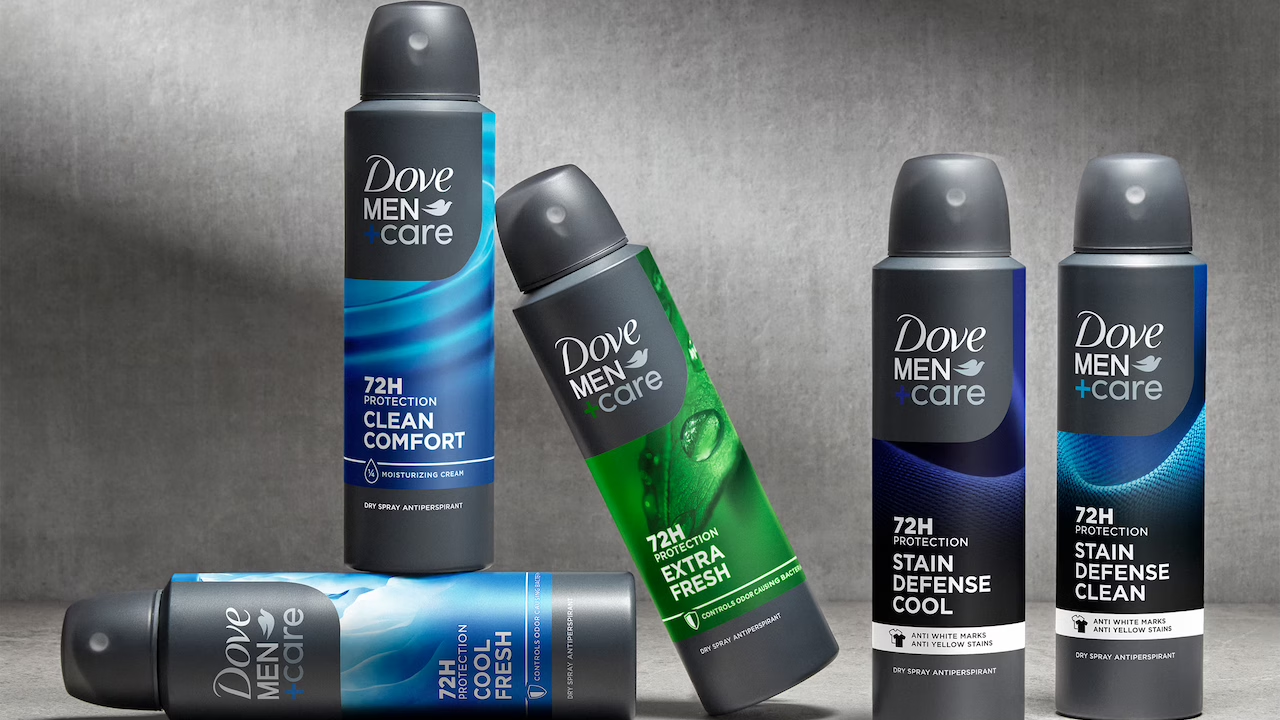
Dove Men is activating what could be considered a small army of content creators for the FIFA World Cup.
The Unilever-owned personal care line has hired hundreds of creators, from mega-creators like Marshawn Lynch and Jordyn Woods to micro talent tiers (creators with 10,000-100,000 followers), to get in front of at least 150 million potential viewers — at least that’s the hope of Jake Hirsch, head of Dove Men, U.S. at Unilever.
While the last FIFA World Cup final alone reached approximately 1.5 billion viewers, marketers are tasked with cranking out enough content to last the length of the World Cup — 48 teams and 104 games across North America.
“This idea of localizing and having relevant content show up in the relevant moments for consumers is super important,” Hirsch said, adding, “We want to be unmissable in this massive cultural moment.”
Creators to navigate logistics
Dove has a tiered approach to its creator strategy. Mega-creators are tasked with reach and awareness to get the brand in front of their own audiences. Creators with smaller followings are asked to help Dove be everywhere at once during the World Cup and across audiences. The Unilever brand did not outline the financial details of its influencer and creator activation. Hirsch said Dove Men has a budget set aside for creators and influencers to boost outperforming content.
The World Cup happens once every four years, making it arguably the biggest global sports marketing moment — and also a logistical nightmare. Aside from the multitude of games happening across the U.S., Canada and Mexico, marketers are working to show up at in-person games and events across broadcast, streaming and social media.
“[A creator strategy] allows you to be relevant throughout the entire tournament in a way that … a digital buy that’s been planned, done months ahead … That train has left the station,” said Charlie Wade, global chief client officer, VML Live, VML’s sports marketing, experiential events and entertainment arm.
AI and blocklists for creator cannibalization
Unilever made a big bet on 300,000 creators after Unilever CEO Fernando Fernández announced the company’s “influencer-first” strategy in March.
That’s a lot of creators to keep track of across the Unilever portfolio, which includes brands like Dove, TreSemmé hair care and Hellmann’s mayonnaise.
Instead of using formal blocklists or even generative AI tools to manage creator relationships (and prevent creator cannibalization), Hirsch relies on internal cross-team communication.
“We see the role of AI-based tech as an enabler to help us scale, but team communication is critical for strengthening the creator community and ensuring brand trust across our programs,” said a spokesperson for the brand.
For the creators themselves, any AI used in creative assets would need to be approved on a case-by-case basis, Hirsch said. Notably, Dove has a standing commitment to never use AI imagery in place of real women. That guidance extends to Dove Men, Hirsch added.
The creator sports marketing playbook
Sports marketing has gained momentum over the years, forcing marketers to find new ways to stand out beyond sponsorship. Creators are just one option.
“It used to be all about just visibility — you put X marketing spend, stick your logo somewhere and hope that it pays off,” said Gregor Johnstone, creative director at Bulletproof, an independent design and creative consultancy. Johnstone added, “The addition of creators and influencers feels like it’s another avenue to add more value to the experience.”