This week, we take a look at the Swiss-made watch microbrand Axia, which became the first officially licensed World Cup watchmaker, and the big business of World Cup merchandise, which is attracting big brands like Nike, as well.
Luxury brands have been involved with the World Cup for years, and watch brands are no different. Brands like Hublot and Tag Heuer have dabbled in being official timekeepers or event sponsors. But until now, no brand has ever made officially licensed World Cup watches.
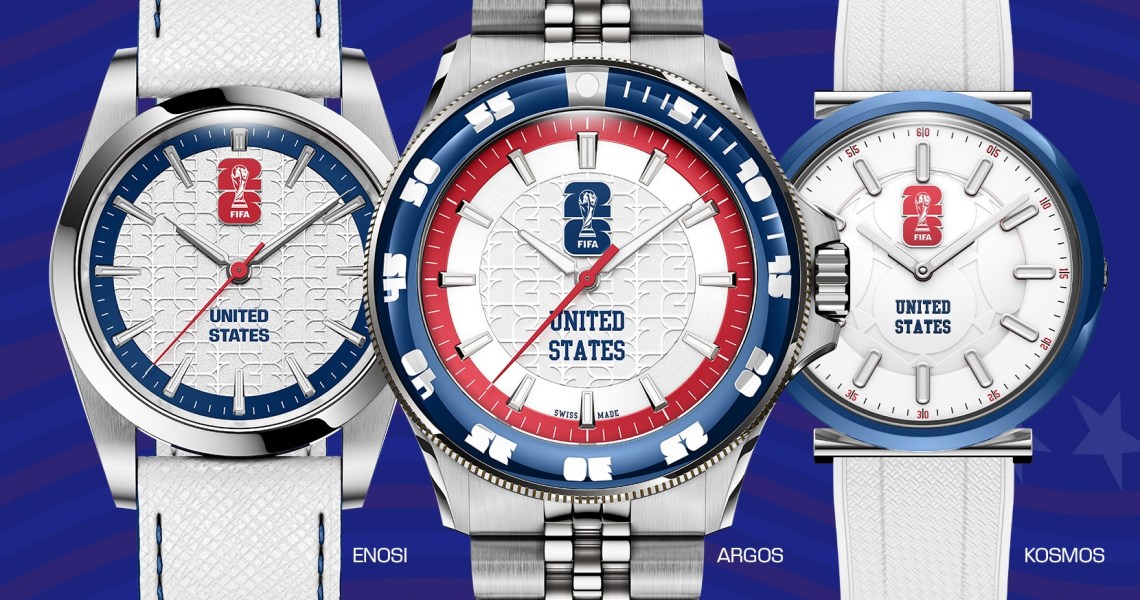
Axia, an 8-year-old Swiss-made premium microbrand based in the U.S., snagged the honors of being the first this year. The brand makes watches in the $1,000-$2,000 price range, putting it in a similar range to larger brands like Tag Heuer. Axia is releasing a series of watches tied to each team in the tournament, as well as general World Cup-branded watches and an upcoming World Champion edition for the team that eventually wins the tournament.
It’s an unlikely exclusive for a brand that sells around 5,000 watches per year. CEO John Kanaras told Glossy the partnership came together quickly, in a matter of six months. A friend introduced Kanaras to someone at FIFA shortly after Hublot ended its partnership with the organization. Hublot had been a sponsor for the last four tournaments, and without an official watch partner, FIFA was more open to experimenting with watches, Kanaras said.
“We finished 45 designs in just a few months,” Kanaras said. “This is new for us and for FIFA. They never really considered it before since they always had watch sponsors. The category was wide open.”
Befitting the recent trend toward affordable watches, Axia is releasing three versions of each team watch at three different price points: the Kosmos for $225, the Enosi for $795 and the Argos for $1,495. There’s also a special collector’s edition box set that includes all three plus a matching case for $2,515.
Being a purveyor of officially licensed merchandise for the World Cup is different than being the official timekeeper, a role Axia has played for other sports like college football. Axia pays royalties from each watch sold to FIFA in exchange for the rights to the branding. Kanaras, a veteran of producing licensed watches, said these deals can be a double-edged sword.
“Together, the licensor and licensee forecast how they think the product will do in the market, and then you have to have a minimum guarantee of sales based on that,” Karanas said. “As a small business, it’s tough to thread the needle. If you lowball your guarantee, the licensor might decide it’s not worth doing. If you’re too aggressive, you might struggle to hit your guarantee.” He declined to share the exact guarantee.
Pre-orders only started earlier this month, and they’re shipping out next week. According to Karanas, they’re already on track to sell well. With pre-orders alone, Axia is selling more watches from this collection than it does in a typical year.
An interesting pattern has already started to emerge. Axia previously used a similar model when it collaborated with the College Football Playoff tournament, with watches for individual teams and one themed around the tournament itself. In that collab, the tournament-themed watch sold far less than the team-specific watches. But with the World Cup collection, it’s the general World Cup watch that has already outsold individual team watches.
Licensed World Cup merchandise is a huge economic draw. In the last World Cup, licensed merch generated $769 million in revenue. This year, with the tournament being in North America, that’s expected to exceed $111 million, according to the International Council of Shopping Centers.
Major brands like Nike are investing heavily in this year’s tournament, even more so than usual. Nike’s global vp of football, Camilo Andrade, told Glossy that the World Cup being on Nike’s home turf of North America provides a unique opportunity for investing in merchandise. Much like Axia, Nike has created several product lines at different price points and for different groups of fans, like the $315 Mercurial shoe for serious enthusiasts and the $150 Mad 90 Pack sneaker collection for more casual soccer fans.
“This moment creates tremendous unity across communities,” Andrade said. “Moments like this create these great tailwinds behind the sport and onramps for customers to get into the sport and the brand.”
But while Nike is already a global company, Kanaras sees the World Cup as a big opportunity for smaller brands to expand internationally. Up until now, Axia has been primarily a U.S.-focused watch brand. But the World Cup collection has already allowed it to reach new markets.
“One of the major watch publications in Morocco wrote about us, and now we’re already sold out of the Morocco watch,” Kanaras said.
Other news to know
- Asics is spinning off its successful sub-brand Onitsuka Tiger later this year. The Japanes sneaker brand had closed its U.S. store in 2023 but now plans to reopen in the U.S. after a surge in popularity.
- Frasers Group, the owner of retailers like Sports Direct, is offering to buy Hugo Boss for over $3 billion. The two companies have done business together for years and Frasers already owns around 26% of Hugo Boss.
- Amazon became the latest online retailer to start using AI-generated imagery to help customers find similar products.