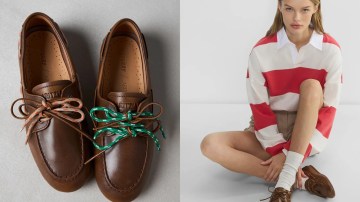
This week, we take a look at how Meta is creating AI-generated derivative ads from brands’ content, with headache-inducing results. As AI content-generation tech matures, it’s flooding platforms with slop in a way that experts and brands alike are just starting to understand.
About a month ago, Brie Read, the founder and CEO of the British tights brand Snag, noticed something odd about her brand’s social presence.
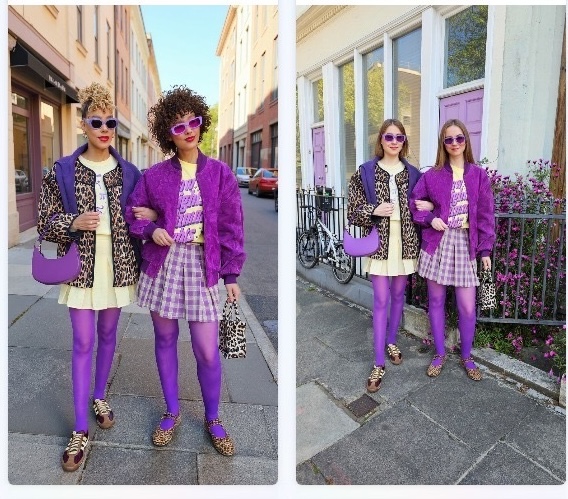
Her loyal customers, who call themselves “Snagglers,” had started to complain about strange, uncanny ads coming from Snag. They were different from Snag’s typical, inclusive casting, as they featured more traditionally thin models and gave off an artificial sheen. The ads looked like AI.
But Read said Snag prides itself on never using generative AI for any part of the creative process. It pays real artists, photographers and creators for every piece of media that comes out under Snag’s name. It turned out the ads were generated by Meta itself, using Snag’s existing ads as source material.
“We’ve started to notice all these things in Meta advertising, where the majority of our marketing spend is,” Read told Glossy. “Things like your text being used to train AI, and more and more AI things you have to opt out of — like AI pictures and AI videos that can alter the image of the thing you’ve uploaded quite dramatically. You have to opt out of each one, individually, every time you post something.”
Read said that, despite opting out of every possible AI feature Meta offers, the company has started using AI to alter 5% of the ads a given advertiser runs on the platform.
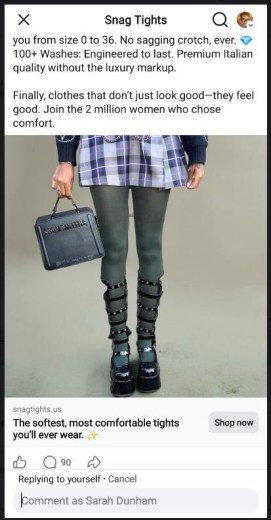
Read told Glossy that these altered ads were causing consternation for both the brand and its customers. She shared screenshots with Glossy of some of the ads, including a woman with three legs. More concerningly, the AI-altered ads would alter a model’s body type, from larger to thinner, as well as replace Black models with white women.

“The customers genuinely hate it,” Read said. “The thing we hear the most from our customers about AI is that it steals people’s work. It’s not good for business, and it’s editing the features of real people. If it were a photo of me, and the AI altered my body, I would find that very triggering.”
Ashley Banks, the chief client officer at Iced Media, said she hasn’t seen other examples of AI-generated ads going out without the advertiser’s consent. Iced is an official ad partner with both Meta and TikTok and represents a wide variety of brands like Paula’s Choice, Kiehl’s and Maybelline.
“We’re definitely seeing a shift toward automated content creation on these platforms,” Banks said. “Meta and TikTok are both heavily investing in AI tools that automatically assemble creative assets at scale. We do see many of these AI features are auto-opted into, and you have to manually uncheck a lot of tiny menus to turn them off.”
Read also pointed out the auto opt-ins as a particular pain point with Meta’s AI tools. On the subreddit r/FacebookAds on Reddit, more advertisers have complained about AI content being mixed into their ads without their awareness. Read posted about the matter on Facebook, after which Meta reached out and said that the feature had been turned off for all advertisers. Meta did not respond to Glossy’s request for comment.
Meta isn’t the only company that has been creating AI-generated content for its advertisers without their consent. IGN reported last week that the video game publisher Finji experienced a similar problem with TikTok’s automated AI ad content. Finji said AI-generated ads created by TikTok without its approval depicted a Black character from an upcoming game in a way that Finji called racist and sexualized.
And across the board, there has been a widening gap between the enthusiasm that large social platforms have for generative AI and the average customer’s desire to consume such content. A recent report from the International Advertising Bureau found that 82% of ad executives thought that Gen Z felt positive toward AI ads. The same report found that only 45% of Gen Zers actually felt that way. Another report this month from the National Bureau of Economic Research found that about 70% of businesses across the U.S., U.K., Germany and Australia are actively using AI, but 80% of them have reported no impact on either employment or productivity.
Both experts and brands have expressed concern about how the spread of AI-generated content will affect social platforms and the ad market.
“Basically, we’re entering a trust crisis in advertising,” said Donatas Smailys, CEO of the creator economy platform Billio. He cited the strong negative consumer reaction to AI campaign images from Gucci this week as an example. “All the early signals, such as the backlash and social media response, are already here. Yes, deploying AI visuals may deliver a short-term boost in engagement or sales. But we’re hungry for organic and creative content, and over time, brands that are or appear inauthentic will disappear.”
Read voiced particular concern about customers being able to distinguish between a legitimate brand with a real business and shadier companies or scammers if all the content is artificial.
“I was pleasantly surprised that Meta listened to me on this,” Read said. “But I think the reaction from customers and how much they disliked it made a difference to them.”
Banks said she is more positive about the technology overall, showing Glossy examples of minor AI-assisted tweaks that Meta and TikTok’s platforms can make to an ad, such as changing a simple background color. But even then, Banks said many of the options generated by these tools are, at worst, unintelligible and unusable, or, at best, not a meaningful improvement on the original ad itself.
“In one month, three months, six months, yes, this could be really helpful for brands,” Banks said. “The tech isn’t quite there yet. It’s a question of trust, and if a brand wants to have specific guardrails around its content, it’s probably not worth the drawbacks. But as AI churns out all this slop, nothing is differentiated. What will really move the needle is brand storytelling and long-form, high-quality content.”
News to know
- The fashion industry continues to wrestle with the impact of the Supreme Court ruling striking down many of the Trump administration’s tariffs. Steven Madden pulled its investor guidance this week, citing the uncertainty around the ruling as the reason it’s difficult to calculate its future economic performance.
- On that note, Democratic politicians are pushing for the federal government to start issuing refunds for the billions of dollars in tariffs it collected that the Supreme Court found unlawful. Senators like Ed Markey of Massachusetts and governors like Kathy Hochul of New York have issued statements or begun pushing for legislation that would get the refund ball rolling.
- The resale pricing app Croissant just raised $28 million, showing there’s still room for investment and growth in the booming secondhand fashion sector.
Glossy’s fashion coverage
Fashion brands are ‘cautiously optimistic’ about the Supreme Court striking down many of Trump’s tariffs
Off Season taps into the NBA’s growing merchandise sales with new licensed fashion collection
American Eagle’s next marketing move? Sponsoring Stagecoach