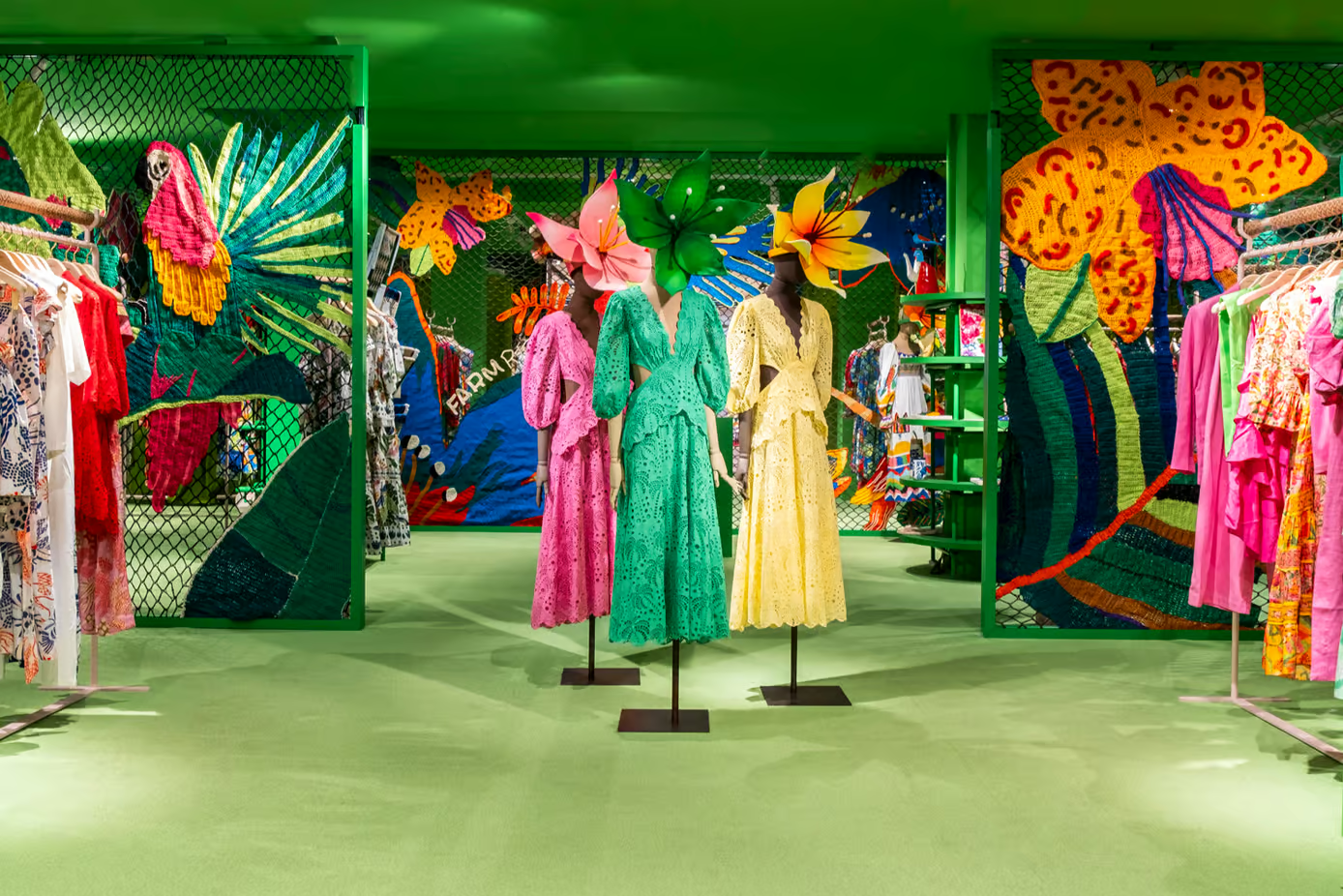
According to CEO Fabio Barreto, Brazilian fashion brand Farm Rio’s secret to consistent growth, and reaching $117 million last year in its international market, and $269 million in its local Brazilian market, has been customizing its processes for each of its focus markets.
In Brazil, the 27-year-old brand has over 100 stores and more than 2,000 points of distribution. Its international business, which is run separately, from New York, includes flagship stores in SoHo and Brooklyn in New York, Venice Beach and Melrose Avenue in Los Angeles, Miami, London, and Paris. Additionally, it maintains pop-up and concession stores in Le Bon Marché and Galeries Lafayette in Paris, as well as Liberty in London, and the Mall of the Emirates in Dubai. It will soon open stores in Washington, D.C. and Milan. In each of these markets, the brand’s e-commerce offerings are unique.
Successful global brands, includng Zara, H&M, Uniqlo, Nike, Adidas, Mango and Levi’s, often tailor their product offerings to suit local and international markets by adapting their designs, collections and marketing strategies to regional preferences and climate needs. For example, Zara sells a broader winter collection in colder climates, while Uniqlo sells lightweight clothing for Japan’s humid summers.
“[To meet local demand] we maintain a very open channel with our commercial team to forward client feedback, supplemented by thorough sales analysis and consumer research,” Barreto said. “Although our creative team is local in Brazil, we have representatives in all our main markets. Additionally, we work with wholesale partners who help guide our collections in each location.”
This adaptive approach has led to the introduction of products like puffers and skiwear for colder climates, while the brand’s local businesses heavily focused on swimwear.
“[To maintain our brand identity] our creative process starts with print development managed by a department that serves all markets,” said Barreto. “Afterward, the creative and styling teams split to cater specifically to Brazilian and international needs.” Different fabrics, color palettes and prints are used, based on suitability, while the brand’s “Dressing Happiness” philosophy and Carioca spirit are constants across markets. “Carioca” refers to anything related to the city of Rio de Janeiro, Brazil.
Pricing and promotional strategies are tailored to the respective markets, with the international pricing being elevated to meet the brand’s positioning. Based on a site analysis, products are twice as expensive on the brand’s international site. Its top markets are Brazil and the U.S., with the U.S. driving almost 50% of the sales. Farm Rio’s wholesale partners, which drive 45% of the business, include Neiman Marcus, Anthropologie and Liberty London.
Farm Rio began expanding to markets beyond Brazil in 2018, which soon required an internationalized supply chain to meet different lead times and B2B demands. Its factories are in China and South America. Barreto emphasized the importance of maintaining quality and compliance through rigorous audits. Farm Rio parent company Grupo Soma conducted over 8,724 quarterly audits within its supply chain in 2023.
For Farm Rio, future growth includes expanding into Europe and secondary markets through franchise models. It recently opened stores in Dubai and Mykonos.
“When we look at our peers, 20-40% of their business comes from footwear and handbags. We are launching these categories now and are very excited about their potential,” Barreto added.