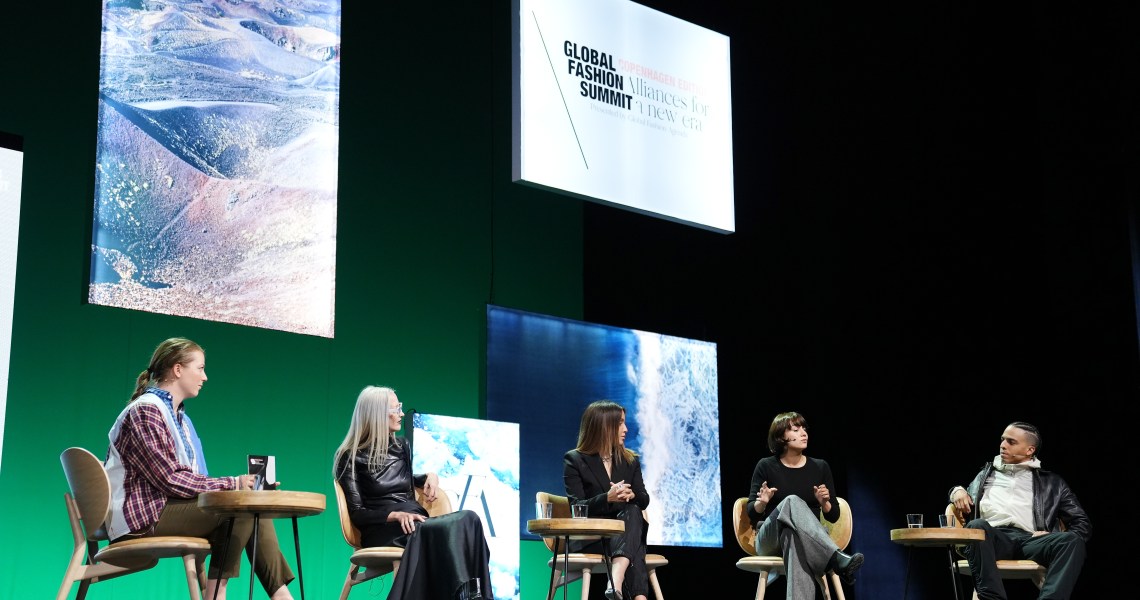
Digital fashion for avatars is gaining ground in the sustainability space, as evidenced by conversations taking place at the Global Fashion Summit in Copenhagen last week.
Marjorie Hernandez, co-founder of The Dematerialised, a digital fashion marketplace, said sustainability’s slow pace of progress could be accelerated by making trend-led designs exclusively for avatars. “So far, the fashion industry has tried to solve a problem by solving the issues that the current industry setup has created,” she said. “The digital world focuses on the complete dematerialization of assets, representing a completely different, alternative solution for overconsumption.”
Fashion brands create too many clothes, leading to huge amounts of textile waste. Around 30% of all clothes made around the world are never sold, according to the Australian Circular Textile Association. The cost of this excess inventory is estimated by global research company IHL Group to be $210 billion.
With digital fashion, trend-led design, which is the culprit of overproduction, could transition to a purely virtual field, allowing for the fashion industry to focus on quality and longevity across look and price points. “It is expected that people will consume less, but that can be a tall order for those used to [wearing] new clothing every day,” said Hernandez. “Offering an alternative to physical fashion that is less impactful and less damaging to the environment is a good solution.”
As people spend more time in digital and virtual environments, she said, the demand for digital garments will be higher. According to research company Gartner, a quarter of people will spend at least an hour a day in the metaverse by 2026.
“Digital fashion represents the first time we have an alternative that is not about improving performance or changing the current business model. It’s something completely different,” said Hernandez.
Leanne Elliott-Young, co-founder of the Institute of Digital Fashion said that digital fashion faces societal perception challenges that hinder its wider adoption to support sustainability strategies. “Right now, as soon as you talk about NFTs, people see the pyramid schemes and they don’t talk about the craft and artisan workmanship that goes into creating them,” she said.
One of the ways this can change is via marketing. “PR and ad agencies’ involvement and marketing messaging are important to shifting the perception around digital fashion,” said Elliott-Young. “Balenciaga is an amazing example of that, with how they involved the fashion industry in the digital world.” Balenciaga was one of the first luxury companies to recreate its collection digitally, in its game released in December 2020, dubbed “Afterworld: The Age of Tomorrow.”
Fast-fashion companies like H&M, Zara and Shein have launched small digital fashion collections for avatars, but large-scale efforts to divert trend-led fashion to avatar-only are still yet to materialize.