This week, I checked in on the plastic surgery trends doctors expect to see in 2026. Additionally, Nars and Chanel announce new beauty ambassadors, and Ulta welcomes a new member to the merchandising team.
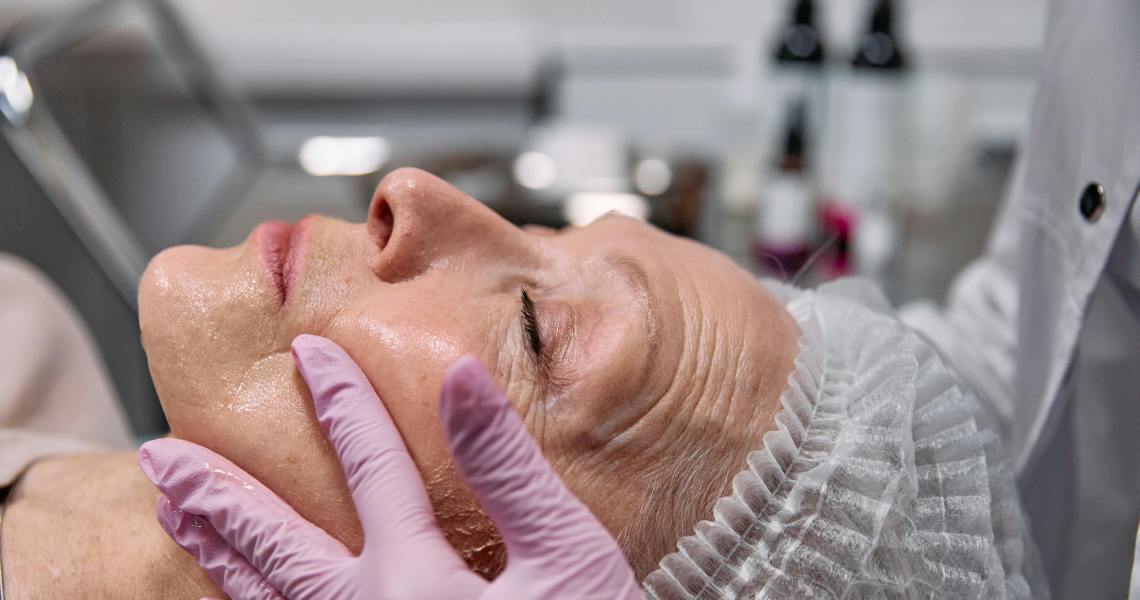
From body filler to AI: The plastic surgery trends to watch for in 2026
In June, Kylie Jenner shared via a TikTok comment the kind of information celebrities have traditionally kept under wraps: the specifications of her breast augmentation. “445 cc, moderate profile, half under the muscle!!! Silicone!!! Garth Fisher!!!” Jenner shared, in response to a user asking for details of her surgery.
Jenner’s reveal exemplifies what some plastic surgeons are forecasting to be the top trends in surgery from 2025 into 2026: less stigma around procedures as patients seek more naturalistic, minimally invasive results. And they’re turning to tools like AI and social media to arm themselves with more information than ever on how to achieve their desired results.
“In 2025, we saw plastic surgery become more mainstream than ever. And I think, in 2026, it’s going to become even more so,” said Dr. John Diaz, a board-certified plastic surgeon based in Beverly Hills. “The stigma of getting plastic surgery is diminishing.”
While celebrities have often normalized and popularized cosmetic procedures, patients are also looking closer to home for inspiration.
“Now the trend, if anything, is going back to identity preservation, looking like themselves,” said Dr. Goretti Ho Taghva, a Newport Beach-based board certified plastic surgeon. “And I think more people are valuing the Pilates type of bodies, more than the ‘Baywatch,’ really voluptuous look.”
To create those more natural results, surgeons are turning to procedures like endoscopic facelifts, Dr. Taghva said, which use small incisions in the hairline and an endoscope, or small camera, to lift and tighten the face with minimal scarring. Procedures like facelifts have also grown in popularity in younger patients looking to preserve rather than reverse aging.
While such techniques are not new, Dr. Bob Basu, a Houston-based board-certified plastic surgeon and president of the American Society of Plastic Surgeons, believes more surgeons will adopt preservation techniques in plastic surgery as more patients seek more natural, minimally invasive results. Such an approach aims to maintain patients’ original anatomy as much as possible
“We’re seeing a shift now into 2026. We’re going to see an expansion of preservation techniques in surgery,” he said, “whether it be preservation facelift techniques, face and neck lift techniques, preservation rhinoplasty techniques, or preservation breast augmentation techniques. How can we get improvements by preserving as much of the natural anatomy as we can, to give you a significant improvement, but to expedite your recovery and minimize risk? ”
But of course, there are new tools on the market, namely artificial intelligence. Dr. Taghva cited Muse, a South Korean imaging tool that analyzes the skin and facial structure to predict how patients will age, as a useful AI platform in her office. “It generates a very detailed analysis of all the skin conditions and, for the plastic surgery side, the facial proportions and what you can achieve with surgeries,” she said of Muse.
Consumers can also find a trove of information on procedures and surgeons on AI platforms from their own homes. According to a 2025 survey by Rater8, 70% of U.S. adults are open to using or already use AI tools to research physicians. But, while AI can make information more accessible, it can also show patients misleading results, Dr. Basu warned.
“AI can create before-and-after pictures that are completely made up. AI information may not be accurate,” he said. “They can actually create an entire patient journey that’s made up. And that’s dangerous for the patient and the consumer, because it looks so real. … It creates such misinformation and unreasonable expectations.”
Beyond technologies, new products are arriving to the U.S. market from overseas, as well. Botox competitor Letybo, made by the South Korean cosmetics company Hugel, received FDA approval in 2024 and has been growing in popularity among American consumers; according to Yelp, searches for the injectable rose 5,250% year over year as of August 2025.
Dr. Diaz said the product can be roughly $5 cheaper per unit than Botox, depending on the market, offering patients a more affordable route to preventing wrinkles.
“When most people get Botox, they’re getting sometimes 60 units, sometimes more,” he said. “That [$5 a unit] could be a difference of $300 in a session.”
Also new to the market as of 2025 is another injectable: the body filler Alloclae. Made by Tiger Aesthetics, the filler can add volume to areas like so-called “hip dips” or even to the breasts. The product is sourced from human cadavers, offering volume to patients who don’t have enough body fat of their own to use for a fat transfer. Like Renuva, another fat-boosting injectable, Alloclae is regulated by the FDA as a human cell, tissue, and cellular and tissue-based product (HCT/P), which means it does not need to follow the same approval process as neuromodulators or injectables.
But even with stigma around plastic surgery lifting, sourcing fat from a dead body may still be a bridge too far for some patients.
“The positive of [Alloclae] is now, for the first time, we have a breast and body filler,” said Dr. Basu. “The negatives of this are that some patients are kind of weirded out that it’s from a cadaveric source.”
Executive moves:
- Curology appointed Dr. Felipe Jimenez as svp of scientific innovation. Dr. Jimenez will lead scientific strategy, testing and cross-functional R&D partnerships at the skin-care brand. He was previously chief science officer at the hair-growth company Nulastin.
- Mia Young was named svp of cosmetics at Ulta Beauty. Young joins the retailer from Tatcha, where she served as chief commercial officer. She will oversee fragrance, makeup and private label starting January 5.
News to know:
- Kaia Gerber is the newest face of Nars. The model and daughter of Cindy Crawford has been named the brand’s global ambassador and will front the campaign for its Afterglow Lip Balm, slated for launch in January.
- Jung Kook of BTS is Chanel’s new fragrances and beauty global ambassador. The K-pop star has starred in campaigns for the likes of Calvin Klein, while his fellow boy band members, like Jimin and V, have represented luxury brands including Dior and Celine.
Stat of the week:
20.7% of consumers plan to use buy-now, pay-later platforms for holiday expenses, according to a holiday shopping survey from the credit platform Kikoff. And 37.5% of consumers reported feeling anxious about their financial situation this year.
In the headlines:
As AI transforms beauty discovery, ex-Tesla staffer builds a ChatGPT alternative for beauty. Flower Knows becomes 1st Chinese label to land on Ulta Beauty. Why everything is “aesthetic” to Gen Z and Alpha.
Listen in:
On the latest episode of the Glossy Beauty Podcast, Ulta Beauty CEO Kecia Steelman unpacks her first year in charge and 2026 goals.
Need a Glossy recap?
Glossy 50 2025: The people who shaped fashion and beauty this year. Herbivore bets big on body care with a 15-piece collection and arrival at Ulta Beauty. Glossy Pop Newsletter: As run clubs replace nightclubs, Cymbiotika rides the trend. Inside Dieux’s Brooklyn lab, where the skin-care brand aims to develop the Holy Grail of sunscreen.