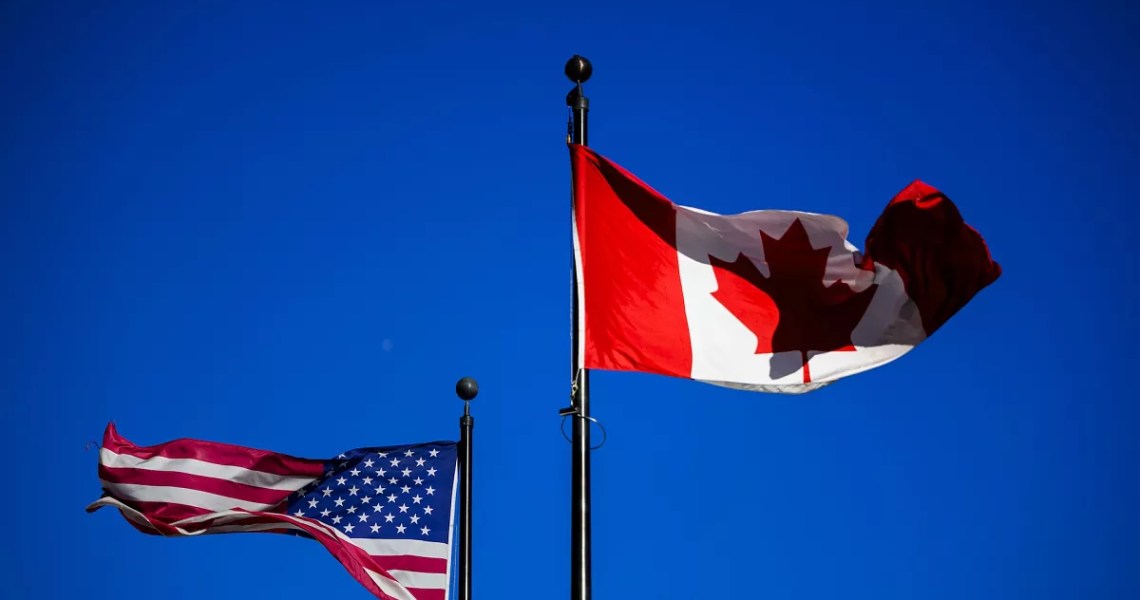
This week, we take a look at the spiraling trade war between the U.S. and Canada, and the effect it’s likely to have on both Canadian and American fashion brands.
A few months ago, as economic tensions between the U.S. and Canada heated up, many fashion brands felt cautiously confident they could manage whatever targeted tariffs or new trade regulations came up.
Then came the blow-up. In the last few weeks, tensions between the two countries over the Trump administration’s aggressive tariffs on Canadian goods boiled over into a full-on trade war. Canadian negotiators rejected a deal they called “unfair” and unserious. In response, the U.S. enacted a 50% tariff on nearly $30 billion worth of Canadian goods exported to the U.S., targeting a wide array of exports including clothing and apparel. Canada responded by promising “dollar for dollar” counter tariffs on U.S. goods.
Now, fashion brands on both sides of the border have a much bigger reason to be upset. The U.S. exports around $4.6 billion worth of clothing to Canada, while Canada exports around $2.8 billion worth of apparel to the U.S. Apparel categories like outerwear and men’s formalwear will be hit hard, as they make up the bulk of apparel manufactured in Canada. Brands like Canada Goose and Arc’teryx have prided themselves on still making their parkas and winter gear in Canada, rather than moving manufacturing overseas.
But even the many Canadian fashion brands that manufacture their clothing outside of Canada will be affected. The tariffs impact all goods shipping from Canada, regardless of where they were made.
Kirk Sigmon, an attorney and founding partner of the law firm KellDann, has advised dozens of brands on international trade. While Sigmon couldn’t disclose the identities of the Canadian companies he currently works with, he did tell Glossy about the common feeling across the industry right now.
“[The trade war] is already having harmful effects,” he said. “Numerous Canadian companies I work with have had to radically change their approaches based on the trade war. I know of at least one Canadian custom clothing manufacturer that is actively exploring whether they can set up shop in the United States to avoid the tariffs, which have thus far basically killed interest from their U.S. customer base.”
Some Canadian companies, like Ssense, have already begun moving operations into the U.S. in order to avoid some of the most onerous tariffs. Ssense’s transition began earlier this year, before the full trade war broke out, as it sought to safeguard itself against future tariffs. Like many Canadian brands, the U.S. is a major market for Ssense, so losing or limiting access to American customers is a potentially ruinous risk.
The Canadian denim brand Duer makes more than half of its revenue from the U.S. Like Ssense, it has also started moving fulfillment and operations to the U.S. to avoid further tariffs.
But not every brand can afford to open a warehouse or fulfillment center in another country. In the long run, several experts Glossy spoke to echoed the prediction that continued conflict between the U.S. and Canada would ultimately lead to a more fractured economic environment for both countries.
“The lasting effect is likely to be a less integrated North American fashion market,” said Rohit Tripathi, vp of industry, CPG and manufacturing at the supply chain management company Relex. “Many fashion companies have historically treated the U.S. and Canada as one commercial region, with common assortments, shared inventory, cross-border e-commerce and centralized distribution. Now, brands will increasingly plan the two countries separately. They may carry separate inventory pools, assortments and pricing rather than moving merchandise freely across the border. That reduces inventory flexibility and can increase markdown risk when demand differs from the original forecast.”
And that won’t just affect Canadian brands selling in the U.S. While Canada is a much smaller consumer market overall compared to the U.S., it is still a major consumer of U.S. goods. Canada and Mexico alone, the two other parties of the United States-Mexico-Canada Agreement, import over 50% of all U.S. fabric and textile exports.
American-based fashion brands with Canadian businesses, like the Maryland-based Collars & Co., are predicting negative effects on their business. Collars & Co. operates a separate online store for Canadian shoppers.
“The trade war will raise costs, squeeze margins and increase prices,” said Collars & Co. founder Justin Baer. “Over time, fashion brands will diversify suppliers and move some production closer to their customers. Smaller companies will be most vulnerable because they have less negotiating power and flexibility.”
Stat of the week
If you needed any more proof that the holiday shopping season has expanded far beyond the bounds of fall and winter, data from AI search and discovery platform Algolia found that consumers are already thinking about the upcoming holidays.
As early as June, Algolia was seeing 15,000 weekly searches for Halloween terms like “Summerween.” By August, searches for Pumpkin Spice had surged by 12 times the amount in June. Black Friday searches were already exceeding 13,000 per week in June and have remained high, breaching 14,000 weekly searches months before Black Friday.
News to know
- YouTube signed a major partnership with Amazon as it seeks to make affiliate commerce a bigger part of its business model. YouTube creators can now tag Amazon products in their videos and get a commission on sales.
- Nuuly continued its meteoric growth this week as it helped drive parent company URBN’s quarterly revenue up over 10%. Nuuly saw a nearly 30% growth in net sales last quarter.
- After years of ups and downs, Shein finally went public in Hong Kong this week — and the results were less than stellar, compared to its massive valuation a few years ago.