This week, a look at the number of fashion brands that are dipping their toes into the health and wellness industry. Wellness is big business these days, and fashion brands have started to incorporate yoga, pilates and juice bars into their marketing.
As the wellness trend continues to expand, fashion brands are starting to incorporate fitness, nutrition and healthy living into their marketing campaigns.
Over the last few months, fashion brands have launched a plethora of new IRL marketing campaigns that lean into all things wellness: Pilates classes, healthy juices, protein smoothie pop-ups and yoga have shown up repeatedly, as brands capitalize on the growing health and wellness industry.
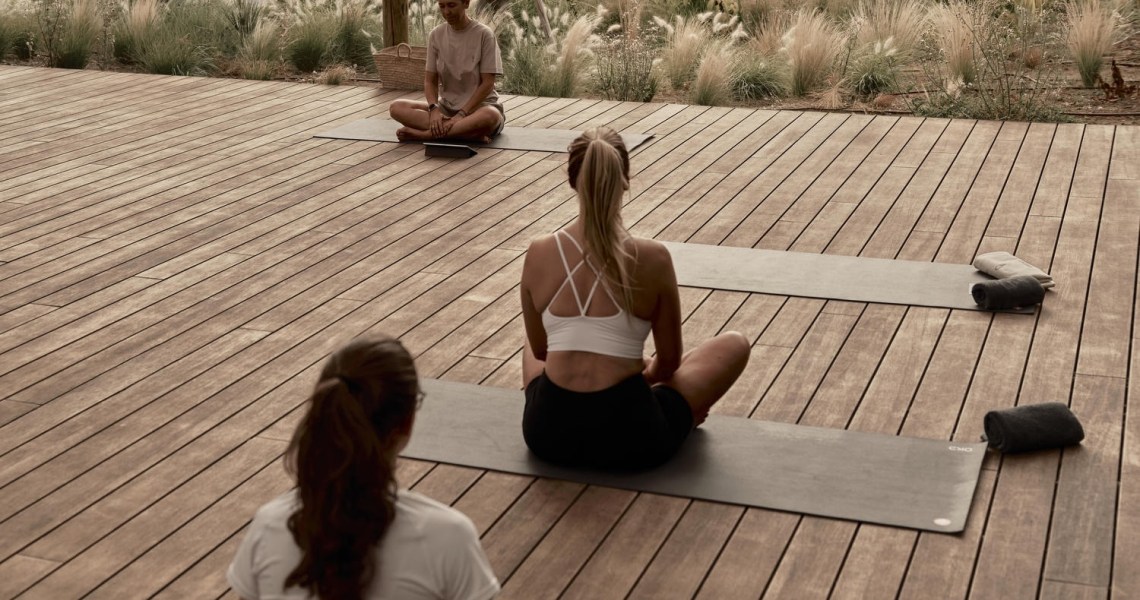
Pangaia, for instance, launched the Pangaia Wellness Club earlier this month. The club, created in collaboration with OKU Hotels in Spain, features three different wellness experiences at the hotel’s locations: yoga, pilates and a sound-based healing class. Music that Pangaia created for its Milan Fashion Week debut in February plays during the classes. Afterward, attendees can hit the Nourishment Bar for healthy juices and smoothies produced by Pangaia.
The partnership also includes a capsule collection of T-shirts, sweatshirts and hoodies, all exclusively available to purchase at the classes. For Pangaia, the appeal of these wellness classes is engaging with customers outside a retail environment. A brand representative told Glossy that there’s “something particularly valuable about seeing our products in motion and allowing guests to experience how they look, feel, and function in moments of movement and relaxation.”
Wellness enthusiasts are big spenders, according to McKinsey. McKinsey’s Future of Wellness report from late last year estimated that Americans spend more than $500 billion on wellness-related products and experiences annually, and that number is growing at 5% annually. It’s a big opportunity for brands to connect with customers as they embrace fitness and health.
Many of the brands most interested in wellness are, naturally, activewear brands. The running brand Salomon recently partnered with the Los Angeles Pilates studio Natural Pilates to host a series of pilates classes at its L.A. store. Natural Pilates has hosted similar classes with other apparel brands, like Beyond Yoga, in its stores. Invites were open to existing Natural Pilates members, while other wellness brands, including Aesop and the tea brand Saint James, sponsored the event and offered free products.
Jenny Taylor, vp of marketing for Salomon North America, told Glossy that in-person workouts are “at the heart of Salomon’s marketing.”
“In-person experiences have always been a part of our DNA as a brand,” she said. “We have launched ‘How to Trail Run’ video series [on YouTube], our Gravel tour [of community running events], community hikes with our retail partners and so much more. Now that we have some of our own Salomon stores, it’s been fun to test different event formats to see what resonates.”
Salomon has been rapidly increasing its store count globally and in the U.S. recently, including opening 13 stores in the U.S. last quarter, bringing its global total to 315.
But the wellness trend isn’t limited to activewear brands. Pierpaolo Piccioli at Balenciaga has shown a great interest in incorporating wellness elements into the brand’s marketing. Throughout the summer, Balenciaga has opened pop-ups serving healthy smoothies and juices in cities like Paris, Beijing, Shanghai and Bangkok. The brand has also done full studio takeovers of Barry’s gym locations in Los Angeles, New York City, London, Paris, Milan, Dubai, Singapore and Sydney. Those takeovers include custom classes, playlists, decor and a co-branded smoothie at the gym’s bar.
Ryan Glick, founder of CNC Agency, has worked on campaigns like this. CNC helped Prada design a roaming floral and aromatherapy installation last year and worked with Gap on a collaboration with skin-care brand Summer Fridays in December.
“Fashion brands are leaning into wellness because the definition of lifestyle has expanded,” Glick said. “What you wear, how you work out, what you eat, where you spend your time — they’re increasingly part of the same identity. Wellness gives fashion brands permission to show up in more of these moments.”
Glick said these campaigns also translate incredibly well to IRL events. Another McKinsey report from earlier this year found that as people cut back on discretionary spending, one of the few things that has seen increased spend is travel and experiences.
“A pilates class, run club or smoothie bar gives people something to actually participate in rather than simply shop,” he said. “That creates community, as well as a much deeper interaction with the brand.”
Eighty-four percent of Americans now consider wellness to be a “top priority.” But brands that want to insert themselves into the established wellness industry face risks. Natalie Trice, founder of Rare Street Pilates, has gone the other way, turning her wellness business into a fashion one with the launch of Stay Rare, an activewear brand. She said consumers can tell when a wellness effort comes from an authentic place versus an opportunistic move to capitalize on a trend.
“In my mind, adding a pilates class or putting a green juice into a pop-up doesn’t automatically make a fashion brand a wellness brand,” she said. “Consumers are increasingly savvy, and can spot a marketing exercise over a brand that genuinely understands and wants to offer something new and different.”
Stat of the week
According to a Narvar survey of 100 consumers, 65% said they plan to use AI for at least part of their holiday shopping plans. Meanwhile, a survey of retailers found that only 8% reported feeling confident in their AI strategies for the upcoming holiday season.
News to know
- Meta agreed to settle in the landmark trial over its practices regarding young users this week. The company will pay nearly $18 billion in fines as well as drastically change its advertising business to make it less predatory for younger users.
- The embattled retailer Target saw another drop in its share price after it was embroiled in a controversy over a Halloween costume that was reminiscent of racist minstrel show caricatures. The company took the costume off its e-commerce site and publicly apologized.
- Dick’s Sporting Goods reported earnings this week, showing declining sales and warning of a difficult market for activewear and footwear. Stocks plunged by 30% in response.