This week, I’m breaking down new changes coming to the injectable peptide market, including the FDA’s proposed deregulation announced by health czar RFK, Jr. and how it is likely to impact the supplement and wellness spaces. Additionally, Kenvue-backed Aveeno makes moves in women’s sports media, Equinox replaces Grown Alchemist with ELC-owned Le Labo in its gyms, and Oura Ring purchases a little-known Finnish startup.
New, FDA-approved peptide providers are likely to flood the market with viral offerings as RFK, Jr. teases regulatory rollback
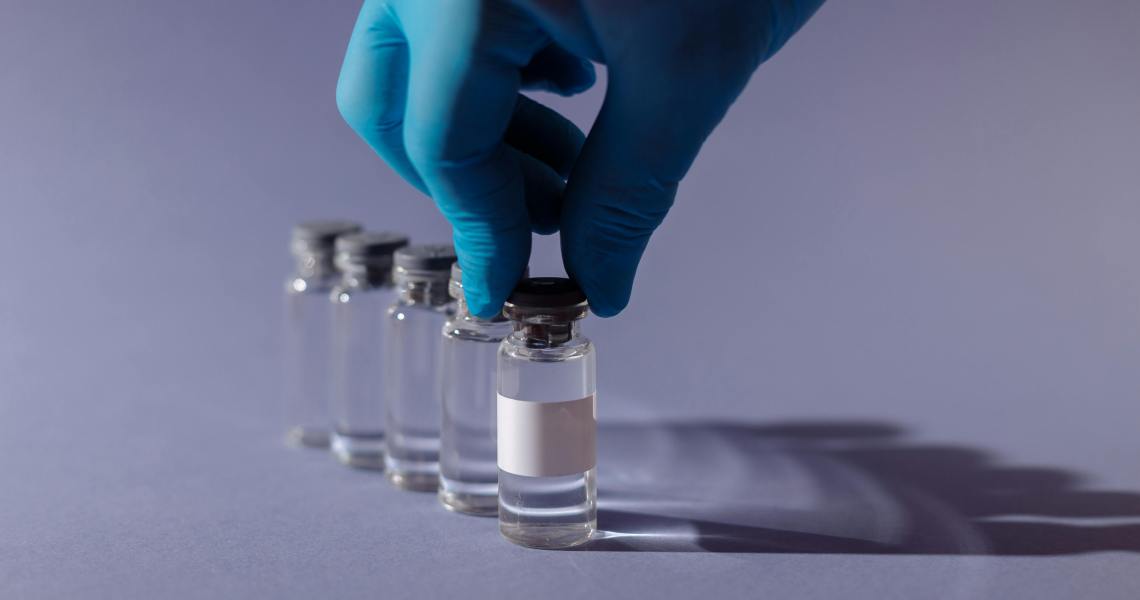
U.S. health secretary Robert F. Kennedy, Jr. plans to partially deregulate 14 injectable peptides, including TikTok-famous BPC-157 and celebrity-endorsed Sermorelin, in an effort to make peptide access safer and easier.
The health czar announced his intentions on an episode of the “Joe Rogan Experience” podcast that aired on February 27. “Within a couple of weeks, we will have announced some kind of new action,” RFK, Jr. said. “My hope is that [these peptides are] going to get moved to a place where people have access from ethical suppliers.”
Peptides, which are short-chain amino acids that occur naturally in the body, have experienced a meteoric rise in the last 18 months, going from niche biohacking practice to full-blown wellness trend. Peptides are best described as “signaling molecules” that tell the body how to use its energy and resources. Think: “Heal that torn tendon!” or “Reduce inflammation in the gut!”
Well-known, FDA-approved peptides include insulin and GLP-1s like Ozempic or Wegovy, which have been tested for safety and efficacy. However, the viral peptides gaining popularity today live in a legal gray zone that’s void of FDA-approval and long-term safety data, despite celebrities, media figures, holistic doctors and the U.S. health czar touting peptides as a miracle cure for just about anything that ails you, from gut issues to wrinkles.
In 2023, the FDA tightened regulations on compounding pharmacies’ use of some peptides, moving them from “class 1” to “class 2,” prompting many compounding pharmacies to remove peptides from their offerings. This drove diehard consumers to murky foreign supply chains to procure their peptides, RFK, Jr. said on Rogan’s show. The health czar told the host he plans to move peptides back to class 1 in the coming weeks, allowing compounding pharmacies to legally make and sell them.
Today, users often skirt the law by ordering peptides over the internet that are labeled as “research peptides,” which allow them to “research the formulas” in scientific home labs. Injecting the formulas is technically illegal, but the loophole has created an easy way to purchase peptides.
This has created gray and black markets for procuring peptides, and ushered users into the shadows.
“[Moving peptides to FDA] class 1 will dramatically improve interest and dramatically improve market awareness, because the clinical community has been afraid of using peptides because of that class 2 designation,” said Jay Campbell, author, leading voice in the U.S. peptide community and founder of BioLongevity Labs, an e-commerce seller of peptides and bioregulators launched in late 2024.
Campbell predicted this change during an interview with Glossy in late 2025. He also believes RFK, Jr. is likely to ban foreign peptides next, which will keep the supply chain narrow and, in theory, safer.
“It’s a good thing, from a net benefit standpoint, because obviously the products are going to be higher quality [if] everything will be sourced in the United States,” Campbell told Glossy. “From my understanding, [the FDA is] going to massively cut back on Chinese and Indian raw material manufacturing [of peptides next]. … There’s going to be a much smaller group of peptide providers or vendors, peptide costs will go up, and manufacturing costs will go up. It’s probably going to dramatically lessen the playing field of actual peptide sellers and resellers.”
This could be a response to the sheer amount of gray-market peptides today. For example, two weeks ago, Futurism reporter Joe Wilkins chronicled a new era of peptides for sale on Temu, further calling into question the dangers of the “research peptide” loophole.
Wilkins wrote, “For just $12, you could get three bottles of what’s supposedly BPC-157, a peptide derived from human stomach bile sold as a healing cure-all. Or you could pay just $4.14 to snag a 12-pack of a vague ‘oligopeptide’ marketed as a skin-firming agent.”
Most peptides used by U.S. consumers today are either procured through the gray market, often online from U.S.-, China- or India-based manufacturers, or under the care of a doctor who relies on an obscured, private supply chain. The safety and purity of peptides can vary greatly from one supplier to the next. Still, it hasn’t stopped the trend from exploding into the mainstream, starting in Silicon Valley with biohackers.
“There was a huge demand for peptides, and so a black market came out, and the black market is run by companies that say they’re making the peptides for animal use or for research purposes, and [this has] basically completely replaced the legal market,” RFK, Jr. said on the podcast. “With the gray market, you have no idea [what you’re getting], and a lot of this stuff we’ve looked at is just, you know, very, very substandard.”
The opportunity for compounding pharmacies, especially those that employ a transparent supply chain in the vein of popular supplement brands, is vast. Many first movers in the space are quietly preparing for the floodgates to open — and compounding pharmacies is one way the market could grow this year.
There is also a cottage industry quietly brewing. For example, Steve Martocci, founder and CEO of supplement tracking app SuppCo, told Glossy that he plans to add peptides to the app’s tracking abilities soon. “There has just been so much interest and too many people kind of going unguided through that process,” he said. “[We’re hoping to] just have the basics on there [with] a really balanced perspective.” Meanwhile, telehealth provider Wisp launched a “health aging vertical” this week that includes peptide prescriptions, as well as NAD+ and antioxidant glutathione.
“I’m a big fan of peptides. I’ve used them myself and used them with really good effect, you know, on a couple of injuries,” RFK, Jr. said. “I’m very anxious to move … about 14 of them back to making them more accessible.”
Executive moves:
- Dr. Bernard Kruger, an elite Manhattan-based physician and Jeffrey Epstein’s longtime doctor, has stepped down from his clinical consulting role at Atria Health and Research Institute, a concierge wellness business, and Sollis Health, a private emergency room company that he co-founded, after being named in the Epstein Files.
News to know:
- Oura Health, maker of Oura Ring, has acquired Finnish tech developer Doublepoint, a first mover in the “gesture control” category. “Gesture control” is a developing field that enables users to communicate with their devices through hand movements rather than speech or touch. Also in this next-gen foot race is Apple, which in January acquired Q.ai, an Israeli startup developing AI technology for audio. According to Reuters, Q.ai is working on the ability to understand whispering and silent “facial skin micromovements.” Both of these applications, though in their infancy, are likely to impact how wellness consumers use and adapt to health trackers.
- Estée Lauder Companies-owned Le Labo is the new amenities partner for Equinox fitness clubs. The brand has replaced indie brand Grown Alchemist, the gym’s partner since 2024. Equinox has more than 100 locations in the U.S.
- Unilever Ventures has invested in Novos, a biotech longevity company launched in 2019. The supplement company’s hero product, Novo Core, is a drink mix that supports slower aging with clinically tested ingredients for $109 per month. “We are thrilled to partner with [Novos founder] Chris Mirabile as Novos continues to demonstrate the power of its nutraceuticals portfolio with further clinical studies and a growing repertoire of published peer-reviewed research,” Anna Ohlsson-Baskerville, a partner at Unilever Ventures, said in a statement. The terms of the deal were not disclosed.
- Sunscreen brand Supergoop! is the new official sunscreen partner of the PGA Tour, an event series that brings more than 100,000 spectators to individual U.S. golf events. The PGA Tour’s prior sun-care sponsor was the brand Drive by Caren.
- It has been a big week for Kenvue-owned body-care brand Aveeno. The company partnered with women’s sports media company Togethxr to produce a digital ‘zine called The Strength Issue. Its cover features WNBA player Cameron Brink, soccer player Sophia Wilson, paralympic swimmer Ali Truwit and American ballet dancer Misty Copeland. Also this week, Aveeno penned a three-year deal with the Mayo Clinic that focused on research, innovation and education.
- SLT, a fast-growing athletic pilates chain that competes with Solidcore- and Lagree-style classes, has announced its plans to purchase independent studios in an effort to scale. “We believe there is a significant opportunity to thoughtfully expand the SLT footprint through the strategic acquisition of studios that have built strong, engaged communities,” SLT founder Amanda Freeman told Athletech News. “Our goal is to preserve what makes each studio special while providing the infrastructure, brand strength and operational expertise needed to scale sustainably.”
Stat of the week:
Classpass, the fitness, wellness and beauty booking platform, released its 2025 Look Back consumer trends and growth report on Monday. Pilates was the most popular workout of the year, with a 66% growth in bookings in 2025, followed by yoga, strength training, cycling and barre, respectively. Meanwhile, the fastest-growing workout type was sports recovery, up 155%, and the most-booked wellness appointments of the year were massage, nails and sauna, respectively. The fastest-growing wellness appointment of the year was stretching, up 143%.
In the headlines:
Online merchants aren’t lowering prices despite Supreme Court ruling [Modern Retail]. Babies’ gut health is the new obsession for parents—and startups [WSJ]. Billions at stake as court orders refunds for invalidated Trump tariffs [TFL]. Wellness is already conquering your hotel room — your flight is next [ATN]. The very real benefits of Tai Chi walking [NYT].
Need a Glossy recap?
How Walmart became a beauty destination. Retailers are taking a more complex approach to loyalty. Kim Kardashian’s Update is the latest brand to give energy drinks a refresh with women in mind. How brands are showing up around the LA Marathon this weekend. Inside the new era of long-wear makeup. Sephora doubles down on K-Beauty hair care. Bath & Body Works is leaning on content creators, reworking packaging and formulations to recoup sales. Victoria’s Secret’s turnaround plan is working. On takes aim at Lululemon with proof-first leggings strategy.