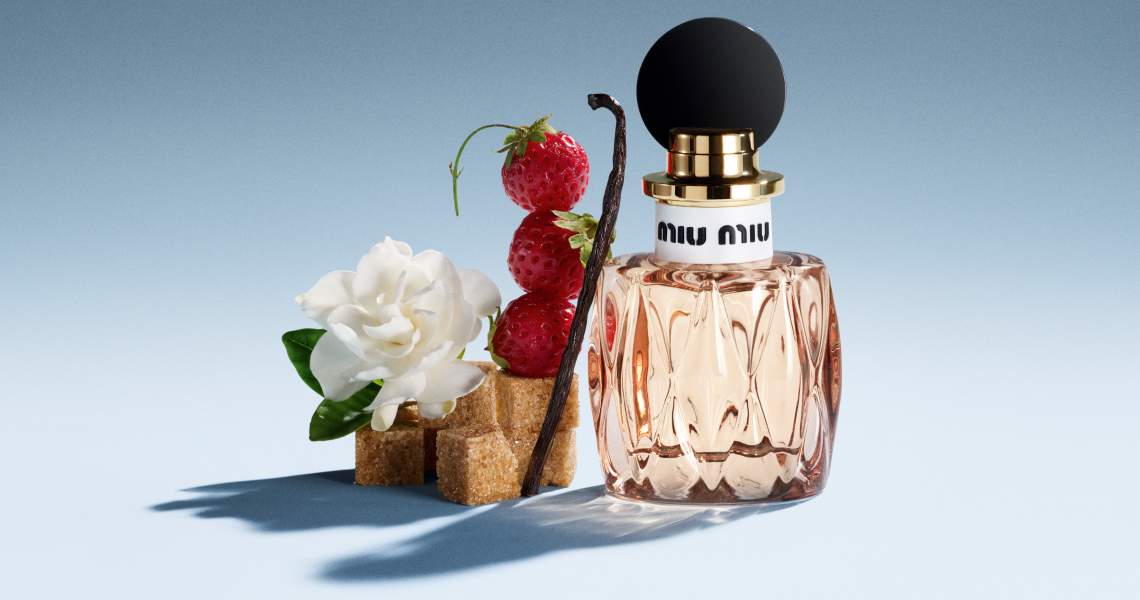
As beauty brands continue to race toward AI adoption, Miu Miu Beauty is prioritizing restraint in how — and where — the technology shows up.
That’s according to the brand’s chief digital officer, Tiffany James, speaking at Shoptalk Luxe this week. James said that, after the brand’s digital team was formed in early 2025, following L’Oréal Luxe’s acquisition of the Miu Miu beauty license in 2024, it wasted no time in embracing AI. “We started using AI pretty immediately, but more for internal processes to make ourselves more efficient,” she said.
Efficiencies were crucial, considering the brand’s accelerated go-to-market timeline. Miu Miu Beauty officially entered the market in August 2025 with the launch of Miutine, its debut fragrance, celebrated with a high-profile launch event in New York in September. “We didn’t have this huge team. We had a blank page,” James said. “Any ways for us to find efficiencies, we took them.”
Without historical data, AI became a way to pressure-test decisions before launch. “We used it for pre-testing content with [a segment of] our target audience to see whether it would perform OK,” James said. AI was also used to adapt creative assets to different digital platforms.
According to L’Oréal USA, Miutine broke into the top 15 rankings for premium fragrance sales following its debut. Distribution has focused on major U.S. retail partners, including Sephora, Ulta and Macy’s, plus the brand has hosted activations designed to drive awareness.
For example, from November 2025 to early January, Miu Miu Beauty hosted a pop-up at Aventura Mall in Miami, one of the country’s top luxury shopping destinations, according to L’Oréal USA. Dubbed the Miutine Holiday House, the multi-room, home-inspired experience featured ingredient storytelling, customization and on-site gifting.
While AI has supported execution, James emphasized that consumer-facing applications remain tightly controlled. “The challenge for us now is finding that ideal line for what is appropriate to be consumer-facing,” she said.
She added that, as a L’Oréal brand, “We have very strict guardrails around AI content.” For example, “We can never replace a human being.”
L’Oréal’s Responsible Framework for Trustworthy AI, established in 2021, is built around seven core principles: human oversight, safety, privacy, transparency, fairness, accountability and environmental consideration. It’s intended to ensure ethical, inclusive and human-centric use of AI across its brands, according to the company.
While some brands have leaned into AI-generated campaigns as a creative statement, James said that approach would not align with Miu Miu Beauty’s positioning. “We go very retro, we go very authentic, lo-fi,” she said.
In 2025, Miu Miu’s broader fashion and beauty ecosystem leaned into that distinctly retro, playful sensibility, including with its Miutine fragrance launch. On the fashion side, the brand launched Miu Miu Summer Reads clubs, aligning the brand with culture, intellect and community. On the beauty side, the brand included a baby-blue branded microphone in its influencer seeding kits for Miutine, encouraging creators to speak, perform or narrate using their own voice, rather than simply “unbox” the product.
James said the company’s internal AI tools include the platform Vizit, which predicts how consumers visually engage with creative assets. “It can test where the eye goes,” she said. “[For example] we can see whether the props we put in that visual are distracting from the bottle.”
In addition, there’s L’Oréal’s internal generative AI assistant, L’Oréal GPT, which was introduced and scaled across teams in 2024. It has since become widely adopted by employees as part of the company’s “GenAI for All” initiative to accelerate its insights and collaboration while protecting company data.
James cautioned against underestimating the skill required to deploy AI effectively, noting that “creative direction in itself is a skill set.” She was equally clear that AI fluency alone is not enough. When it comes to hiring, James said candidates who position themselves as “all AI” can be a red flag, stressing that she prioritizes adaptability and openness to learning as tools continue to evolve.
At the same time, she warned against overreliance on the technology itself. “Overestimating is putting all your eggs in one basket,” she said. “We are embracing AI, but taking it one step at a time.”
Looking ahead, James confirmed that the brand will launch additional products in 2026, though she declined to share specifics. And, ultimately, she positioned AI not as a creative replacement, but as infrastructure.
“We still want to maintain our attention on high-value tasks,” she said. So, she’s asking, “What can AI take off my hands that wouldn’t be as efficient otherwise?”