The Glossy 50 honors the year’s biggest changemakers across fashion and beauty. More from the series →
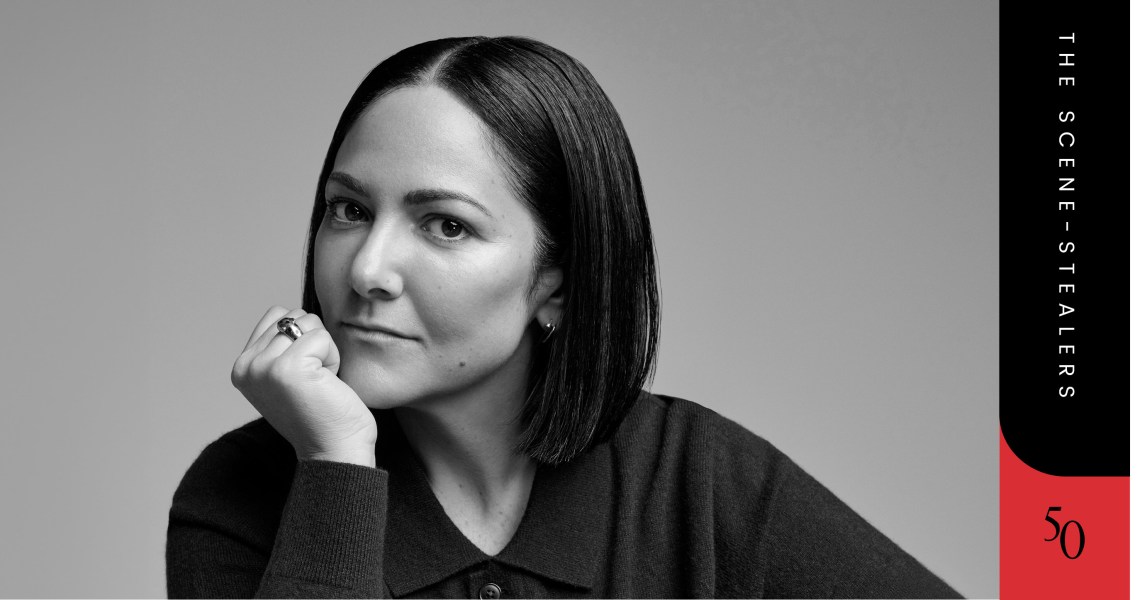
Few fashion marketers this year managed to create a cultural moment with a single product, let alone a sweater that’s been in circulation for four decades with its own trademark. But that’s exactly what Julia Collier, J.Crew’s CMO, pulled off with The Next Rollneck Generation, the campaign that turned the brand’s rollneck sweater into one of 2025’s most talked-about items.
The idea, Collier said, came from observing what people wanted from J.Crew at this uncertain time. “People look to J.Crew for comfort and for a feeling of familiarity,” she told Glossy. Though Collier, who grew up in England, had never encountered the rollneck sweater before joining the brand, she soon realized how deeply it sat in American memory. “Everyone had a story about it,” she said. “It felt like the right piece to bring forward again.”
Collier said she wanted to ensure the campaign didn’t read as pure nostalgia, a sentiment brands have leaned into heavily this year. Instead, she shaped it around modern visuals and a cast of young American creatives, including internet personality Benito Skinner, actor Dominic Sessa and musician Maggie Rogers. Weaved in were subtle callbacks to the brand’s history, including the use of “This Is the Day”, a 1983 song released the same year J.Crew was founded.
It worked. Within 48 hours of launch, Collier began receiving DMs and texts from friends, former colleagues and people she hadn’t spoken to in years, all saying they’d seen the rollneck campaign and thought it was “so good,” “so J.Crew,” or that it made them want to buy the sweater again. It was an early sign that the campaign was resonating beyond J.Crew’s core fans. Then came the data: Google searches for “J.Crew rollneck” jumped 900% in the week following the campaign’s launch, and new iterations of the sweater, including a Fair Isle version, began selling out without additional marketing.
But the bigger signal came from social platforms: TikTok and Instagram users began recreating the campaign’s looks and short vignettes, tagging J.Crew in posts that spread without any paid support. And, Collier said, talent agents began reaching out to pitch their clients for future brand work.
“That’s the most interesting measure of success: when something continues on its own, without us pushing it,” Collier said.
Collier’s said her approach to marketing is to maintain “a slight outsider perspective.” She said doing so is especially essential at a legacy brand with a strong internal mythology. “It’s easy to believe your own hype,” she said. “I always want to know what the people who aren’t already fans are saying.” As such, she can often be found checking Reddit threads, reading customer service notes and spending time in stores observing how shoppers react to the product.
Her background helps. Before J.Crew, Collier spent several years in brand marketing at Skims, where she learned to build momentum by responding quickly to cultural shifts. The challenge at J.Crew, she said, is different: The brand has deeper roots and a broader national audience, which means choosing moments carefully. “Not everything needs to be a big swing,” she said. “But when you do go big, you have to go all in.”
That philosophy also shapes how she thinks about J.Crew’s identity at a time when “American prep” is reappearing across fashion, from homegrown American brands to international ones. Collier is quick to point out that the term can feel exclusive or outdated, and she prefers to focus on the parts that feel relevant now — practicality, warmth, ease — rather than past stereotypes. “We reference our history constantly, but we’re not trying to reenact it,” she said. “We’re trying to make it meaningful today.”
Looking ahead, Collier said she sees opportunities in expanding J.Crew’s editorial voice. The brand’s history in standout copywriting and catalog storytelling makes Substack an obvious space to explore, she said. Physical activations will also play a role. J.Crw recently took over 190 Bowery, transforming the historic New York building into an immersive, gallery-style installation featuring products from the brand’s archives. It functions as a content engine as much as an in-person experience, Collier said, giving the brand material that resonates far beyond the showcase itself.
But above all, she said, the product is the engine behind the brand’s marketing. “When the product is good, the marketing follows,” said Collier. “You can build a lot from something people genuinely love.”
In 2025, that meant turning a heritage sweater into a national conversation and giving J.Crew one of its strongest cultural hits in years.