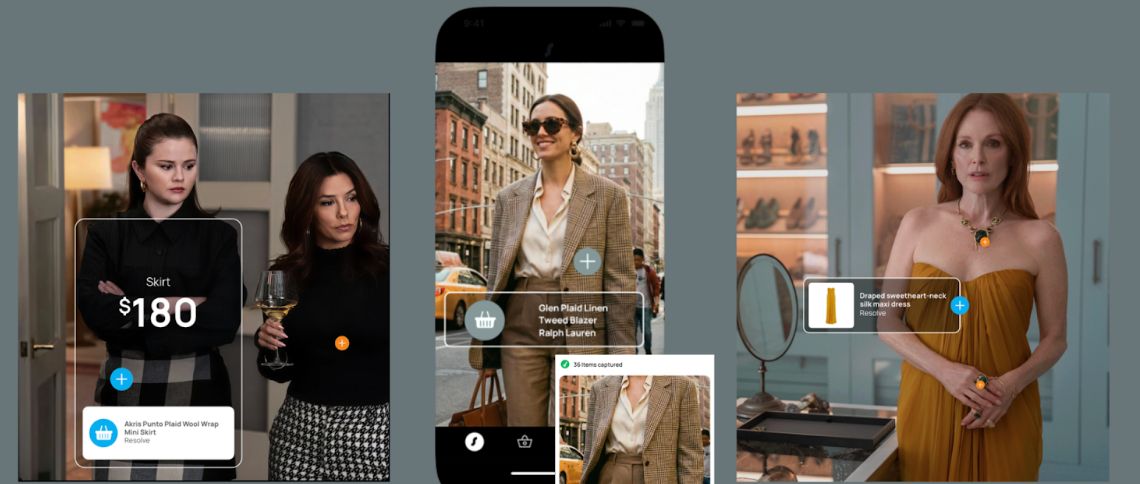
Poshmark is expanding its resale inventory beyond its own app through a partnership with the visual shopping platform Silvr, as the marketplace looks to reach consumers when fashion inspiration strikes.
The integration, which launched in the U.S. this week across apparel and accessories, brings Poshmark’s more than 120 million active listings into Silvr’s visual-search app. Users can upload a screenshot or photograph an outfit they see on TikTok, on television or in real life, and Silvr will find the best matches across its retail and resale partners. Shoppers selecting a Poshmark listing are redirected to the Poshmark marketplace to complete the purchase.
For Poshmark, the deal creates a new route to consumers before they have deliberately entered a shopping channel. The company sees it as a customer acquisition tool, a distribution point for its inventory and an additional sales channel for sellers.
“We want to be where discovery is happening next, not just where it’s happening now,” Elizabeth von der Goltz, chief revenue officer at Poshmark, told Glossy. “We’re bringing over 120 million listings into a discovery surface that reaches consumers in a completely new moment.”
The partnership comes as product discovery moves beyond retailer websites and traditional search bars. Google expanded its Circle-to-Search visual search feature in February, allowing consumers to identify multiple components of an outfit at once; Pinterest is testing a conversational, visual shopping app called Ask Pinterest; and Shopify is surfacing merchant products on external AI channels.
Silvr is differentiating itself by focusing solely on fashion and allowing users to readily search for products — including resale items — featured in TV, video, and online editorial content.
“The computer vision challenge of identifying clothing is very simple when you have very clean catalogs against white backgrounds,” said Silvr co-founder and CEO Josh Lanzet. “The challenge with computer vision comes with what is a large majority of Poshmark’s inventory, which is the things that have bad lighting and layering.”
Silvr co-founder and CTO Jason Fahlstrom said one-off resale inventory is where the technology becomes most valuable. “The value really sits in the long-tail aspect, the one-off resale listing that exists just once and never again,” he said.
Silvr searches inventory from around 450 directly onboarded retail and resale partners, including eBay, The RealReal, Nordstrom, Harvey Nichols, Nike and Levi’s. Through its broader affiliate-network relationships, it can access products from more than 1,300 brands. Lanzet said results are ranked by visual relevance.
During a small user test last week, Poshmark products began appearing among Silvr’s trending items, according to the founders. Poshmark will judge the partnership mainly by how many new buyers it brings to the marketplace, as well as the cost of acquiring a new buyer and that customer’s lifetime value.
“Our goal is not to move existing demand around. It’s to grow the total pie,” von der Goltz said.
The companies declined to disclose the partnership’s financial terms. Silvr earns affiliate revenue from purchases originating through its app and works with networks including CJ, impact.com, Rakuten Advertising and Awin to track those transactions and commissions.
For sellers, stronger product photography could improve visibility in visual search. Von der Goltz said Poshmark’s transition to using portrait-format images as part of an app redesign in March was partly intended to make listings easier for visual-shopping tools to recognize and surface.
“Sellers who show their items beautifully — with good light, a clean background and strong composition — are perfectly positioned for where this is going,” she said.
Silvr’s next phase increasingly centers on its B2B business. Fashion companies can add their visual search to their websites, while publishers and streaming services can make products within existing images and videos shoppable.
The company opened a beta for that infrastructure last month, and Lanzet said the company was already near its client capacity, with interest from fashion brands, publishers and streaming platforms.
For publishers, Silvr charges a licensing fee for tools such as “shop this image” or “shop this video,” while the publisher keeps the affiliate revenue. Lanzet said the proposition has become more relevant as media companies look to offset falling search traffic and monetize existing content. Publishers expect search engine traffic to decline by 43% over the next three years, according to the Reuters Institute’s 2026 industry survey.
Enterprise contracts now generate slightly more revenue for Silvr than its consumer app, Lanzet said. The company announced a $3 million pre-seed raise in February to fund engineering, improve its computer-vision technology and expand both businesses.
Silvr is also developing a more accurate recognition model, resale filters, influencer profiles with virtual closets and themed shopping lists, and tools allowing developers to integrate its technology elsewhere online.
Naver said in the company’s first-quarter results, reported April 30, that revenue from its global C2C businesses, including Poshmark, rose 57.7% year over year. It cited steady growth at Poshmark, though the company does not report Poshmark’s results separately.
But Poshmark does not want to become just an inventory source for outside AI tools. It sees those platforms as new ways to bring shoppers back to its marketplace.
“We definitely want to be the destination where consumers begin their shopping journey,” von der Goltz said. “We are expanding the surface area of discovery so that more people find their way to Poshmark, fall in love with what they find and come back again and again.”