In this week’s Luxury Briefing, why Neiman Marcus sits at the center of a shrinking U.S. luxury wholesale map, how Miista turned a viral political-fashion moment into a lesson in craft and pricing power, and what Hermès’s January price hikes are signaling in the resale market. Plus, executive moves across LVMH, Fast Retailing, Aura and Gucci; Dior’s global pop-up rollout; fresh financial signals from Phoebe Philo; and the questions shaping luxury as 2026 gets underway. For tips or comments, email me at zofia@glossy.co.
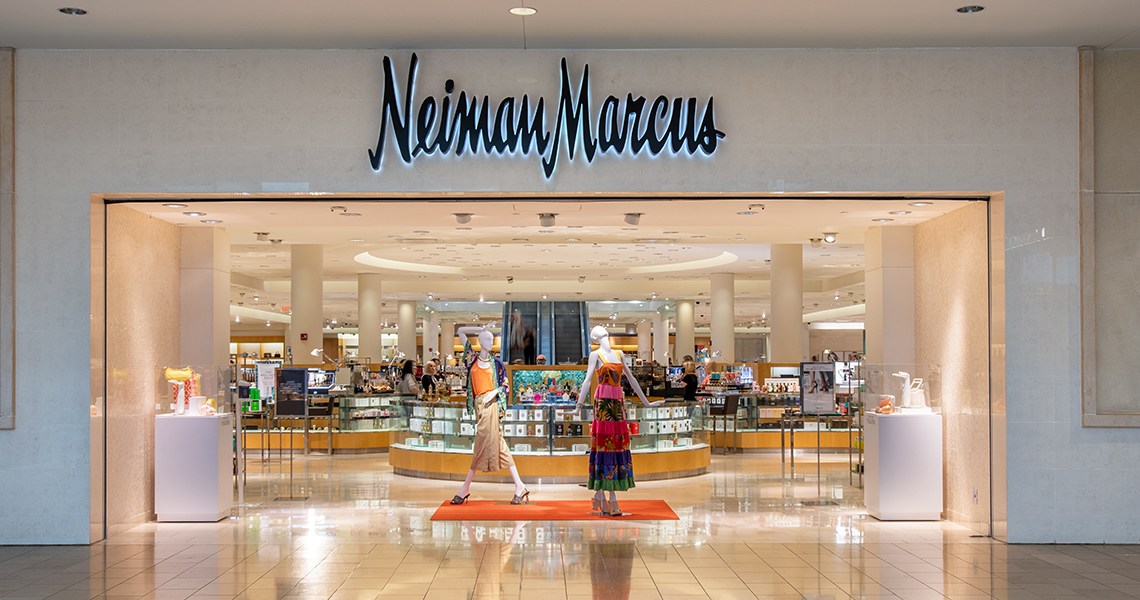
For much of the past year, the industry conversation around Saks Global has circled the same anxious question: Will it survive? But as the company enters 2026 under the weight of debt, vendor strain and asset sales, additional questions remain: What does all of this mean for Neiman Marcus? And what does it reveal about luxury retail in the U.S.?
On paper, Neiman Marcus remains the strongest banner inside Saks Global. It still commands deep private-client relationships, performs well in core markets like Texas and California, and retains cultural credibility with designers, based on its pre-acquisition disclosures. There are no public plans to close full-line Neiman Marcus stores, and in several cases, the company has reversed proposed closures under pressure from local stakeholders. Yet strength at the store level has not insulated Neiman Marcus from the financial reality of the group it now belongs to.
Neiman Marcus Group did roughly $5.4 billion in revenue in fiscal 2023, including nearly $1 billion in annual online sales, according to its earnings. The retailer posted strong profitability in the years following a 2020 bankruptcy, with adjusted EBITDA nearing $500 million in fiscal 2022 and several core markets, particularly Texas, exceeded pre-pandemic sales levels.
Saks acquired Neiman Marcus Group in late 2024 for $2.7 billion. Saks Global now carries roughly $4.7 billion in debt, with interest expenses projected to approach $400 million annually, nearly double fiscal 2024 levels. In December 2025, the company missed a bond interest payment of more than $100 million and is now reportedly in talks with creditors about approximately $1 billion in financing ahead of a potential restructuring.
That pressure has reshaped how Neiman Marcus operates in ways that matter to brands. Historically, Neiman Marcus paid vendors on net-30 or similarly short payment terms, in line with long-standing luxury wholesale norms, according to pre-acquisition vendor agreements and reporting by Vogue Business and Business of Fashion. In February 2025, that changed. Saks Global imposed uniform net-90 payment terms across all banners, calculated from the date inventory is received, while placing past-due balances on a 12-month repayment schedule starting in July of 2025. For many brands, some of which had been waiting close to a year for payment, the move was less a reset than an acknowledgment of how strained cash flow had become.
Typical retail payment cycles range from 30-45 days. Ninety days effectively forces brands to finance the retailer’s working capital, a burden that falls hardest on small- and mid-sized labels.
That fragility hardened this week. On January 7, Hilldun Corp., the factoring firm that represents more than 100 Saks Global vendors, told clients it still could not approve shipments to the retailer and advised brands to continue holding inventory. Hilldun said it has not received any payments from Saks Global since December 19 and has had little communication with the company since CEO Marc Metrick’s exit on January 2. The update came hours after Standard & Poor’s cut Saks Global’s credit rating to “selective default,” citing a missed interest payment of more than $100 million on December 30, ongoing liquidity issues and what it described as an inability to monetize assets quickly enough to stabilize the business. S&P warned that overdue payments have already disrupted Saks Global’s supply chain, leaving the retailer with insufficient in-stock inventory to operate normally. For brands, the practical implication is stark: Spring 2026 product is ready, other retailers are already receiving shipments, and inventory produced for Saks, Neiman Marcus and Bergdorf Goodman is now effectively stranded until a financing path becomes clear.
At the same time, Saks Global has been monetizing Neiman Marcus real estate to raise cash. In December, it sold the land beneath the Neiman Marcus Beverly Hills flagship. In early 2026, it confirmed a similar leaseback deal for the 250,000-square-foot Neiman Marcus store at Union Square in San Francisco, keeping the store open while shedding ownership of the underlying asset. According to S&P Global Ratings, the company has been targeting roughly $600 million in real estate transactions and has explored selling a minority stake in Bergdorf Goodman, as well.
For analysts, the situation is emblematic of a broader erosion in U.S. luxury distribution. In its Global Luxury Goods report published January 8, Bernstein describes traditional multi-brand retail as a model that has been weakening for decades, squeezed between fast fashion at the low end and the mega-brands at the top going direct. Today, Richemont derives roughly 76% of revenue from direct-to-client channels, Prada about 90% , and Kering has deliberately rationalized wholesale as part of its turnaround.
“The possible demise of Saks Fifth Avenue would create a material gap for small and mid-sized brands to find appropriate avenues of distribution in the USA,” Luca Solca, senior analyst at Bernstein, told Glossy. “This would be even more remarkable in the premium and upper premium space, where retail innovation has been significant.”
Industry executives argue that Saks Global’s problems are not only structural, but also self-inflicted. Saks Global and Neiman Marcus did not respond to requests for comment. “The Saks Global crisis is the symbol of the meltdown of the fashion industry as we know it,” said Susanna Nicoletti, a senior marketing, branding and digital executive who has worked across LVMH, Richemont and Kering. “From one of the most prestigious retailers in the world, it became a struggling conglomerate because of short-sighted management and an inability to innovate the multi-brand formula while staying relevant. Prestige alone is no longer enough. Staying in business today requires pragmatism and strong foundations.”
Those foundations were further weakened by repeated rounds of layoffs throughout 2025 as Saks Global integrated Neiman Marcus and cut costs. Hundreds of roles were eliminated across corporate functions, store teams and buying organizations, culminating in a unified buying structure for Saks and Neiman. While framed as an efficiency measure, the changes disrupted merchant continuity at a time when trust and relationships between brands and the stores were already under strain, due to delayed payments.
According to Kathryn Welles, CMO of the marketing company Alfredus.co, which has worked with Cartier and Perrier-Jouet, “Saks wasn’t undone by competition alone. It was undone by treating luxury like a financial instrument to be optimized through leverage and asset sales. Luxury retail is not a spreadsheet. It’s a living network of relationships between brands, buyers, artisans and customers. When relationships are subordinated to financial engineering, collapse isn’t a shock. It’s the natural conclusion.”
Outside of the department-store system, a handful of smaller multi-brand players have quietly absorbed energy and share that once flowed through national wholesale. Mitchells Stores, the family-owned retailer founded in 1958, now operates roughly 10 locations under banners including Mitchells, Richards and Marshs. In 2025 it acquired Stanley Korshak in Dallas, one of the most productive specialty luxury stores in the U.S., with estimated annual sales around $40 million. The Webster, founded in 2008, operates about 13 locations across the U.S., including Miami, New York, Los Angeles and Austin, and was majority acquired by Frasers Group in late 2025 to support measured expansion while preserving its tightly curated model. Alongside them, specialists like Hirshleifers in Manhasset, New York and Forty Five Ten in Dallas illustrate where luxury wholesale still works: in regional, service-driven environments built on long-term vendor trust rather than national scale.
For many designers, Saks, Neiman Marcus and Bergdorf Goodman still represent a significant share of wholesale revenue. There are few national alternatives left. Barneys is gone. Matches has exited the U.S. Specialty retailers are influential but fragmented. At Glossy’s recent Beauty Summit, luxury beauty brands voiced parallel concerns about shrinking premium shelf space and rising risk per account. The difference is that beauty has Sephora, which is still growing, according to LVMH 2025 earnings. Fashion lacks an equivalent national discovery engine.
How Miista leaned into its Rama Duwaji fashion moment
When artist Rama Duwaji wore the London-based brand Miista’s Shelley boots to the swearing-in ceremony of her husband, Zohran Mamdani, as New York City mayor, the image spread quickly online, and so did comments about her outfit. For example, the New York Post highlighted the boots’ $630 price point.
According to the 14-year-old brand, the attention driven by the January 1 event provided an opportunity. “We always hope that our shoes can be the catalyst for conversation,” a Miista representative said. “And this year, Rama Duwaji happened.” In the U.K., the “Kate Middleton effect” is well-documented for catapulting unknown brands into the spotlight and selling out collections.
Rather than allow a narrative about the style’s high price spiral, Miista used its email communications to break down the boot’s construction, including its Italian leather, short European supply chain and in-house manufacturing — and, implicitly, explain why a craft-led product doesn’t price itself like fast fashion.
It appears that the strategy landed. “We’ve felt a significant lift in activity since Rama wore the Shelley boots, most notably from our U.S. community,” a spokesperson said in an email, pointing to increased site traffic and footfall at the brand’s New York store, which opened in 2024. According to the spokesperson, customers have been coming in to request the Shelley style and then staying to browse. The brand said U.S. sales have grown at a double-digit pace over the past two years, without outside capital. Opening a store in Los Angeles is among its next steps.
Hermès’s January price hikes
Hermès has just increased its U.S. prices by roughly 3.8–10.3%, according to the news site Purse Bop. The brand regularly increases its prices annually. So far, demand in the resale market has remained resilient, according to Richard Ramirez, vp of merchandise from Reklaim, a data-backed pre-owned luxury platform. The spokesperson said secondary prices typically adjust quickly after retail increases, particularly for high-performing styles like the Birkin 25 and Mini Kelly, which continue to command strong premiums.
Separately, in a new report, Bluefish, an AI-driven marketing platform tracking purchase-intent searches, ranks Hermès fifth among the top 10 luxury fashion brands searched for in holiday gift–related AI queries in its new report. The brand came behind Louis Vuitton, Gucci, Ralph Lauren and Chanel, and ahead of Dior, Prada, Burberry, Coach and Loro Piana.
Executive moves
- Amandine Ohayon will be appointed CEO of Givenchy on January 9, succeeding Alessandro Valenti and reporting to Pietro Beccari, chairman and CEO of the LVMH Fashion Group and chairman and CEO of Louis Vuitton. Valenti will become deputy managing director in charge of commercial activities at Christian Dior Couture on January 12, reporting to Pierre-Emmanuel Angeloglou, deputy CEO of Christian Dior Couture. Sidney Toledano, senior advisor to LVMH chairman and CEO Bernard Arnault, said Valenti “demonstrated exceptional determination and efficiency in managing Givenchy’s transitional phase.” Beccari said he is “convinced Amandine will play a pivotal role in further accelerating the new growth chapter of Givenchy,” and Angeloglou said he is “confident that Alessandro will make a significant contribution to our retail and digital performance.”
- Fast Retailing has appointed Italian designer Francesco Risso as creative director of GU, tasking the former Marni creative director with shaping the brand’s next growth phase. His debut GU collection will debut in fall/winter 2026, plus he’ll develop a collaboration line with Uniqlo set to launch in 2026.
- The Aura Blockchain Consortium has appointed Marcel Härtlein as chief executive officer and general secretary, succeeding Romain Carrere. Härtlein previously served as group head of digital and IT at Lalique and will lead the nonprofit’s next phase of growth, including expanding global membership, accelerating blockchain adoption and developing new services. Aura now includes more than 50 luxury brands and over 80 million registered products.
- Christian Dior Couture Americas has appointed Charlotte Holman Ros as president effective February 1, succeeding Alexandra Winokur, who will depart on January 31 following a one-month handover. Holman Ros joins from her role as president of Parfums Christian Dior North America and will report to Alessandro Valenti, deputy managing director in charge of commercial activities at Christian Dior Couture, while Parfums Christian Dior has named Olivier Teboul as her successor in North America.
- Since her appointment in September, Gucci president and CEO Francesca Bellettini has moved quickly to reshape the brand’s management structure to support its turnaround under artistic director Demna. She created a new chief client, marketing and commercial officer role for Dario Gargiulo, appointed Gianluca De Ficchy as CFO, hired Giovanni Perosino as senior vice president of marketing, and centralized reporting so all regional presidents report directly to her, as Gucci posted a better-than-expected third-quarter performance.
News to know
- Dior has launched a global pop-up tour to mark Jonathan Anderson’s debut men’s and women’s collections, which landed in stores early this month. The tour begins with a takeover of Selfridges’s Corner Shop in London from Jan. 8 to Feb. 28, before hitting Le Bon Marché in Paris from Jan. 26 to Feb. 22 and SKP in Beijing through March 3. The pop-ups spotlight Anderson’s first ready-to-wear collections, refreshed Dior icons and the new Book Cover totes, with prices ranging from around $1,000 for footwear to roughly $10,000-plus for bags and statement accessories.
- Phoebe Philo’s namesake label is signaling strong momentum, forecasting 2025 revenue of about $41 million, roughly triple its 2024 turnover of $14.3 million, according to Companies House filings published December 30. Revenue nearly doubled year over year in 2024, mainly driven by direct-to-consumer sales alongside a growing wholesale business, as the Phoebe Philo–founded brand continues global retail expansion and prepares to open its first flagship in London’s Mayfair. Prices are positioned at the high end of luxury, with ready-to-wear starting around $1,000 and bags and accessories reaching $15,000–$20,000. The brand is backed by minority investor LVMH Moët Hennessy Louis Vuitton.
Listen in
On the Glossy Podcast, senior fashion reporter Danny Parisi, international reporter Zofia Zwieglinska and editor-in-chief Jill Manoff kicked off the first episode of the year by looking ahead to the biggest fashion questions of 2026, from what consumers will shop for and how they’ll buy to how much they’ll be willing to spend. Listen here.
Read on Glossy
David’s Bridal launches a new ambassador program for employees and creators. What can brands expect if Saks Global files for bankruptcy? How Favorite Daughter plans to scale to $150 million this year.