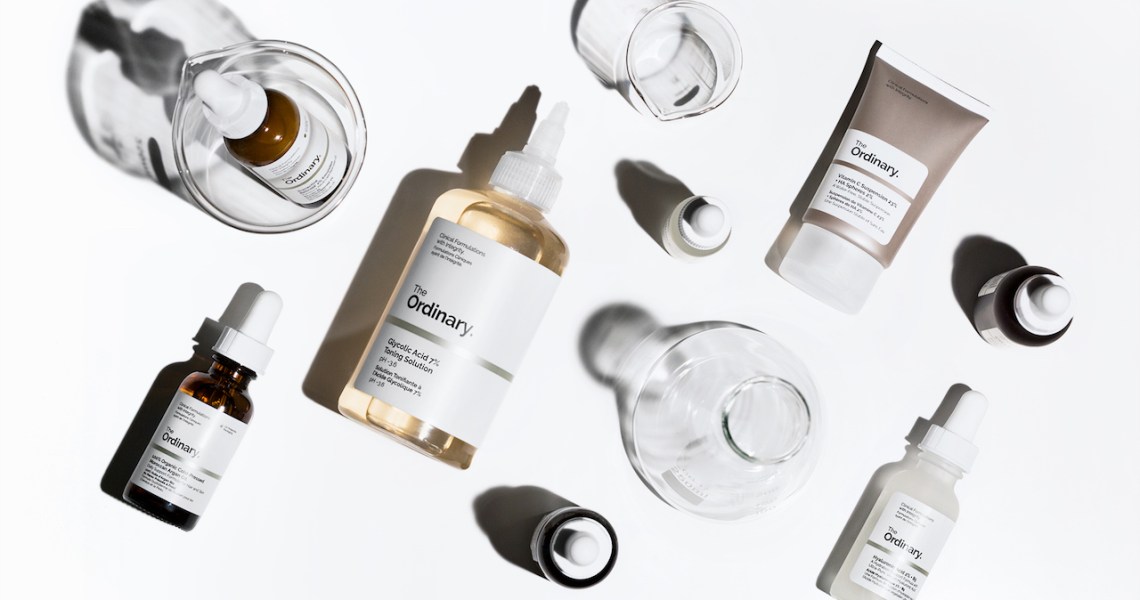
The Ordinary shook up the beauty aisle when it launched in 2016 with affordable skin-care formulations built around a single active ingredient, like hyaluronic acid or caffeine. A decade later, that approach appears to be helping the Estée Lauder-owned skin-care brand in a new era of beauty consumption.
According to data from 5W AI Communications, The Ordinary tops the list of beauty brands surfaced in AI citations. The brand’s products appeared in 7% of responses to beauty-related consumer prompts submitted to ChatGPT, Claude, Perplexity and Google AI Overviews. Skin-care brands largely dominated the top results, with CeraVe and La Roche-Posay also in the top five brands by AI citations.
Those results speak to a new discovery model where LLMs like ChatGPT and Google Gemini prioritize ingredients and expert credentials to surface product recommendations.
“Brands are using ingredient transparency. They’re talking about their dermatologist credentials,” said Ronn Torossian, founder and chairman of 5W AI Communications. “And that is what AI engines like to see: more detail, more description, more facts.”
In recent months, beauty retailers like Sephora and Ulta Beauty have announced partnerships with tech giants like OpenAI and Google, respectively, to integrate AI into their platforms. Those partnerships are growing as AI threatens to upend traditional search as a primary discovery path: According to a September 2025 report from digital marketing agency WSI, 58% of Google searches result in zero clicks to external websites.
Among primarily makeup brands, Charlotte Tilbury was the top brand by AI citations, appearing in 4.5% of AI citations, thanks in large part to its Magic Cream, Pillow Talk and Flawless Filter products. The brand has been a standout in Puig’s portfolio; according to the Spanish conglomerate’s first-quarter 2026 report published in April, like-for-like makeup sales grew 9.2%, largely driven by Charlotte Tilbury sales.
While 21st-century brands like Rare Beauty and Drunk Elephant also cracked the top 10, legacy brands were largely absent from the top brands cited by AI. According to 5W’s data, Estée Lauder was the highest-ranked legacy beauty brand by AI citations, ranking No. 18.
“There are legacy brands that are in deep trouble in every single industry,” said Torossian. “This is a completely new world. And one of the challenges traditionally big companies have is they’re more resistant to change.”
Torossian anticipates that more brands will invest in tactics to boost their AI presence in 2027. That includes building out more detailed product citations on their websites, publishing more original research, and producing more video content to create the kind of information that LLMs pick up.
But much of the data picked up by LLMs like ChatGPT is outside of brands’ direct control. According to 5W, Wikipedia pages and Reddit forums, like r/SkincareAddiction, r/MakeupAddiction and r/30PlusSkinCare, are also commonly cited in AI beauty search queries.
Consumers using AI have also, in some cases, shown greater readiness to spend. According to Amazon, consumers who used the retail giant’s AI chatbot to make a purchase between November and December 2025 spent 80% more than those who did not. In its third-quarter 2026 earnings report published in May, The Estée Lauder Companies stated that, despite overall skin-care sales remaining flat, net sales at The Ordinary were up double digits.
But the pipeline for AI shopping and discovery remains uncertain. OpenAI rolled back its “Instant Checkout” capability in March, and consumers have also shown resistance and skepticism to the growing presence of AI in online content.
But that hasn’t stopped consumers from adopting AI, particularly when it comes to shopping. According to NielsenIQ, consumers conduct over 1 billion beauty-related searches per week on ChatGPT, and nearly 49% of Gen Z and 37% of millennials use generative AI weekly for search or shopping.