This Unpacked guide, sponsored by Cosmoprof, explores the increasingly strategic role of the ecosystem behind a beauty brand, and how these relationships help brands innovate, scale and compete internationally.
Global beauty and personal care sales are expected to reach $669.8 billion in 2026, growing at a rate of 6.1%, according to Euromonitor International. But despite the momentum, it can take a village to bring these products to market, and brands at various stages of maturity have different needs when it comes to their supply chains.
This reality is also fueling change in beauty manufacturing, particularly contract manufacturing. According to Grand View Research, the global personal care contract manufacturing market is estimated at $25.8 billion in 2026 and is projected to reach $45.5 billion by 2033. Grand View Research’s definition of this category includes manufacturing, custom formulation and research and development, as well as packaging services across skincare, hair care, color cosmetics, fragrances and other personal care products.
Bringing a beauty product to market often means drawing on several kinds of expertise, from sourcing ingredients and developing a formula to choosing packaging and scaling up production.
“Brands may work with several manufacturers because different categories require distinct formulation knowledge, equipment and production environments,” said Enrico Zannini, general manager of BolognaFiere Cosmoprof. “A specialist in color cosmetics may offer different capabilities from a company focused on skincare, fragrance or professional hair products.
“At the same time, some manufacturing groups are expanding across categories and integrating development with industrial production. This can offer brands opportunities to consolidate relationships,” he said. “The choice depends on the portfolio, the expertise required and the brand’s ability to coordinate suppliers.”
These specialists come together at Cosmoprof Worldwide Bologna, the international trade show covering all sectors of the beauty industry, from ingredients to finished products, and Cosmopack, a dedicated cosmetics supply chain exhibition. For brands, it’s an opportunity to compare what suppliers and manufacturers can offer at different stages of product development.
But first, what does a beauty brand need to know when setting up the crucial backbone of their physical operations?
To really understand the ins and outs of the beauty business, here are some key terms for brands.
- Active ingredients: Specialized, biologically or technologically targeted functional compounds added to a formulation to deliver the specific performance and benefits a brand claims.
- Contract manufacturer: A third-party company that produces ingredients and/or finished products for another brand according to the brand’s specific designs, formulas and quality standards.
- Formulation: The chemical composition and recipe that combines base raw materials with functional active ingredients to create a stable, effective cosmetic product.
- Lead time: The time required to complete a defined step, such as sourcing packaging materials, manufacturing a batch or delivering finished goods. When comparing suppliers, it’s helpful to clarify when the clock starts and what the quoted time includes.
- MOQ: Minimum order quantity. The smallest number of units a manufacturer will agree to produce in a single order.
- Original design manufacturer (ODM): Also known as turnkey manufacturers, ODMs handle the end-to-end product development lifecycle — including trend forecasting, raw material selection, custom formula creation and final assembly.
- Pilot batch: A small production run used to assess how a formulation and manufacturing process perform before scaling up to commercial volumes.
- Private label: A model in which a supplier offers an existing product or formulation that a brand can sell under its own name. The supplier may offer options such as different fragrances, shades or packaging.
- Raw materials: Cosmetic products’ foundational building blocks and base ingredients, such as binders, polymers, oils, solvents, etc. These primarily provide products’ physical stability, tactile texture, application feel and color payoff.
Third-party manufacturing has matured to become about more than buying production capacity or filling tubes. For beauty brands, manufacturers have transformed into full-service innovation partners that offer custom formulation, clinical substantiation, packaging engineering and global regulatory navigation.
“Beauty brands increasingly need access to capabilities that extend well beyond production capacity,” said Zannini. “Depending on their expertise, manufacturing partners can contribute formulation knowledge, research, packaging development, regulatory support and the infrastructure needed to move from a laboratory concept to commercial production.
“For emerging brands, this provides access to resources that would be challenging to build internally. For established companies, it can support entry into new categories or markets.”
According to Zannini, the most productive relationships begin with a shared understanding of the project: the intended consumer, product benefits, target markets, price positioning, distribution channels and expected volumes. These will further influence formulation, packaging and the development schedule.
Beyond contract manufacturers, beauty brands collaborate with a diverse ecosystem of partners across research, technology, supply chain and retail. These partners may include:
- Academic research institutions and universities: Labs and researchers develop and validate raw material extraction.
- Agriculture, food tech and biotech players: These cross-industry partners provide waste byproducts for ingredient upcycling and/or help develop alternatives to controversial or supply-constrained raw materials.
- AI and technology platforms: Screen ingredients, generate complex formulations, automate global regulatory compliance checking, and build AI virtual consultants for customized recommendations and marketing content generation.
- Off-price retailers and other specialized sales channels: Manufacturers work with off-price buyers to design, manufacture and supply limited-run, value-oriented products specifically for “treasure hunt” buyers, while professional networks including salons and spas are critical growth engines that cannot be overlooked.
- Eco-logistics and ethical certification bodies: Establish more sustainable logistics and supply chains in pursuit of specialized certifications from ethical conservation organizations.
Social media virality on TikTok, Instagram, YouTube and other platforms have made speed-to-shelf more critical and complex than ever. These demand cycles may move at lightning speed, but the time needed to bring a product to market depends on how manufacturers balance R&D with regulatory compliance and industrial scaling. Factors include whether a formula is created entirely from scratch, reformulated to meet new clean standards or adapted from an existing stock base.
“Manufacturers can help brands evaluate the implications of different routes, from an existing formula to a fully customized product,” said Zannini. “A clear plan should identify testing, component sourcing, industrialization and approval milestones, including the decisions that could affect timing or cost. Early coordination between development and production teams helps identify constraints before they become launch delays.”
Product development spans many phases over the course of several months:
- Concept and trend forecasting, including determining whether a new trend is a short-term spike or a long-term shift.
- Custom formulation, lab testing and compliance.
- Industrialization, pilot batches and packaging engineering, such as ensuring packaging maintains product integrity and meets sustainability requirements and scaling up production.
- Commercial production, logistics and deployment to primary distribution channels, including salon, spa or retail partners.
- Post-launch, inventory optimization and channel expansion allow brands and manufacturers to manage overstock, while consumer feedback and data can influence line extensions or reformulations.
Digital tools are also helping stakeholders evaluate ingredients, coordinate development activities and use formulation knowledge more efficiently, according to Zannini. For instance, AI can support formulation analysis and regulatory screening, while automation can improve production planning and consistency.
“The potential benefit is a more informed development process, with fewer avoidable iterations,” said Zannini. “However, the impact on timing depends on the product and the capabilities of the partners involved.
“Physical testing, safety assessment, packaging compatibility and industrial validation remain essential. Integrating R&D and manufacturing expertise early can be just as important as introducing a new technology.”
Formulations and what goes into a product have become more transparent and accessible than ever, prompting brands and their partners to be more mindful about ingredient decisions.
Seventy-four percent of U.S. consumers consider organic ingredients important to personal care products, according to a 2025 survey. However, the desire for clean and sustainable products does not mean that consumers are willing to sacrifice performance for their ethics. Research shows that consumers’ leading priority is products that ensure the most effective personal care routines. The majority of consumers simply don’t want to compromise performance for sustainability.
To meet the growing demand for cleaner and more effective ingredients, manufacturers and their partners are prioritizing in-house raw material development. Engineering exclusive active ingredients gives brands higher efficacy, full supply chain traceability and fact-checked clinical trends.
“Sustainability is encouraging companies to examine the entire journey of an ingredient, including its source, processing requirements, availability and contribution to the finished product,” Zannini said. “This is creating opportunities for biotechnology, more resource-efficient processes and the recovery of useful materials from other industries.”
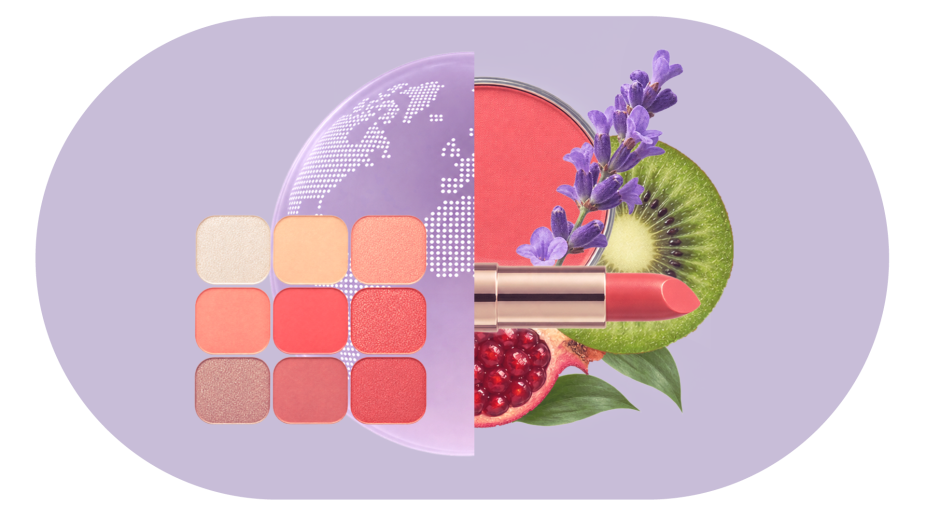
One approach manufacturers are increasingly experimenting with is upcycling waste byproducts into high-performance ingredients. For instance, Intercos Group, which works with more than 700 clients ranging from emerging brands to multinationals, uses coffee silver skin, a byproduct of the roasting process, for its emollient properties. Similarly, beauty contract manufacturer Ancorotti Cosmetics extracts orange water from fruit peels sourced by food industry partners and uses it in its formulations. As Zannini noted, this collaboration between ingredient suppliers, formulators and manufacturers is essential to translating promising research into solutions that brands can use reliably.
Manufacturers’ innovative strategies are poised to become even more valuable to brands as global regulations change how products are manufactured and restrict ingredients such as silicones, microplastics, talc and palm oil. In anticipation of these bans, manufacturers are developing 1:1 clean replacements that maintain or, in some cases, even improve the visual and sensory performance of the ingredients.
“Regulatory awareness needs to be part of continuous business planning,” Zannini said. “The challenge is to combine environmental objectives with performance, consistency and commercial scalability.”
Zannini recommended that companies monitor upcoming regulatory changes across markets and discuss emerging requirements with other stakeholders and experts at trade events. Anticipating changes gives brands more time to assess alternatives and coordinate implementation, reducing the risk of disruption to launches or existing product ranges.
Brands should also explain what makes new or sustainable ingredients relevant to consumers and connect that story to evidence.
“Scientific terminology becomes more meaningful when it helps people understand a product’s purpose, performance or experience,” Zannini said. “Close collaboration with suppliers can provide valuable information about sourcing, development and testing.
“The communication should also distinguish evidence relating to an individual ingredient from results demonstrated in the finished product. Whether the story concerns efficacy, traceability or environmental improvements, clear and specific explanations help brands communicate innovation credibly and build long-term trust.”
There are many key cosmetic ingredients and ingredient categories that beauty brands and their partners must monitor closely due to legislative bans, environmental restrictions and other safety concerns.
| Ingredient/Category | Cosmetic function | Status and impact |
| Silicones | Synthetic polymers traditionally used as emollients and slip agents for smooth, silk application and long wear in skincare and makeup. | Regulatory bans have restricted specific substances or uses, prompting formulators to develop alternative ingredients that achieve similar textures or performance. |
| Microplastics | Non-biodegradable synthetic polymer particles used for texturizing, bulking, film-forming and sensory enhancements in formulas. | Global environmental restrictions due to ocean pollution and non-biodegradability have spurred a transition to natural alternatives. |
| Talc | Mineral powder traditionally used to absorb moisture, provide opacity and offer a dry sensory feel in powders. | Safety concerns and client blacklists are driving formulators to replace talc with natural excipients, such as upcycled agricultural byproducts. |
| Palm oil and palm derivatives | Vegetable oil present in roughly 70% of beauty products, processed into fatty acids to create emollients, emulsifiers, surfactants and more. | E.U. Deforestation Regulation (EUDR) requires that palm oil and its derived products must not originate from deforested land. Non-compliance carries significant fees. |
| Mica and silica | Mineral powders used for shimmer, opacity, oil absorption and tactile slip across color cosmetics and skincare. | Emerging regulatory examination, raw material discontinuations and brand blacklists are leading formulators to develop clean substitutes. |
| Regulated deforestation crops, e.g., coffee, cocoa | Harvested for functional botanical extracts, specialty oils and upcycled sensory binders. | EUDR enforcement targets 7 key crops, requiring full supply chain geolocation to verify no tropical high-carbon land was deforested. |
Unfortunately not. The complexities of packaging go way beyond the surface, and they intersect with the consideration of ingredients.
One major reason: Brands have to ensure that a product’s packaging and its formulation are compatible. Certain active ingredients will oxidize if stored in clear glass. Some pumps can easily become clogged if an emulsion is particularly viscous.
“Brands need to consider protection, functionality, consumer experience and visual identity together with manufacturability, cost and component availability,” said Zannini. “Packaging decisions made early can have consequences throughout the product’s commercial life.”
The conversation on sustainability applies just as much to product packaging as it does to product ingredients. Being mindful of recycling limits, considering refillable packaging options — and whether or not they’re viable — are serious considerations for modern beauty brands. And there’s never been more attention on microplastics and other forms of plastic leaching — where a packaging material or component degrades or bleeds into the beauty product itself, which then makes its way to the consumer’s body.
“Environmental and regulatory requirements also need to inform development,” Zannini said. “The E.U.’s Packaging and Packaging Waste Regulation is one example of why brands and their partners need to consider future requirements when making current investments. Refill systems, material choices and recyclability should be evaluated in relation to the complete packaging solution, the intended market and how consumers will actually use and dispose of it.”
All of these decisions have financial and logistical implications. Hasty or uninformed packaging choices can cause unanticipated supply chain delays, erode carefully balanced margins and even result in consumer backlash if the considerations above are ignored.
Packaging development connects several areas of expertise, including brand strategy and design, formulation, materials, testing, regulations and logistics. That’s why it helps to bring packaging, formulation and production specialists into the conversation before committing to a design.
“At Cosmopack, brands can speak directly with packaging manufacturers, formulation specialists and machinery providers,” said Antonia Benvegnù, head of sales Cosmopack Bologna, Asia and Americas. “Those conversations help brands understand how a packaging choice will affect the formula, the filling line and the way the customer uses the product.”
Navigating unpredictable demand and viral shopping cycles requires brands to move away from rigid, traditional forecasting and instead build agile, collaborative relationships with contractor manufacturers.
“A sudden increase in orders affects materials, packaging availability, production schedules and working capital, while the duration of that demand may remain uncertain,” Zannini said. “This makes communication and scenario planning particularly important. The objective is to respond to an opportunity while protecting product consistency and avoiding inventory commitments that become difficult to manage.”
Instead of committing to large upfront inventory runs, brands can work with manufacturers that accommodate lower MOQs.
For instance, manufacturers like Ancorotti Cosmetics work with indie and startup brands on smaller order batches, but maintain the infrastructure to scale production volume if a product goes viral. Likewise, The Soap Factory in New Zealand and Italy’s Le Antiche Mura offer adaptable batch sizes depending on brand needs — balancing early-stage flexibility with equipment capacity when demand surges.

“Flexibility needs to be understood across the whole supply chain. Packaging minimums may differ from manufacturing minimums, and smaller batches can involve higher unit costs,” Zannini said. “Brands should discuss both the starting point and the conditions for growth, including component sourcing, capacity and lead times. A suitable partner helps them understand these trade-offs and establish a realistic route to larger volumes.”
Beyond their equipment infrastructure, contract manufacturers also have valuable market intelligence that brands can leverage. Working with brand partners across the globe gives these manufacturers a unique, forward-looking view of where market demand is headed in the long term.
Manufacturers such as Intercos have internal trend teams dedicated to specific regions and markets to evaluate market data. This helps distinguish short-term viral spikes and medium- or long-term category shifts before manufacturers and brand partners set production schedules.
“Social media can generate demand much faster than a physical supply chain can respond, but market insights can help put short-term signals into context,” Zannini said. “Brands and manufacturers should discuss replenishment lead times, production constraints and the conditions for increasing volumes before a surge occurs.”
Between a patchwork of regulations and international trade volatility, taking a brand abroad isn’t as easy as it used to be.
Much depends on where a brand is expanding. For those looking to grow in the U.S., they’ll have to grapple with the Modernization of Cosmetics Regulation Act (MoCRA), which applies whether a brand is planning to manufacture within the country or just importing. The FDA regulation makes detailed manufacturer documentation table stakes, and it also calls for the sharing of any and all “adverse events” associated with product use.
For brands expanding to the E.U., there will be other considerations, including the more than 1,700 ingredients currently banned from use in cosmetics and personal care products sold in member states.
“International expansion requires a brand to reassess both its product and its operating model. Formulation requirements, claims, labeling, documentation, distribution and consumer preferences can vary between markets,” Zannini said. “The location of production can also become a strategic consideration. Regional manufacturing may help improve responsiveness and bring operations closer to customers, although its suitability depends on the business.”
Even certain retailers have vastly different requirements. This is particularly relevant when navigating clean beauty standards and certification, which can vary significantly between retail players and the third parties they lean on for certification.
A dependable manufacturing partner who knows the lay of the land in these different geographies is essential to ensuring compliance in a rapidly shifting global market. For instance, through the Cosmoprof international network, brands can engage with different industry communities, compare approaches and identify potential partners with a more informed understanding of local conditions.
“A brand’s core promise may be shared internationally, while textures, fragrance preferences, formats or ingredient choices require closer consideration in individual markets,” Zannini said. “Manufacturing groups with regional development or production capabilities can contribute local knowledge while drawing on a broader pool of scientific expertise. The appropriate balance depends on regulatory requirements, consumer expectations and operational complexity.”
Finding the right contract manufacturer or supply chain partner can be harder than it looks. It requires evaluating everything from scientific capabilities and operational flexibility to regulatory expertise and even cultural alignment.
Trade exhibitions can help brands identify and compare potential partners through direct conversations. For instance, Cosmoprof Worldwide Bologna brings together the global beauty supply chain under one roof through Cosmopack, its dedicated cosmetics supply chain exhibition. Participants include contract manufacturers, raw materials labs, packaging engineers and machinery providers.
At these events, brands can scout emerging players, compare competitors and build direct relationships with prospective partners. Brands can also use digital platforms such as Cosmoprof My Match to filter potential suppliers by product category, business goals and formulation capabilities before meeting on the exhibit floor.
“Brands should begin by assessing whether a partner has relevant expertise for their product category, target markets and stage of development,” said Benvegnù. “Key considerations include R&D capabilities, quality systems, testing, traceability, regulatory support, production capacity, minimum orders and lead times. They should also clarify formula ownership, confidentiality, change-management procedures and the evidence behind environmental or social commitments.”
Scientific and technological depth is another important consideration when evaluating potential partners.
For instance, top manufacturers often maintain dedicated in-house raw material labs, conduct clinical testing or collaborate with university biotech centers to develop proprietary, scientifically validated active ingredients. This commitment to innovation is especially important to develop replacements for increasingly restricted ingredients. On that note, as tighter global laws take effect, manufacturers’ regulatory affairs teams play a critical role in tracking ingredient origin, overseeing supply chains and engineering eco-friendly packaging.
Technology is also reshaping the beauty business, with AI accelerating product development and testing, as well as supply chain automation shortening concept-to-market timelines.
Indie and emerging brands in particular need partners that accommodate flexible batch sizes, ranging from test runs to multi-ton commercial orders. This adaptability and agility are essential for brands to manage inventory risks during early growth. Additionally, brands may want to consider whether manufacturers have regional R&D hubs to adapt formulas for local climates or cultural preferences, or offer short, traceable supply chains as part of their sustainable strategies.
Finally, operational transparency and cultural alignment — such as behind-the-scenes access and human-centered, socially responsible business practices — help ensure supply chain integrity and build trust, both between partners and with brands and consumers.
As the industry continues evolving, Zannini believes that the companies behind beauty brands will increasingly be evaluated on how they bring together capabilities across research, formulation, packaging and manufacturing.
“We expect these connections to become even more important,” Zannini said. “Digital capabilities and AI will contribute to this evolution, alongside the development of production networks that combine international expertise with proximity to individual markets. For Cosmoprof, making this expertise visible is central to understanding the industry’s future.”