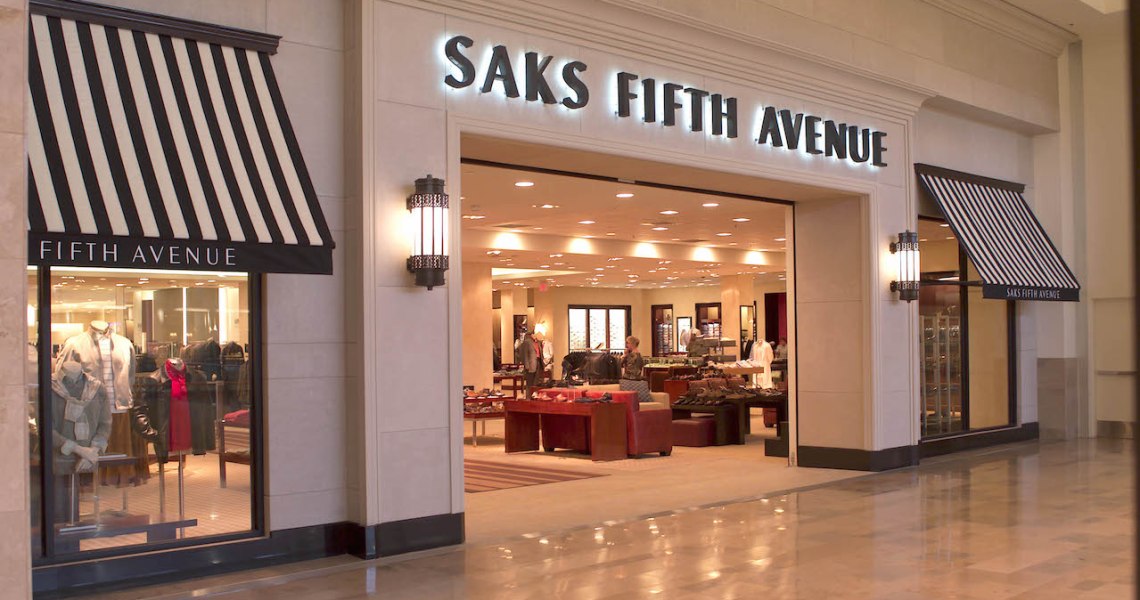
This week, Saks Global finally declared bankruptcy after weeks of rumors. We take a look at the factors that led to this moment.
What went wrong at Saks Global? Barely two years after its multi-billion-dollar merger with Neiman Marcus, the beleaguered luxury retailer filed for bankruptcy protection on Wednesday morning, following weeks of swirling rumors that the filing was imminent.
Despite the confidence the company displayed when the merger closed in 2024, the newly formed Saks Global seemed off-balance from the start. The merger was mired by widespread reporting that Saks was unable to pay its vendors, owing them millions of dollars and souring its brand relationships. A persistent inability to pay down debt, combined with an ongoing liquidity crisis, put Saks increasingly on the back foot, culminating in the announcement on Wednesday morning.
Glossy spoke with several bankruptcy, financial and retail experts to get a sense of what Saks did wrong that led it to this point. And while there are numerous threads to pull on — like the shift away from department store spending among U.S. consumers — Saks’s persistent debt played a pivotal role.
“The structure of the Neiman Marcus acquisition and the debt load that Saks Global is carrying was the biggest factor leading to the bankruptcy,” said Jonathan Lazarow, retail expert, lawyer and founding member of the M&A law firm Ambrose Lazarow, PLLC. “While a slowdown in luxury goods spending contributed to Saks’s challenges, the most significant challenge has to be the debt payments, liquidity requirements and other lender-required covenants.”
According to Lazarow, the Neiman Marcus deal was highly leveraged, meaning it required Saks to take on a considerable amount of debt. That meant it would have been challenging to generate sufficient revenue to repay that debt, even under the best circumstances. However, the deal was ill-timed, coming just as consumers began to reduce discretionary spending.
“In a situation where the business is primarily derived from discretionary spending, a drop in sales volume will only exacerbate the challenges that the debt load created,” Lazarow said.
According to data provided to Glossy by Creditsafe, Saks Global’s debt load was compounding. The more payments it missed, the less able it was to make future payments. Between July 2025 and December 2025, the number of Saks’s debts that fell into delinquency (over 91 days past due) increased significantly. In July, 16% of Saks’s debts were delinquent. By October, it was 24%, and by December, it was over 47%.
Saks needed surging sales to stay on top of all that it owed, but data from Placer.ai shows that foot traffic to its stores was slowing. Annual foot traffic to Saks was down 5% last year, while Neiman Marcus’s foot traffic was down by 4.6%.
“This sharp increase [in delinquent payments] highlights deepening cash flow issues, as the company’s ability to meet its financial obligations deteriorated rapidly,” said Ragini Bhalla, head of brand at Creditsafe. “Such a large proportion of overdue bills indicates that Saks was not only delaying payments, but it was also likely struggling to secure the necessary liquidity to cover its debts. These persistent payment delays likely exacerbated the company’s financial troubles, contributing to the mounting pressure that led to its bankruptcy filing.”
While many of the brands Saks owed money to were smaller or independent brands — with many now facing the fallout of likely never receiving the full amounts they’re owed — Saks also owed hundreds of millions of dollars to some of the biggest companies in fashion. Chanel is reportedly owed over $130 million by Saks Global, while companies like Capri Holdings, Kering and PwC are reportedly owed more than $30 million each.
“I understand that lenders stopped checking vendor credit for Saks prior to its acquisition of Neiman Marcus Group,” said Mark Brutzkus, partner at Stubbs Alderton & Markiles, LLP. “Since February 2025, in its attempt to repair its vendor relationship, Saks Global has been in negotiations with its vendors to pay the past due balances in 12 monthly installments starting in July 2025. Vendors that continued shipping to Saks were shipping at their own risk.”
News to know
- The CFDA officially announced its calendar for New York Fashion Week in February, which will include Rachel Scott’s first show for Proenza Schouler. The calendar also includes some notable absences like Luar.
- Pacsun launched a new social commerce app called PS Community Hub. It lets creators share content and earn affiliate commissions from Pacsun products.
- Cucinelli reported revenue increasing by 12% this past quarter, a good sign for the luxury sector after more than a year of slowing sales. Growth was primarily driven by sales in the Americas and Asia.